






Definition & Meaning
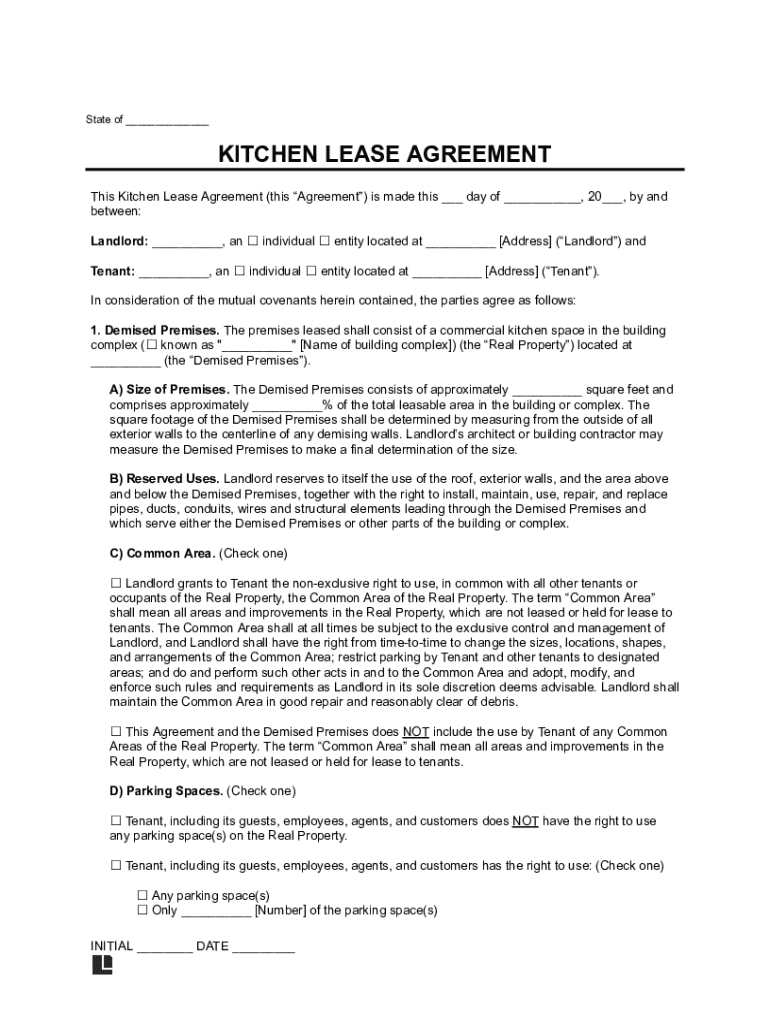
A Kitchen Lease Agreement is a legal document formulated between a landlord and a tenant for the purpose of leasing a commercial kitchen space. This agreement outlines all the necessary terms and conditions that both parties must adhere to during the rental period. Such an agreement is crucial as it defines the tenant's rights to use the specific kitchen premises, details the size and features of the space, and establishes the monetary and non-monetary obligations of the tenant. It serves to formalize the arrangement and protects both parties by providing a clear legal framework.
Key Components of the Agreement
- Description of Premises: Clearly outlines the dimensions and characteristics of the kitchen space being leased.
- Rental Terms: Includes length of lease, rent amount, and payment schedule.
- Responsibilities: Details maintenance duties and who is responsible for utilities and other operational expenses.
Understanding these components ensures both parties have a clear grasp of their commitments and rights concerning the kitchen space.
Key Elements of the Kitchen Lease Agreement
This agreement typically includes comprehensive details to cover all possible scenarios and obligations. Fundamental elements often featured within a Kitchen Lease Agreement encompass:
- Lease Duration: Specification of the lease term, whether fixed-term or month-to-month.
- Rent and Deposits: Defines the amount payable as rent and any security deposits required.
- Use of Premises: Clauses specifying permitted uses of the kitchen space to safeguard against unauthorized activities.
- Insurance Requirements: Obligations for the tenant to maintain liability insurance.
- Termination Clauses: Defined conditions under which the lease may be terminated prior to its expiry.
These components ensure that the legal framework is robust and covers every essential aspect of leasing a commercial kitchen.
Legal Use of the Kitchen Lease Agreement
Legal use of a Kitchen Lease Agreement involves both parties entering into a contract that states tenant use of the space for cooking or related activities in compliance with local health codes and regulations. The legal enforceability of such agreements requires:
- Adherence to Local Laws: Ensuring that all lease terms align with relevant state and city municipal regulations.
- Compliance with Health and Safety Standards: Commitment to maintaining necessary hygiene and safety practices in the kitchen.
- Fair Housing Laws: Adhering to laws and guidelines governing nondiscriminatory rental practices.
These legal considerations are vital to ensure that the agreement is enforceable and to prevent disputes or potential legal issues.
Steps to Complete the Kitchen Lease Agreement
Completing a Kitchen Lease Agreement involves several key steps that both parties must adhere to:
- Negotiate Terms: Both landlord and tenant should agree on the lease duration, rent, and specific use of the premises.
- Draft the Agreement: Utilize a template or legal advisor to draft an agreement that includes all conditions and terms negotiated.
- Review and Amend: Both parties should review the draft thoroughly for accuracy and propose any necessary amendments.
- Sign the Agreement: Following agreement by both parties, the document is signed to make it legally binding.
- File and Distribute Copies: Ensure each party retains a copy of the signed agreement for their records.
Executing each step precisely guarantees transparency and mutual understanding, which mitigates risks of future conflicts.
Important Terms Related to Kitchen Lease Agreement
Understanding the terminology employed in a Kitchen Lease Agreement can help parties interpret its contents accurately:
- Lease Renewal: Terms under which a lease can be extended upon expiry.
- Sublease: Conditions allowing the tenant to lease the kitchen space to another entity.
- Indemnification: Protection clauses against losses or damages incurred due to tenant’s activities.
- Force Majeure: Provisions for lease suspension in cases of unforeseen natural events.
Clarity in these terms is crucial for facilitating a smooth and transparent rental process.
Who Typically Uses the Kitchen Lease Agreement
Kitchen Lease Agreements are predominantly utilized by businesses and individuals within the food service industry, including:
- Caterers: Requiring space for meal preparations.
- Food Truck Operators: Needing a base kitchen for operations.
- Bakery Owners: Leasing kitchen space to fulfill high-volume orders.
These agreements are tailored to meet the needs of these specific business types, ensuring that all required conditions for secure and legal operations are fulfilled.


State-Specific Rules for the Kitchen Lease Agreement
Lease agreements might be subject to varied state laws that impact their formulation and enforcement. Some state-specific considerations include:
- Zoning Regulations: Ensures kitchen use complies with local zoning laws.
- Environmental Health Standards: Varies by state, with specific health codes and inspection requirements.
- Security Deposit Limits: State laws may dictate the maximum deposit that can be charged.
Familiarity with these rules is paramount for ensuring compliance and lawful operation under the lease.
Examples of Using the Kitchen Lease Agreement
Practical use of a Kitchen Lease Agreement includes numerous scenarios:
- Pop-Up Restaurants: Short-term leasing agreements for temporary dining events.
- Seasonal Food Production: Renting kitchens for peak production months.
- Community Kitchens: Shared use agreements for multiple renters/operators.
These examples demonstrate the versatility and necessity of such agreements for various culinary ventures, providing clear legal assurances for both landlords and tenants.