






Definition & Meaning
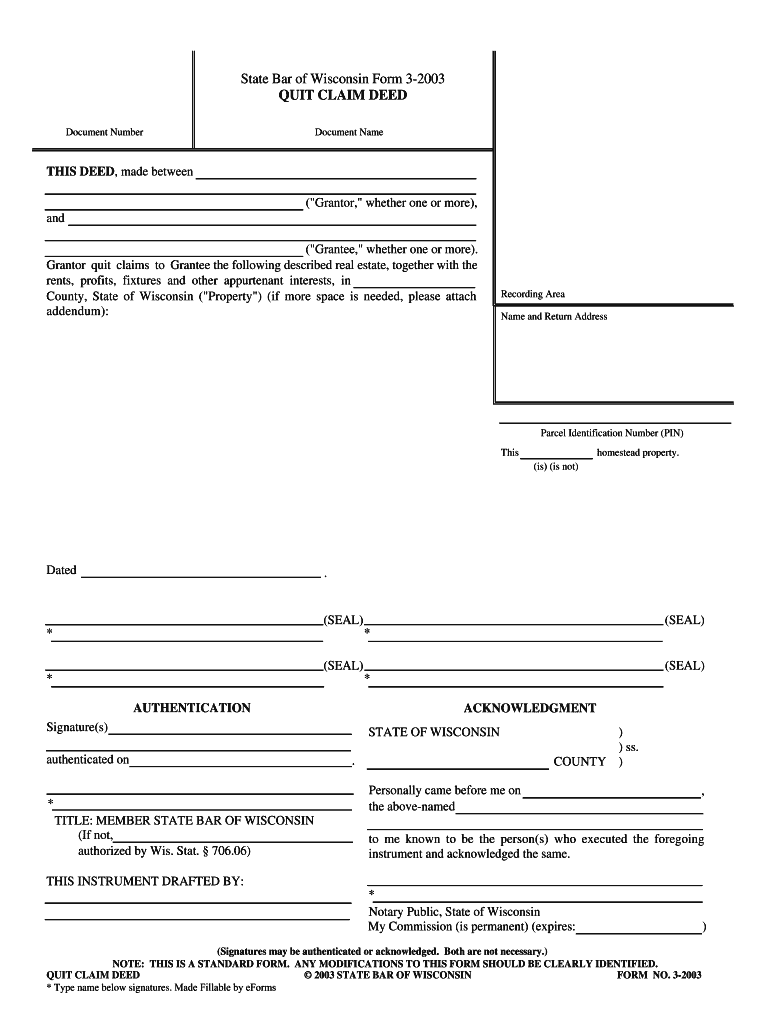
The State Bar of Wisconsin Form 3-2003 Quit Claim Deed is a legal document used to transfer ownership of real estate property from one party, known as the Grantor, to another, known as the Grantee. Unlike other forms of property transfer, a quit claim deed offers no warranties regarding the property's title. This means the Grantor does not guarantee that they hold valid ownership of the property or that the property is free from liens or encumbrances.
Key Characteristics
- Ownership Transfer: Transfers all interest the Grantor has in a property.
- No Warranty: Provides no assurance to the Grantee about the status of ownership or title defects.
- Efficiency: Often used for transfers between family members, to remove a person’s name from a title, or in divorce settlements.
How to Use the State Bar of Wisconsin Form 3-2003 Quit Claim Deed
To effectively use the Form 3-2003 Quit Claim Deed, understand the basic mechanics of property transfer and involve appropriate document preparation.
- Complete the Form: Fill in the details of both the Grantor and Grantee, along with a clear legal description of the property.
- Notarization: The form must be signed in the presence of a notary public to be valid.
- Recording the Deed: Once completed and notarized, the deed should be filed with the Register of Deeds in the county where the property is located.
How to Obtain the Form
The Wisconsin State Bar Form 3-2003 Quit Claim Deed can be sourced from various platforms:
- State Bar of Wisconsin Website: Download directly from their official site.
- Local Attorney: Lawyers specializing in real estate can provide the form and assist with its completion.
- Online Document Services: Platforms like DocHub offer editable versions of the form that can be filled out online.
Steps to Complete the Form
Step 1: Gather Information
- Grantor and Grantee Details: Full names and current addresses.
- Property Description: Complete and precise legal description, often found on the current deed or tax statement.
Step 2: Complete the Form
- Detail Input: Carefully input all gathered information into the appropriate sections.
- Notarization Requirement: Plan for the notarization of the Grantor’s signature.
Step 3: File the Form
- Recording: Submit the completed and notarized deed to the county's Register of Deeds.
Why Use the Form
The State Bar of Wisconsin Form 3-2003 Quit Claim Deed is beneficial for several specific situations where property needs to change hands:
- Family Property Transfers: Ideal for conveying property between spouses or family members.
- Divorce Settlements: Facilitates the transfer of property interests as part of divorce agreements.
- Business Reorganization: Useful for transferring property within different legal entities without complete title examination.
Who Typically Uses the Form
The form is common among a variety of users:
- Private Individuals: For personal property transfers.
- Legal professionals: Attorneys may use this form to assist clients in property transactions.
- Real Estate Agents: Often assist clients in accessing and processing the form.


Important Terms Related to the Form
- Grantor: The party transferring ownership of the property.
- Grantee: The party receiving ownership.
- Legal Description: A precise, legally recognized property description used in the deed.
Legal Use of the Form
In Wisconsin, the Quit Claim Deed must meet legal standards to effectively transfer property interests:
- Legal Descriptions: Properly delineated property descriptions are necessary.
- Notarization: Mandatory to authenticate the Grantor's signature.
- No Title Warranty: Ensures awareness of the lack of title warranty inherent in this type of deed.
Key Elements of the Form
Required Sections
- Names of Grantor and Grantee
- Legal Description of Property
- Statement of Transfer with No Warranty
The form must include these elements to be valid and legally binding. Adjustments or modifications should be noted clearly, ensuring transparency in any changes.