






Definition & Purpose of Forms 1098-E and 1098-T
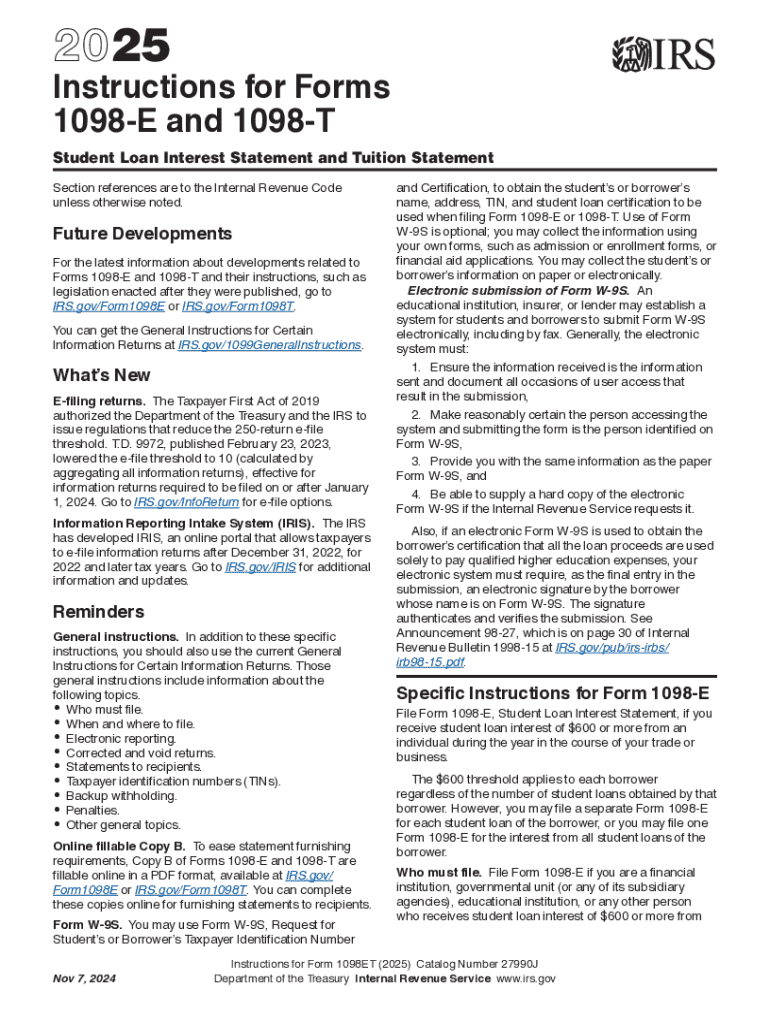
Forms 1098-E and 1098-T are essential IRS tax documents in the United States that facilitate the reporting of financial information related to education expenses. Form 1098-E is used for reporting student loan interest paid, enabling taxpayers to potentially claim a deduction on interest payments made during the tax year. On the other hand, Form 1098-T reports tuition payments and related educational expenses, which can qualify taxpayers for education tax credits or deductions. By ensuring that individuals can fully leverage tax benefits associated with educational expenses, these forms play a crucial role in financial planning for both students and their families.
How to Use Forms 1098-E and 1098-T
These forms help individuals and educational institutions accurately report financial interactions. To effectively utilize Form 1098-E, borrowers should verify the interest paid on qualified student loans, ensuring this aligns with the lender-provided 1098-E form. For Form 1098-T, students must confirm that the tuition payments and any scholarships or grants are reported correctly, which assists in calculating eligible educational credits or deductions. Users should retain these forms for their tax records and reference them when preparing their tax returns.
Steps to Complete Forms 1098-E and 1098-T
-
Gather Necessary Information:
- For Form 1098-E, collect details about student loan interest paid to lenders throughout the year.
- For Form 1098-T, ensure you have records of tuition payments and any scholarships or grants received.
-
Complete the Form:
- Fill in personal information and financial details as specified.
- Verify that all reported amounts, such as interest and tuition, are correct.
-
Validate Information:
- Cross-check entries with lender or educational institution records to avoid discrepancies.
-
Submit and Retain:
- Submit completed forms as part of your tax return.
- Keep copies for your records to address potential inquiries from the IRS.
Who Typically Uses Forms 1098-E and 1098-T
Forms 1098-E and 1098-T are predominantly used by:
- Students and Former Students: Those who have incurred student loan interest or those enrolled and making tuition payments.
- Parents: Supporting their children's educational expenses.
- Educational Institutions: Universities and colleges obliged to report financial details regarding student accounts to the IRS.
IRS Guidelines for Forms 1098-E and 1098-T
According to IRS guidelines, lenders and educational institutions must furnish Forms 1098-E and 1098-T by January 31 of the subsequent tax year to both the IRS and the payee (borrower or student). The guidelines specify the criteria and thresholds for reporting, ensuring uniformity and compliance. Accurately reporting interest and tuition payments help prevent potential audits and ensure compliance with federal tax laws.
Filing Deadlines and Important Dates
- January 31: Deadline for lenders and institutions to issue Forms 1098-E and 1098-T to recipients.
- April 15: Standard deadline for taxpayers to file their tax returns, utilizing information from these forms.
Required Documents for Completing Forms 1098-E and 1098-T
To accurately complete the forms, gather:
-
For 1098-E:
- Statements from your lender showing interest paid over the tax year.
- Personal financial records for cross-verification.
-
For 1098-T:
- Official tuition payment statements from your educational institution.
- Any documentation regarding scholarships or grants.
Penalties for Non-Compliance
Non-compliance in filing or inaccurately reporting on Forms 1098-E and 1098-T can lead to significant penalties for both institutions and taxpayers. Educational institutions face fines for not sending forms or for providing incorrect data. Taxpayers risk losing potential deductions and credits if forms are not properly filed or if discrepancies are discovered during IRS audits.
Electronic vs. Paper Submission Methods
Forms 1098-E and 1098-T can be submitted electronically or via paper, depending on the taxpayer’s preference. Electronic filing is recommended for its convenience and quick confirmation of receipt by the IRS. Paper submission is still accepted, although it entails longer processing times. Regardless of the method, it is crucial to ensure that all information is accurate and complies with IRS guidelines to avoid delays or potential inquiries.