






Definition and Purpose of Form 8959
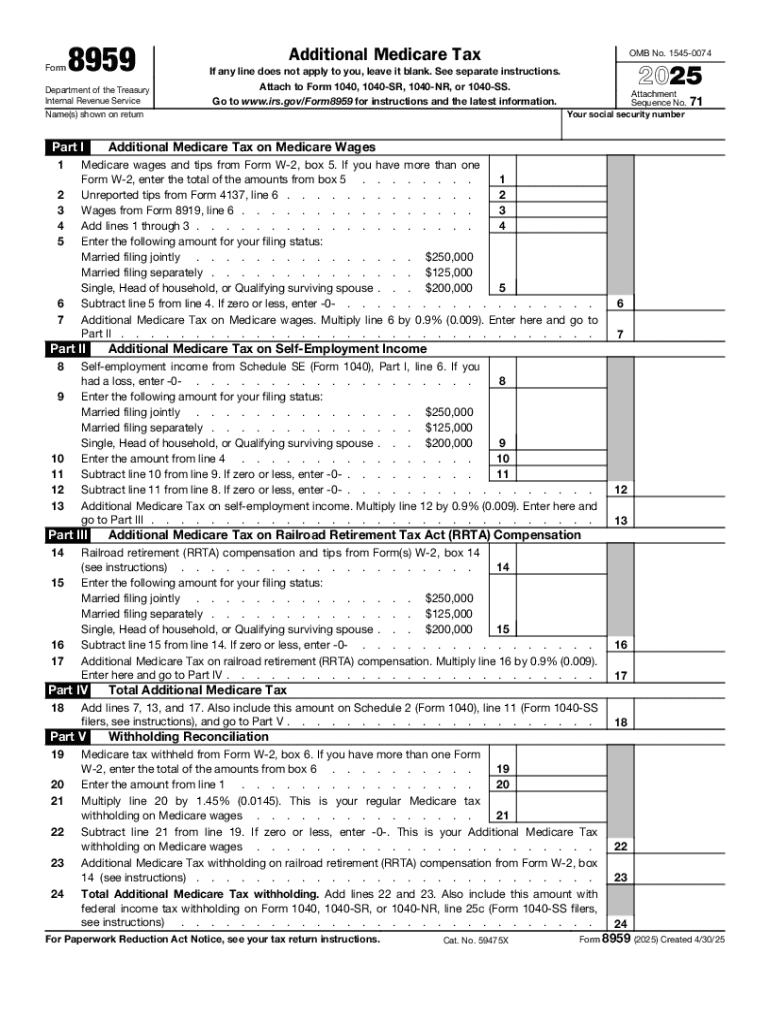
Form 8959 is dedicated to calculating the Additional Medicare Tax for individuals who have a high income. This tax applies to wages, self-employment income, and railroad retirement compensation. Understanding this form is crucial for individuals and married couples filing jointly who surpass certain income thresholds. The primary purpose of the form is to report additional Medicare tax liabilities and reconcile them with any withholding that might have already occurred. By comprehensively detailing income sources, Form 8959 ensures precise tax calculation and compliance with IRS regulations, especially for those whose earnings exceed the standard Medicare wage base.
How to Use the 2025 Form 8959
To effectively complete the 2025 Form 8959, taxpayers must first collect all pertinent documents that outline various forms of income. The instructions provided by the IRS should be followed meticulously to ensure proper reporting and calculation. Taxpayers calculate the Additional Medicare Tax by applying the tax rate to earnings above certain income thresholds. The form involves multiple fields where Medicare wages and compensation are recorded, and specific instructions need to be adhered to accurately compute amounts owed or withheld. Real-life scenarios often involve calculating the tax based on joint earnings for married couples, or individual incomes, which can significantly affect the final tax figure.
Steps to Complete the 2025 Form 8959
- Collect Required Documents: Gather all income statements including W-2s, 1099 forms, and any self-employment records.
- Determine Income Thresholds: Identify if your total income exceeds the threshold which varies by filing status, affecting where your additional Medicare tax begins.
- Calculate Additional Medicare Tax: Apply the necessary tax rate to your earnings exceeding the income threshold to determine the tax amount due.
- Report Income Accurately: Use the form to detail all income sources and apply the calculative steps to determine accurate tax liability.
- Submit Form with Filing: The completed Form 8959 needs to be filed alongside your standard tax return to ensure compliance.
Important Terms Related to 2025 Form 8959
- Additional Medicare Tax: An extra tax on high earners, beyond the regular Medicare tax rates.
- Income Thresholds: These vary by filing status and dictate the income level at which the additional Medicare tax applies.
- Medicare Wages and Compensation: All forms of pay subject to Medicare taxes, including self-employment income
- Self-Employment Income: Profits reported by individuals operating as private consultants or business owners, specifically as sole proprietors.
IRS Guidelines for Form 8959
The IRS issues specific guidelines that dictate the calculation and filing processes for Form 8959. These instructions emphasize the necessity of accurate income reporting and the allowance for adjustments if initial withholdings were insufficient. Furthermore, the IRS outlines possible scenarios which could affect how the form is completed, such as changes in filing status or multiple employment sources. Taxpayers are advised to consult IRS bulletins for any amendments or updates affecting current tax year filings.
Filing Deadlines and Important Dates
The deadline for submitting the 2025 Form 8959 aligns with federal income tax submission dates. Typically, this falls on April 15, though changes can occur if this date falls on a weekend or holiday. It is imperative for taxpayers to meet this deadline to avoid penalties. Extensions can be filed if necessary, but timely payment of any tax due is required to prevent interest accumulation and additional charges. Taxpayers should be proactive in understanding these timelines to ensure compliance.
Penalties for Non-Compliance
Failure to file the 2025 Form 8959 when required, or submitting it late, can result in penalties from the IRS. This can include fines for both late submission and payment, along with interest on the unpaid portion of taxes owed. The IRS typically imposes fines based on the level of non-compliance and any history of errors or delays from previous tax years. Therefore, understanding the form's requirements and deadlines is crucial to avoid financial ramifications.
Eligibility Criteria for the Additional Medicare Tax
Not all taxpayers are required to pay the Additional Medicare Tax. Eligibility primarily hinges on income levels that exceed specified thresholds, which vary based on how a taxpayer files their return—single, married filing jointly, married filing separately, or head of household. This tax is particularly relevant for high-income earners, and the form must be diligently filled out to ensure that exempt individuals are not inadvertently charged, and liable individuals accurately report additional tax liabilities.