






Introduction to Publication 1179 (Rev July 2025)
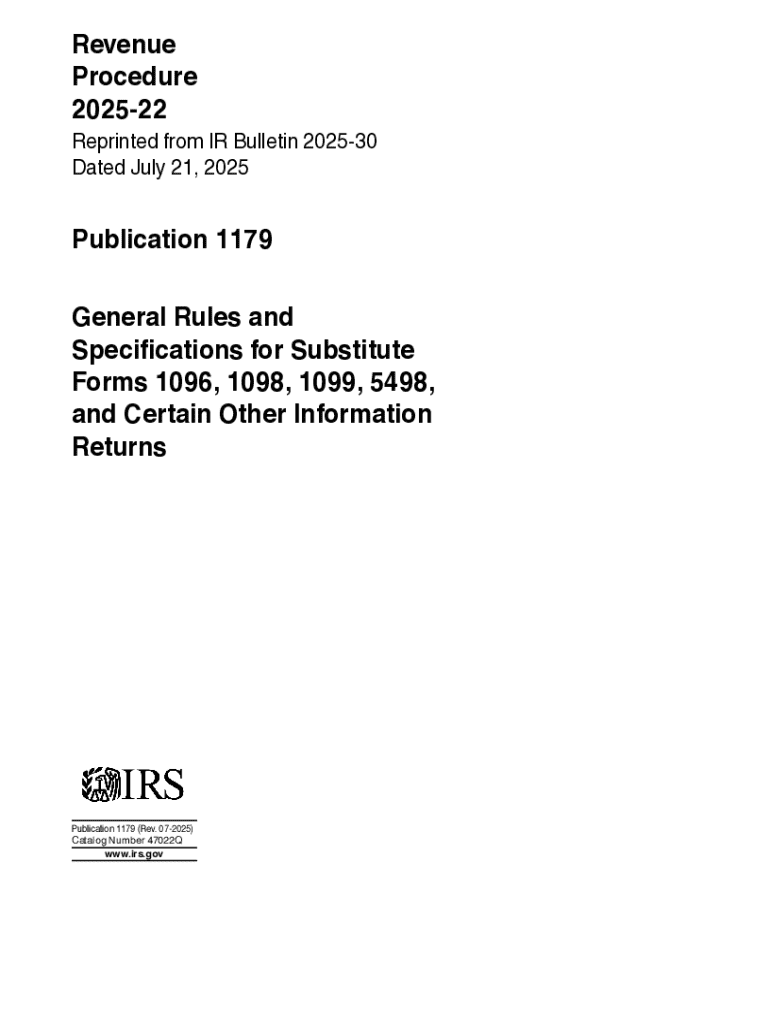
Publication 1179, revised in July 2025, serves as a comprehensive guide issued by the IRS for taxpayers who need to manage substitute forms such as 1096, 1098, 1099, and 5498. It delineates the general rules and specifications for preparing these substitute forms properly, ensuring compliance with IRS regulations. The publication aims to address the requirements and responsibilities of parties involved in the preparation and submission of these forms, clarifying what constitutes an acceptable substitute to reduce filer burden effectively.
How to Use Publication 1179 (Rev July 2025)
Understanding how to properly utilize Publication 1179 is crucial for anyone responsible for substitute forms. The document is divided into clear sections, each focusing on a different aspect of form preparation and submission. Tax filers should:
- Identify Required Forms: Determine which substitute forms apply to your situation.
- Follow Specifications: Adhere strictly to the instructions within the publication on how these forms should be prepared.
- Utilize Templates and Guidelines: Ensure all substitute forms conform to the dimensions and layouts specified.
By following these steps, users can ensure their documents meet the IRS standards, avoiding potential errors and penalties.
Key Elements of Publication 1179 (Rev July 2025)
Publication 1179 outlines several vital components needed to create compliant substitute forms:
- Definitions: Clear explanations of terms used throughout the publication to aid comprehension.
- General Requirements: Detailed specifications required for creating substitute forms, including form dimensions, layout, and content.
- Printing Guidelines: Instructions on how forms should be printed and what color schemes are permissible.
Adhering to these key elements is vital for ensuring the forms are accepted without issue.
Important Terms Related to Publication 1179
Several key terms are essential for understanding Publication 1179:
- Substitute Forms: Forms used in place of official IRS documents, matching the required formats and information.
- Recipient Statements: The portion of the form intended for the recipient's copy.
- Electronic Delivery: The process of issuing form information digitally rather than through paper copies.
Familiarity with these terms enhances comprehension when navigating the publication.
Legal Use of Publication 1179 (Rev July 2025)
Using Publication 1179 legally involves ensuring compliance with IRS guidelines:
- Authorized Use: Ensure forms conform to the requirements specified by the IRS.
- Disclosure Requirements: Understand what information must be disclosed and how it should be presented.
Compliance is critical, as incorrect or unauthorized use of these forms can lead to penalties.
IRS Guidelines for Filing Substitute Forms
The IRS provides specific guidelines for filing substitute forms:
- Submission Standards: Follow the details on dimensions, font size, and information placement exactly as specified.
- Filing Methods: Forms can be submitted electronically through approved IRS systems when applicable.
Ensuring compliance with these guidelines helps maintain timely and accurate submission of documents.
Penalties for Non-Compliance
Failing to adhere to the guidelines set forth in Publication 1179 can result in significant consequences:
- Monetary Fines: Financial penalties may be imposed for incorrect form submission.
- Reputation Damage: Non-compliance could harm your reputation with clients or the IRS.
- Legal Repercussions: In severe cases, failure to comply could lead to audits or legal action.
Awareness of these penalties stresses the importance of remaining compliant.
Digital vs. Paper Versions of Publication 1179
Publication 1179 is accessible in both digital and paper formats. Each has its considerations:
- Digital Version: Easily accessible and can be updated quickly to reflect changes in IRS regulations.
- Paper Version: Useful for physical reference but may not be as up-to-date as digital editions.
Selecting the appropriate version depends on your preference and need for accessibility to the most current information.