
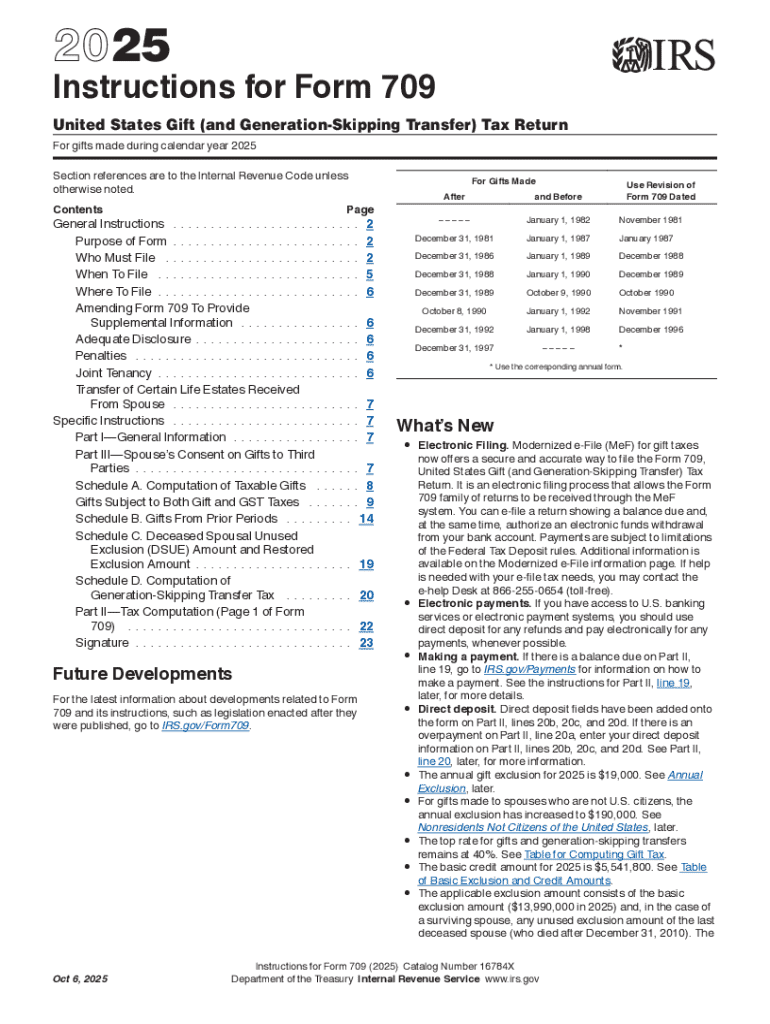







Definition and Purpose of Form 709: Gift and Generation-Skipping Transfer Tax Return
Form 709, known as the United States Gift (and Generation-Skipping Transfer) Tax Return, is a crucial document used to report certain gifts and the generation-skipping transfer (GST) tax implications. This form is filed annually by individuals to declare gifts given that surpass the annual exclusion limit set by the Internal Revenue Service (IRS). While gifting assets can be a strategy for estate planning, it’s vital to comply with the federal regulations detailed in Form 709 to avoid penalties and ensure that any transfer taxes due are accurate and timely. Moreover, this form helps in tracking lifetime gift exclusions, which are essential for calculating the taxable estate upon death.
Key Elements of Form 709 and Instructions
The instructions for completing Form 709 provide guidance on each part of the form, detailing how to report gifts, including the total value of all gifts, donor and recipient information, and calculations of the taxable portion. Key components involve:
- Annual Exclusion: Instructions explain how to apply the annual gift exclusion against each gift made. The exclusion amount can vary; the instructions provide the requirements for applying it.
- Unified Credit: The form guides users on calculating the unified credit, applicable against the cumulative total of taxable gifts, aiding in the minimization of potential tax liability.
- Generation-Skipping Transfer Tax: Special instructions are given for reporting GST, which applies to transfers made to skip-generation recipients, like grandchildren.
Filing Deadlines and Important Dates for Form 709
Filing Form 709 requires adherence to specific deadlines to avoid penalties. Typically, the deadline coincides with the individual’s tax return due date, which is usually April 15 of the year following the gift. If the individual receives an extension to file their income tax return, the same extension applies to Form 709. It's crucial to maintain awareness of these dates, as failure to file on time can result in penalties, interest on unpaid taxes, and a loss of the ability to contest certain aspects of the return.
Steps to Complete Form 709
Completing Form 709 involves several steps:
- Gather Information: Compile all records of gifts made throughout the year, including the recipient's details and the fair market value of the gifts.
- Apply Exclusions and Deductions: Utilize the instructions to apply applicable exclusions and deductions, which may affect the taxable amount.
- Calculate Taxable Amounts: Compute the sum of gifts that surpass the exclusion limit, taking advantage of the instructions to accurately determine the gift tax due.
- Complete the Form: Fill out each part of Form 709 as per instructions, ensuring accuracy in donor and gift itemization sections.
- File with IRS: Submit Form 709 by the deadline, either electronically or via mail. Ensure all supporting documents and payments are included, if necessary.
Penalties for Non-Compliance
Neglecting to properly file Form 709 may lead to significant penalties. The IRS imposes fines for both late filing and late payment of due taxes. Interest on owed taxes accrues until the total due is paid. Moreover, incomplete or inaccurate forms might lead to IRS audits, additional penalties, or disallowed deductions, thus increasing the tax liability.
Software Compatibility and Submission Methods
Many taxpayers benefit from using tax software like TurboTax or QuickBooks, which can assist in completing and submitting Form 709. These programs provide guidance in line with IRS regulations, ensuring compliance and potential ease in electronic submission. Taxpayers can choose between electronic filing, mail submission, or in-person delivery, but should verify the preferred method offers confirmation of receipt.
IRS Guidelines for Form 709
IRS guidelines define the nature and scope of gifts that necessitate filing Form 709. They stipulate who must file, including those who exceed the annual exclusion amount or engage in transactions subject to GST tax. The guidelines also elaborate on permissible deductions and exceptions for spousal gifts, which don’t contribute to the taxable gift total if properly documented.
Examples and Scenarios Involving Form 709
Taxpayer scenarios highlight the practical application of Form 709:
- Example 1: John gifts $20,000 to his child. Since the annual exclusion is $15,000, he must report the $5,000 excess.
- Example 2: Lisa transfers $30,000 to a trust for her grandson. Beyond the annual exclusion, the GST applies due to the generational skip. These examples underline the importance of understanding the intricacies detailed within the instructions for Form 709.
Versions and Historical Changes of Form 709
Over the years, changes in tax laws have prompted updates to Form 709. The instructions offer a historical context for these adjustments, helping taxpayers navigate past and present regulatory frameworks. Historical awareness aids users in accurately completing the form according to current laws, reflecting changes like exclusion amount adjustments and electronic filing advancements.







