






Definition & Meaning
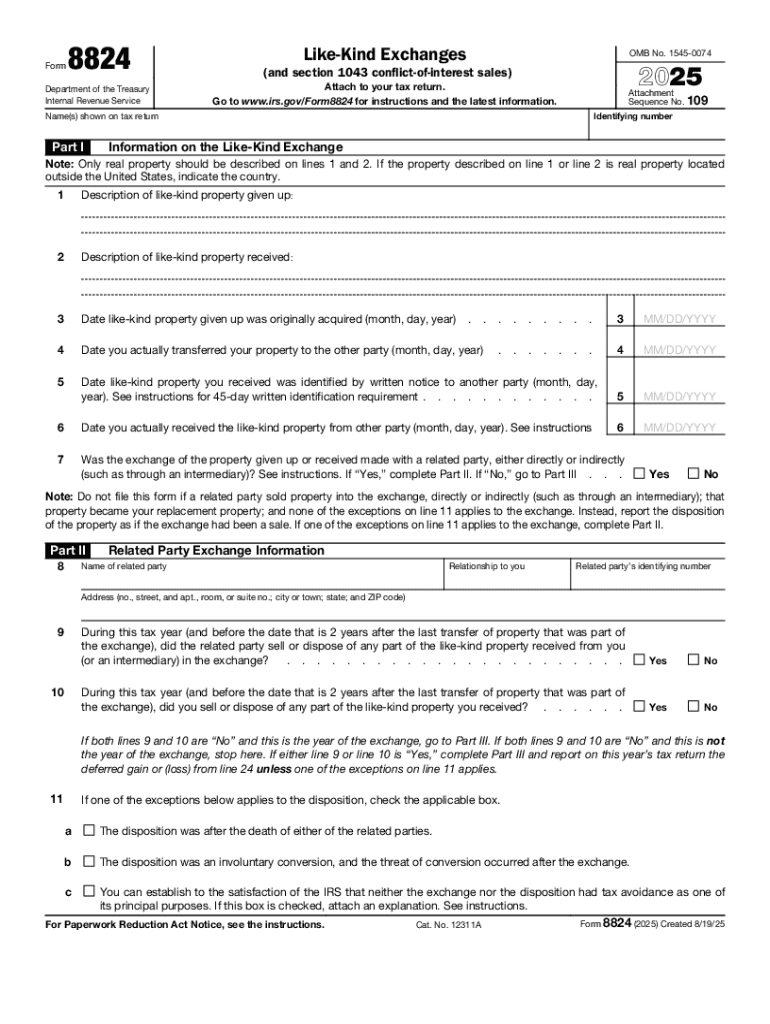
Form 8824 is used by taxpayers to report like-kind exchanges, primarily involving real estate properties, under IRS regulations. Like-kind exchanges refer to swaps of similar assets that qualify for tax deferral on the recognized gains. This strategic tax planning tool allows investors to defer paying capital gains taxes by reinvesting the proceeds from sold properties into similar or qualified properties. By using Form 8824, individuals and businesses can ensure compliance with the IRS while maximizing their investment opportunities.
Key Features
-
Like-Kind Property: Refers to properties of the same nature or character, even if they differ in grade or quality. This is crucial in determining the validity of a like-kind exchange.
-
Non-Recognition of Gain: Allows taxpayers to defer capital gains tax on the exchange of properties that are considered like-kind, which is significant for real estate investors.
How to Use Form 8824
The use of Form 8824 involves detailing the properties exchanged and ensuring the transaction meets all IRS guidelines for a like-kind exchange. Taxpayers must demonstrate that both properties are held for investment purposes and are of similar nature. The form requires the inclusion of thorough documentation to substantiate the exchange, covering all aspects from the description of properties to dates of exchange and any related parties involved.
Detailed Steps
-
Gather Necessary Information: Assemble all relevant details about the properties involved, including descriptions and identification numbers.
-
Complete Part I - Information on the Like-Kind Exchange: Input specifics about the properties exchanged, ensuring precision with descriptions and exchange dates.
-
Fill Out Part II - Gain or Loss: Calculate any potential recognized gain or loss from the exchange, taking into account differences in value.
-
Include Part III - Basis of Like-Kind Property Received: Determine the adjusted basis for the new property following the guidelines.
Steps to Complete Form 8824
Completing Form 8824 involves careful attention to detail to ensure compliance with IRS requirements. This process typically requires gathering detailed documentation, accurately reporting information, and adhering to the defined timeline for submission.
Step-by-Step Breakdown
-
Identify Like-Kind Properties: Validate that both properties qualify as like-kind under IRS standards.
-
Calculate the Basis: Determine the adjusted basis for the like-kind property received, factoring in any recognized gain or cash received.
-
Document Exchange Details: Provide the IRS with the date of property transfers and exchange dates, ensuring no discrepancies.
-
Review Finalized Information: Ensure all fields are correctly filled and calculations are accurate before submission.
-
Submit by Deadline: File the form with your regular tax return, respecting IRS deadlines to avoid penalties.
Why Use Form 8824
Utilizing Form 8824 offers significant benefits for taxpayers engaged in like-kind exchanges, particularly concerning tax deferral. By trading up their investment portfolios without immediate tax repercussions, investors can grow their portfolios more efficiently.
Advantages
-
Tax Deferral: Allows taxpayers to reinvest without the immediate burden of capital gains taxes.
-
Investment Growth: Encourages strategic reinvestment in similar properties, fostering portfolio expansion.
-
Efficiency in Real Estate Markets: Facilitates fluid property exchanges, maintaining market dynamism and investment opportunities.
Important Terms Related to Form 8824
Understanding the terminology used in Form 8824 is crucial for correctly completing the form and ensuring IRS compliance.
Key Terms
-
Like-Kind Exchange: A swap of similar properties meeting specific IRS criteria for tax deferral.
-
Recognized Gain: The portion of gain that is taxable, unless deferred in a like-kind exchange.
-
Boot: Any non-like-kind property received in the exchange, which might be taxable.
IRS Guidelines
The IRS provides detailed guidelines to support taxpayers in properly executing like-kind exchanges. Adherence to these guidelines ensures the deferment of capital gains taxes and avoidance of potential penalties for misreported exchanges.
Main Points of Guidance
-
Exchange Timing: Properties must be identified within 45 days and the exchange completed within 180 days.
-
Documentation Requirements: Accurate documentation of both the relinquished and replacement properties is crucial.
-
Qualified Intermediaries: Often necessary to manage the exchange process and maintain compliance with IRS rules.
Filing Deadlines / Important Dates
Compliance with IRS deadlines is vital for the successful deferral of capital gains taxes in like-kind exchanges.
Key Dates
-
45-Day Identification Period: The taxpayer must identify the replacement property within 45 days of transferring the relinquished property.
-
180-Day Exchange Period: The exchange's completion must occur within 180 days after the initial transfer.
Transgressing these deadlines can invalidate the like-kind nature of the exchange and nullify the associated tax benefits.
Examples of Using Form 8824
Providing real-world scenarios illustrates how Form 8824 functions in various contexts, offering clarity to taxpayers.
Practical Examples
-
Residential Real Estate Investors: A taxpayer exchanges one rental property for another without incurring immediate capital gains tax.
-
Commercial Property Swap: Two businesses swap office locations in a like-kind exchange, deferring the associated capital gains taxes.
These examples underscore the strategic use of Form 8824 in leveraging investment opportunities while maintaining IRS compliance.