






Definition and Meaning
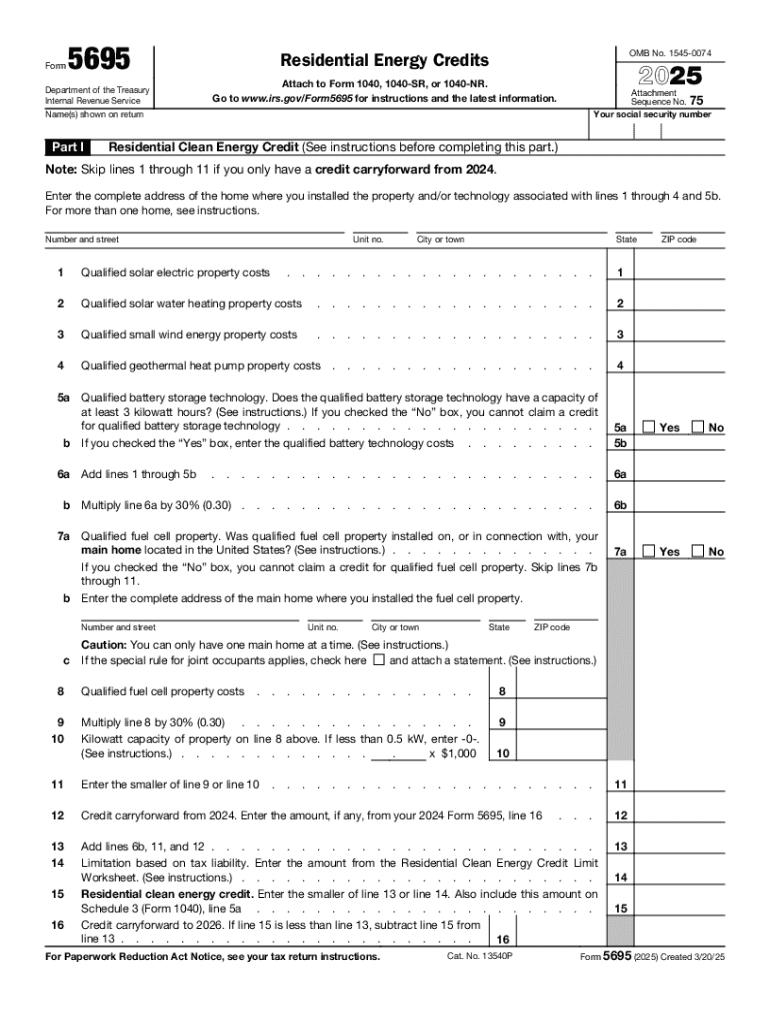
The 2025 Form 5695, Residential Energy Credits, is used by homeowners in the United States to claim tax credits for certain energy-efficient improvements and clean energy technologies implemented in their residences. It serves as a vehicle to promote the adoption of sustainable energy solutions by offering financial incentives for eligible home updates. These improvements can include solar panels, wind turbines, geothermal heat pumps, and other qualifying energy-efficient renovations, which are pivotal in reducing carbon footprints and energy costs.
Eligibility Criteria
Understanding who qualifies for the Residential Energy Credits is essential. Homeowners who have installed eligible energy-efficient systems or improvements in their primary or secondary homes within the tax year can use Form 5695. Eligible expenditures must meet specific energy efficiency standards as dictated by the IRS. Both newly constructed homes and existing structures qualify, provided the improvements adhere to the guidelines. Renters, however, do not qualify for these credits as they are not directly making capital improvements to a property they own.


Key Elements of 2025 Form 5695
The form is divided into several sections, including parts dedicated to claiming the Residential Clean Energy Credit and the Energy Efficient Home Improvement Credit. Each section requires detailed information, such as the type of improvement, installation costs, and whether these improvements comply with federal energy efficiency standards. Taxpayers must accurately complete these sections to ensure they receive the appropriate credits.
Steps to Complete the 2025 Form 5695
- Gather Documentation: Collect all invoices, bills, and certificates related to the energy improvements made. This includes manufacturers' certifications that verify the eligibility of the installed items.
- Complete Part I: This section deals with the Residential Clean Energy Credit. Input details related to expenditures on solar, wind, geothermal, or fuel cell property.
- Complete Part II: Focus on the Energy Efficient Home Improvement Credit. Enter costs related to insulation, energy-efficient windows, and energy-efficient HVAC systems.
- Calculate Credit: Follow the instructions for calculating the total credit amount based on your eligible expenses.
- Transfer Total: Once calculated, transfer the total credit amount to the relevant line on your federal tax return.
Required Documents
To ensure compliance and substantiate claims, maintain a file containing all relevant documents. This includes purchase receipts, installation contracts, and any manufacturer’s certifications that detail the energy efficiency of the purchased products. Keeping thorough records is crucial as they may be required for verification by the IRS.
IRS Guidelines
The IRS provides guidelines for taxpayers claiming the Residential Energy Credits to ensure accurate reporting and compliance. These guidelines specify which products and improvements are eligible for the credits and detail the standards that must be met. It’s important to refer to these guidelines annually, as regulatory criteria and credit limits may change.
Filing Deadlines and Important Dates
Filing your tax return by the Federal deadline is imperative to claim the Residential Energy Credits. Typically, tax returns are due on April 15 each year, but if this date falls on a weekend or holiday, the deadline may shift to the next business day. Taxpayers should confirm the year's deadline well in advance to ensure timely submission.
Penalties for Non-Compliance
Failing to accurately complete the 2025 Form 5695 or attempting to claim credits for non-qualified expenditures can result in penalties or interest charges from the IRS. It’s fundamental to ensure that all entries are correct and supported by proper documentation to avoid these possible repercussions.
How to Obtain the 2025 Form 5695
You can obtain the latest version of Form 5695 from the IRS website or request a hard copy by mail. Additionally, most tax preparation software includes digital versions of the form, facilitating its use during the electronic filing process. When using software, ensure it is updated to reflect the latest IRS standards and guidelines.
Software Compatibility
Forms like the 2025 Form 5695 can be integrated with popular tax preparation software such as TurboTax or QuickBooks. These platforms simplify the completion process by importing financial data and assisting with compliance through interactive guidelines. Ensuring your software is compatible and up-to-date is key to a smooth filing experience.