






Definition and Purpose of IRS Form 8829
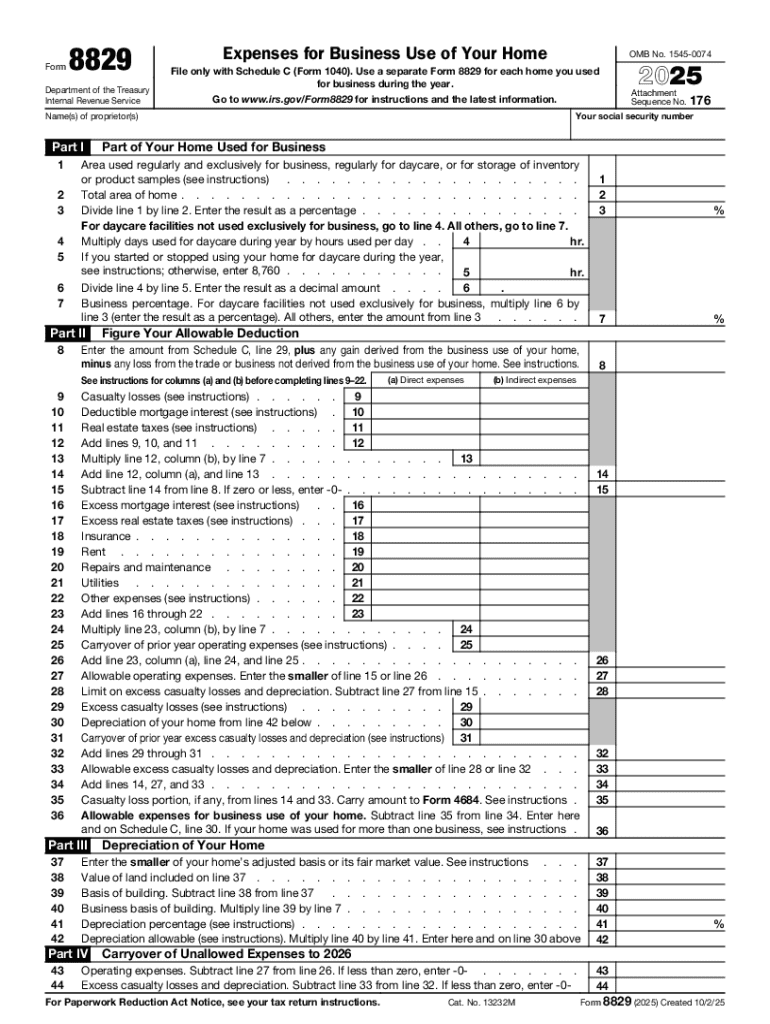
Form 8829, also known as the "Expenses for Business Use of Your Home" form, is used by taxpayers to claim deductions related to the use of a part of their home for business purposes. It assists in calculating the amount of square footage used for business operations, which determines the percentage of home expenses that can be deducted. This form must be filed along with Schedule C (Form 1040) for those who are self-employed or sole proprietors.
Deductions Covered by Form 8829
- Direct Expenses: Costs specifically related to the business part of your home, such as repairs to the office space.
- Indirect Expenses: General costs incurred for the home like mortgage interest, insurance, utilities, and general repairs.
- Depreciation: A way to account for the wear and tear on the portion of the home used for business over time.
Examples and Practical Scenarios
- Freelance Designer: A designer working from a dedicated room can use Form 8829 to allocate a percentage of home utility bills as business expenses.
- Consultant with Home Office: If meeting clients at home, the consultant can claim a portion of cleaning expenses as direct business costs.
How to Use the 2024 Form IRS 8829
Using Form 8829 effectively requires understanding the various sections and required calculations. Here is a detailed process on how this form is utilized.
Steps to Fill Out Form 8829
- Calculate Business Area: Measure the square footage used exclusively for business and compare it to the total square footage of the home.
- Complete Section I (Part of Home Used for Business): Enter the total and business square footage to determine the business-use percentage.
- Fill Out Section II (Expenses): List both direct and indirect expenses. Use the business-use percentage to calculate the deductible portion of indirect expenses.
- Compute Depreciation: Use Section III to record the depreciation for the business-use part of your home.
- Submit with Schedule C: Transfer the deductible amount to Schedule C to reduce your taxable income.
Additional Information
- Required Accuracy: Ensure measurements and calculations are precise to avoid IRS issues.
- Record Keeping: Retain detailed records and receipts for all expenses claimed on Form 8829.
Steps to Complete the 2024 Form IRS 8829
Completing Form 8829 entails a methodical approach to ensure accuracy and compliance with IRS standards.
Detailed Completion Steps
-
Section I: Business Use of Home
- Measure your work area and total home size.
- Calculate the percentage of home used for business.
-
Section II: Expenses
- List out the direct expenses in full.
- Enter the total home expenses and apply the business-use percentage to find the deductible amount.
-
Section III: Depreciation of Home
- Identify the basis of the home (initial cost plus improvements).
- Apply depreciation schedules to determine the deductible depreciation.
-
Summary Section
- Combine all deductible amounts for the total business use deduction.
Practical Tips
- Software Tools: Use tax software like TurboTax or QuickBooks for automatic calculations.
- Consultation: Seek help from a tax professional if unsure about complex calculations.
Critical Elements of Form 8829
Understanding the key components of Form 8829 will help ensure accurate and complete filing.
Major Sections of the Form
- Part I: Business Use Calculation: Determine the home area used specifically for business.
- Part II: Expenses Deduction: Direct and indirect expenses deducted based on business use percentages.
- Part III: Home Depreciation: Calculation of depreciation for the business portion of the home.
Important Considerations
- Eligibility: Only apply if the business area is used regularly and exclusively for business purposes.
- Documentation: Maintain thorough records to justify every expense claimed.
Who Typically Uses IRS Form 8829
Form 8829 is particularly relevant for individuals who utilize a portion of their home for running a business.
Common Users
- Self-Employed Professionals: Individuals such as freelancers, consultants, and entrepreneurs.
- Small Business Owners: Those operating small businesses without separate business facilities.


Specific Examples
- Remote Workers: Employees who have arrangements with employers allowing home office expenses.
- Part-Time Workers: Individuals leveraging home space for part-time business activities.
IRS Guidelines for Form 8829
It's crucial to adhere to IRS guidelines when completing Form 8829 to ensure compliance and avoid audits.
Key IRS Rules
- Exclusive Use: The space must be used exclusively for business activity.
- Regular Use: The area should be used regularly for conducting business.
- Principal Place of Business: The home must be the primary location for business operations.
Consequences of Non-Compliance
- Audits: Misrepresentation or errors can trigger IRS audits.
- Penalties: Incorrect deductions may lead to penalties and interest on back taxes.
Documentation Recommended by the IRS
- Receipts: Keep receipts for all expenses claimed.
- Floor Plans: Maintain diagrams showing business versus total home space.
- Utility Bills: Document utility bills with annotations for business use.
Filing Deadlines and Important Dates
Meeting deadlines is crucial for avoiding penalties associated with the filing of Form 8829.
General Deadline
- April 15: Typically, the due date to file Form 8829 with your tax return (subject to changes if it falls on a weekend or holiday).
Extension Options
- Form 4868: File for a six-month extension if additional time is needed to submit accurate information.
Impact of Late Filing
- Penalties: Late submissions can result in penalties unless an extension is granted.
- Interest: Accrued interest on unpaid taxes from the original filing deadline.
Business Entity Types That Benefit from Form 8829
While Form 8829 is designed primarily for sole proprietors, specific business structures can still derive benefits when filed correctly.
Applicable Business Structures
- Sole Proprietorships: Directly file with Schedule C.
- LLCs: If treated as sole proprietorships for tax purposes.
Examples of Benefiting Entities
- Tax consultants operating from home offices.
- Photographers using home studios for client shoots.
Caveats for Other Structures
- Partnerships/Corporations: Typically file other forms, but consultation with a tax professional is encouraged to explore potential indirectly-related deductions.
This structured content is designed to provide comprehensive guidance on using Form 8829 for U.S.-based taxpayers looking to claim home business expenses, ensuring both legal compliance and maximizing tax benefits.