




01. Edit your form online
Type text, add images, blackout confidential details, add comments, highlights and more.

Type text, add images, blackout confidential details, add comments, highlights and more.

Draw your signature, type it, upload its image, or use your mobile device as a signature pad.

Send it via email, link, or fax. You can also download it, export it or print it out.
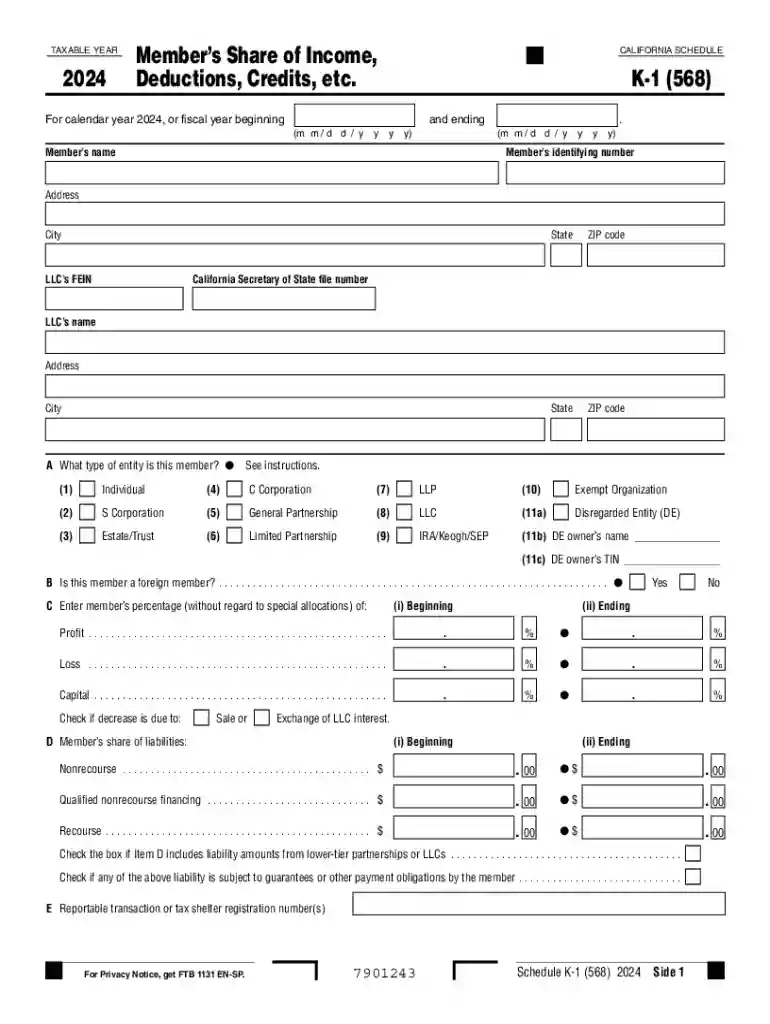
The California Schedule K-1 (568) is a supplemental tax form used by LLCs that have filed a California Form 568 to report each member’s share of the LLC's income, deductions, credits, and other financial data. This form is critical for members to accurately declare their respective shares in their personal income tax returns. It breaks down financial distributions so that both the entity and the individuals maintain compliance with state tax requirements.
This form ensures transparency in financial activities, facilitating accurate assessment of each member’s tax obligations. It includes various sections that detail income types, deductions, and member-specific data, essential for precise tax calculations. Understanding its structure and purpose helps in effective tax planning and compliance.
Recognizing the different parts of the California Schedule K-1 (568) helps in reliably completing the form:
Each element performs a crucial function for both the LLC and the members by ensuring accurate and compliant tax filing.
To complete the California Schedule K-1 (568), follow these organized steps:
Keep streamlined documentation for any future IRS inquiries or audits.
Understanding specific terms is essential for accurately processing the California Schedule K-1 (568):
These terms help clarify conversations around LLC structures and the financial implications for its members.
Using the California Schedule K-1 (568) effectively calls for an understanding of its utility:
Proper use ensures not only compliance but also improved financial management through clarity on personal and entity income sharing agreements.
The California Schedule K-1 (568) is typically used by:
This wide usage highlights the form’s fundamental role in the tax ecosystem of California-based LLCs and their stakeholders.


California implements specific rules for the Schedule K-1 (568) that distinguish it from federal forms:
Adhering to these state-specific rules is vital for maintaining compliance and avoiding penalties.
Timely submission of the California Schedule K-1 (568) is crucial:
Tracking these dates prevents unintended lapses, supporting smooth financial reporting and tax management processes.
We've got more versions of the California Schedule K-1 (568) form. Select the right California Schedule K-1 (568) version from the list and start editing it straight away!
At DocHub, your data security is our priority. We follow HIPAA, SOC2, GDPR, and other standards, so you can work on your documents with confidence.

Schedule K-1 (568): This explains how to allocate income, deductions, and credits to each member of the LLC. Common Mistakes to Avoid. Several common errors can
You must attach a copy of Schedule K-1 (568) to your California tax return to claim the tax paid by the LLC on your behalf. The LLCs return must be filed
Dec 22, 2023 document, and periodically update system security plans that describe system boundaries, system environments of.


