






Definition and Purpose of the Volunteer Policy and Agreement
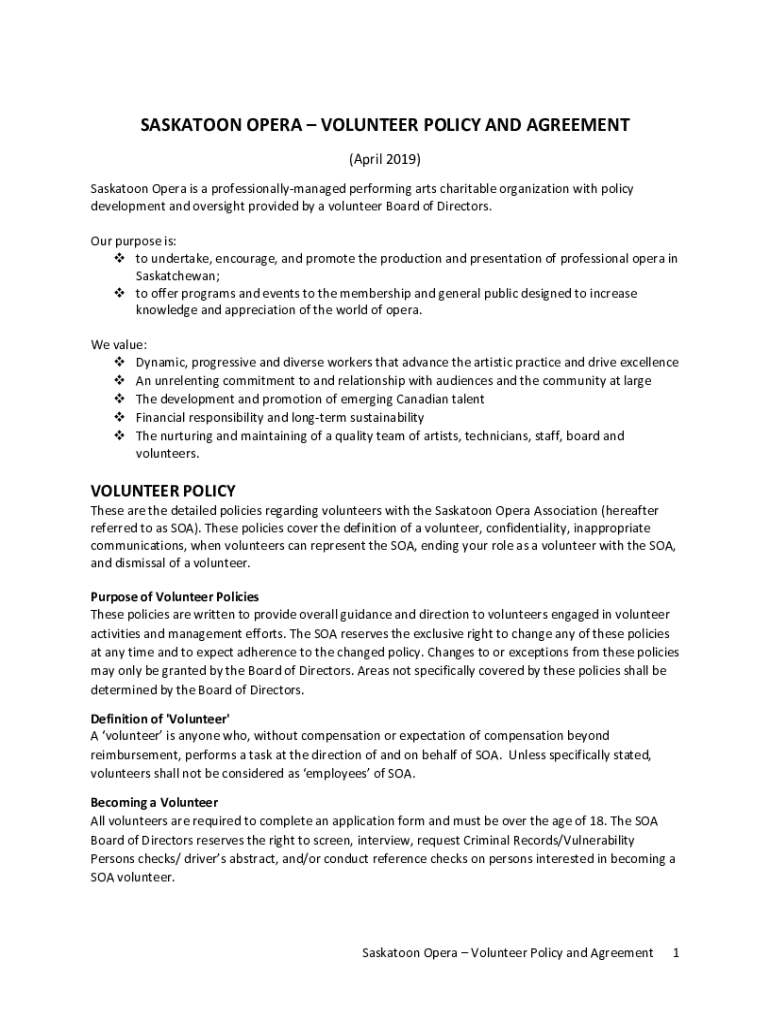
The Volunteer Policy and Agreement is a formal document that outlines the roles, responsibilities, and expectations for volunteers within an organization. This document serves as a framework to foster mutual understanding between the organization and its volunteers. By clarifying both party's obligations and rights, the agreement ensures effective collaboration and minimizes misunderstandings. In practice, it typically includes sections on volunteer definitions, application procedures, confidentiality requirements, and codes of conduct, all tailored to suit the needs and operations of the specific organization.
How to Use the Volunteer Policy and Agreement
The Volunteer Policy and Agreement functions as a guiding document for both new and existing volunteers. Organizations distribute this agreement during orientation sessions or onboarding processes. Volunteers are encouraged to review the document thoroughly to understand their commitments and the organization's expectations. Key points to focus on include:
- Roles and Responsibilities: Clearly outlines what is expected from volunteers in terms of duties and conduct.
- Commitment Level: Details the time and effort expected, such as specific hours or events.
By ensuring that volunteers and coordinators are on the same page, the agreement helps maintain smooth operations and prevent potential disputes.
Steps to Complete the Volunteer Policy and Agreement
Completing the Volunteer Policy and Agreement involves several critical steps to ensure all necessary areas are covered:
- Review the Document: Carefully read through each section to understand the terms fully.
- Provide Personal Information: Fill in any required fields such as name, contact details, and emergency contacts.
- Understand the Commitments: Affirm your understanding of the role's responsibilities and the organization's expectations.
- Sign the Agreement: Provide a signature to acknowledge your consent to and understanding of the terms.
These steps ensure that both the volunteer and the organization have a clear understanding of their mutual commitments and expectations.
Key Elements of the Volunteer Policy and Agreement
The core elements of a Volunteer Policy and Agreement are vital to its effectiveness and include the following:
- Confidentiality Clauses: Protects sensitive information accessed during volunteer activities.
- Code of Conduct: Sets standards for behavior and professionalism.
- Volunteer Rights: Lists what volunteers are entitled to, such as training and support.
- Termination Policies: Outlines the procedures for terminating the volunteer relationship if necessary.
These elements work together to create a comprehensive framework that supports both the organization’s operational needs and the volunteer’s experience.
Legal Considerations for the Volunteer Policy and Agreement
Volunteers must understand the legal implications of their agreement, which may include:
- Liability Waivers: Protects the organization from certain legal claims made by volunteers.
- Insurance Provisions: Describes what insurance, if any, the volunteer is covered under.
- Compliance with Laws: Ensures adherence to relevant labor and volunteer laws specific to the jurisdiction.
Careful attention to these legal aspects helps both organizations and volunteers avoid potential legal issues and ensures a legally sound volunteering environment.
State-Specific Rules for Volunteer Policy and Agreement
State-specific variations may affect how the Volunteer Policy and Agreement is structured or enforced. These differences can include:
- Minimum Age Requirements: Vary from state to state for volunteering without parental consent.
- Background Check Regulations: States may differ in how they regulate background checks for volunteers.
Understanding these state-specific rules is essential for compliance and ensures that the volunteer agreement aligns with local laws.
Examples of Utilizing the Volunteer Policy and Agreement
The Volunteer Policy and Agreement is put into use in a range of scenarios, including:
- Community Service Projects: Providing clear expectations for temporary volunteers working on short-term projects.
- Ongoing Volunteer Roles: Offering consistent guidelines for volunteers engaged in long-term commitments.
- Non-Profit Events: Ensuring that event-specific tasks and codes of conduct are understood and agreed upon by volunteers.
These examples highlight the versatility and critical role of the agreement in various volunteer-driven settings.
Versions or Alternatives to the Volunteer Policy and Agreement
Organizations might consider different formats or versions to suit their needs:
- Simplified Agreements: For short-term or low-risk volunteer roles.
- Comprehensive Contracts: For roles requiring significant responsibility or involving vulnerable populations.
- Digital Versions: E-forms that allow for electronic signatures and easier distribution.
Exploring these alternatives can provide flexibility to organizations and accommodate diverse volunteering scenarios effectively.