






Definition & Meaning
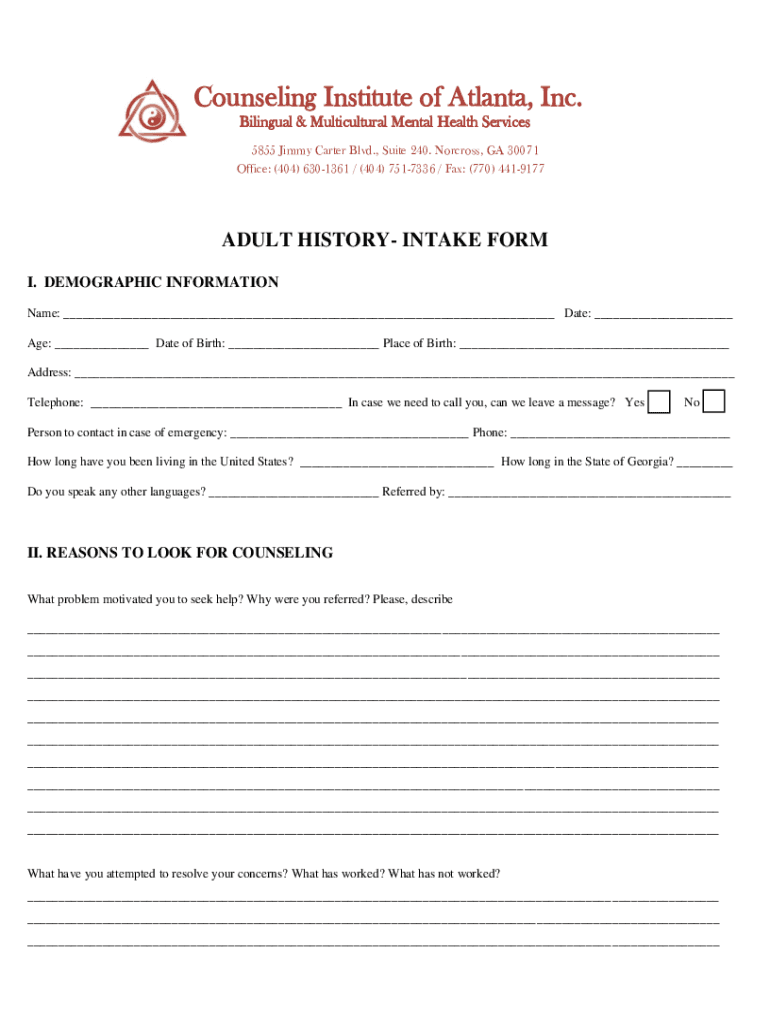
An "Adult History-Intake Form" is a comprehensive document used primarily in mental health and counseling settings to gather detailed information about a client. This form is essential for creating a holistic view of a client’s background, including personal, medical, and social histories. It typically covers various aspects such as the reasons for seeking help, current psychological symptoms, medical conditions, family history, prior treatments, socio-economic status, and legal issues. This intake form serves as a foundational tool for therapists and counselors to develop effective treatment plans tailored to each individual client.
Key Elements of the Adult History-Intake Form
The form contains several critical sections that together paint a full picture of an adult client's history and current situation:
- Demographic Information: Gathers basic details such as name, age, gender, ethnicity, and contact information to ensure accurate identification and communication.
- Medical History: Includes past and current medical conditions, medications, and allergies that could impact mental health or influence treatment decisions.
- Emotional and Psychological Background: Details symptoms related to mood, thought patterns, and behavior that the client is experiencing.
- Family and Social History: Explores family dynamics, significant relationships, and support systems which can affect the client’s mental health.
- Legal Issues: Captures any past or current legal involvement that might add stress or contribute to behavioral concerns.
- Consent and Confidentiality: Outlines the terms under which information is used, stored, and shared, ensuring the client's rights and privacy are protected.
How to Use the Adult History-Intake Form
Utilizing the intake form efficiently involves several steps:
- Preparation: Ensure that the environment is conducive to honest and comfortable disclosure from the client.
- Document Collection: Clients should bring any relevant medical records or prior assessment reports for accurate background information.
- Review and Explanation: Explain each section of the form to ensure the client understands the importance of each piece of information.
- Completion: The form can be filled out independently by the client or with assistance from a clinician if clarification is needed.
- Review: Once completed, clinicians should review the form in detail to identify key areas that require immediate attention in the initial sessions.
Who Typically Uses the Adult History-Intake Form
The form is predominantly used by:
- Mental Health Professionals: Psychologists, psychiatrists, clinical social workers, and counselors use this form to understand clients comprehensively.
- Counseling Centers: Both private and institutionalized centers employ these forms to standardize the information-gathering process.
- Multidisciplinary Teams: In environments such as hospitals, a multidisciplinary approach is adopted where different specialists access the form for an integrated treatment approach.


Steps to Complete the Adult History-Intake Form
Completing this form requires attention to detail and honesty:
- Begin with Personal Information: Fill in your name, contact details, and demographic data.
- Explore Medical History: Provide details about any known medical conditions, treatments, and allergies.
- Detail Current Symptoms: Clearly note all psychological symptoms you are experiencing.
- Family and Social Details: Describe family structure, relationships, and any significant social influences on your life.
- Complete Legal Information: Document any legal issues you are currently dealing with.
- Review and Finalize: Go through the form to ensure all information is complete and accurate before submission.
Legal Use of the Adult History-Intake Form
The form is governed by strict legal and ethical guidelines to ensure the client’s data is handled correctly:
- Confidentiality: Adheres to HIPAA regulations to protect sensitive information.
- Informed Consent: Requires clear communication and agreement on how information will be used.
- Record Keeping: Legally mandates detailed and accurate records, maintained securely to prevent unauthorized access.
Examples of Using the Adult History-Intake Form
Real-world application of this form can vary:
- In a Clinical Setting: A new client at a community mental health clinic might fill out this form during the first appointment, providing clinicians with a foundational understanding of their needs.
- Counseling Session Preparation: Therapists may use information from this form to prepare personalized session plans addressing specific client challenges identified.
- Family Therapy Context: Within family therapy, understanding individual family members' histories can guide the development of collective treatment objectives.
Importance of Completing the Adult History-Intake Form
Completing the form is crucial as it:
- Facilitates Tailored Care: Enables professionals to design interventions aligned to the client's unique history and needs.
- Ensures Continuity: Provides a comprehensive client history that is valuable across multiple service providers for continuous care.
- Increases Engagement: Clients are more engaged in their own therapy by giving them an active role in sharing their story.