






Definition and Purpose of Form 502
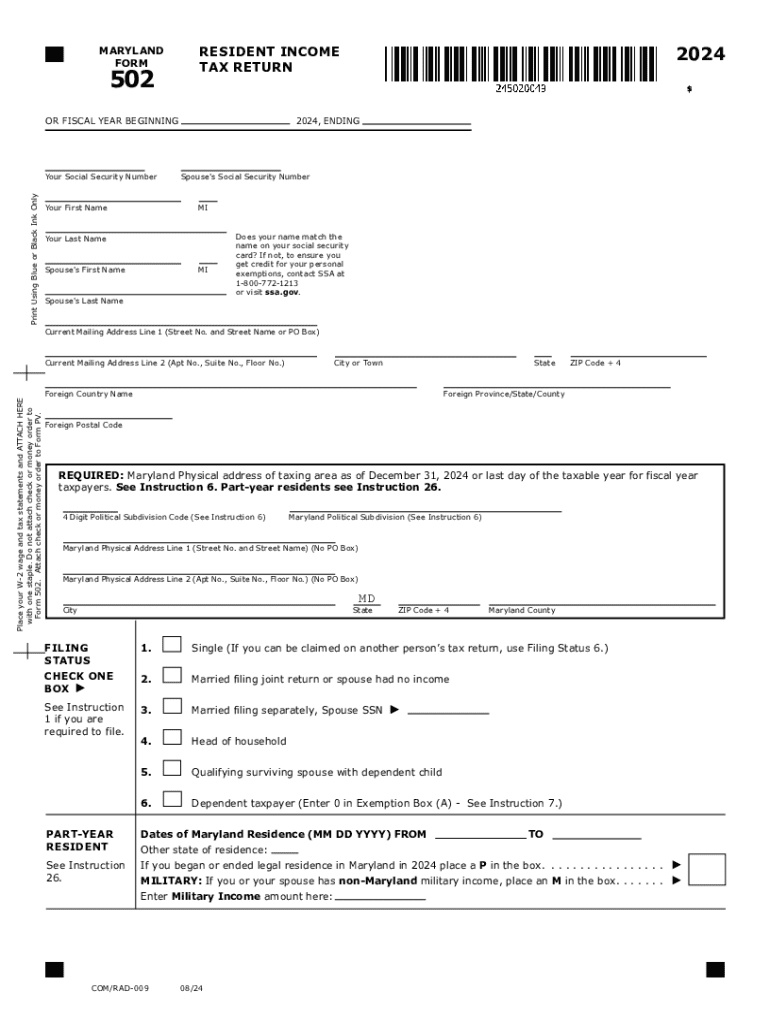
The Maryland Form 502 is a critical document used for the 2024 Resident Income Tax Return. It serves as the primary tool for Maryland residents to report their income, calculate their taxes, and claim any exemptions or deductions. By understanding the purpose and components of Form 502, taxpayers can accurately fulfill their state tax obligations, ensuring compliance and potentially optimizing their tax liabilities.
Steps to Complete Form 502
Completing Form 502 involves a methodical process to ensure all necessary information is accurately captured. Follow these steps for precision:
- Gather Personal Information: Begin by collecting basic personal details such as your full name, Social Security Number (SSN), address, and filing status.
- Report Income: Document all sources of income, including wages, dividends, and any freelance earnings.
- Claim Deductions and Exemptions: Identify applicable deductions and exemptions, such as those for dependents or educational expenses.
- Calculate Taxable Income: Deduct any exemptions and deductions from your total income to determine your taxable income.
- Determine Tax Liability: Use the state tax tables included in the instructions or any tax software to calculate your final tax liability.
- Final Review and Signature: Ensure all sections are completed accurately; sign and date the form before submission.
Who Typically Uses Form 502
Form 502 is predominantly used by residents of Maryland fulfilling their state tax obligations. It's applicable to:
- Full-time Maryland residents
- Residents with multiple sources of income within the state
- Individuals claiming specific state-based deductions and exemptions
It's crucial for taxpayers who may be newly relocated to Maryland, retirees with pensions, and small business owners operating primarily within the state.
Important Terms Related to Form 502
Understanding key terms associated with Form 502 can streamline the filing process:
- Filing Status: Indicates whether you file as single, married, filing jointly, or head of household.
- Exemption: A deduction allowed for yourself, your spouse, and any dependents, reducing taxable income.
- Tax Credit: A direct reduction in tax liability, distinct from deductions, that lowers the amount of tax owed.
Familiarity with these terms ensures compliance and can significantly impact your tax calculations.
IRS Guidelines and Influence
Though Form 502 pertains specifically to Maryland taxes, aligning with IRS guidelines is essential. Federal tax data often influences the figures on your state return, as state taxable income calculations typically start with adjusted gross income from federal forms. Adhering to IRS timelines and ensuring consistency between state and federal submissions can prevent discrepancies and potential audits.
Filing Deadlines and Important Dates
Timeliness is crucial when filing Form 502 to avoid penalties:
- April 15: Standard deadline for filing without risk of penalties.
- October Extensions: Possible if requested, aligning with federal extension guidelines, but taxes owed must be paid by the original due date to avoid interest.
Setting reminders for these key dates helps manage your tax obligations securely and efficiently.
Required Documents and Preparations
Ensure you have the following documents ready when completing Form 502:
- W-2 Forms: From all employers within the tax year.
- 1099 Forms: Reporting additional income such as dividends, interest, or freelance earnings.
- Documentation for Deductions: Proofs such as mortgage interest statements or tuition payment receipts.
These documents form the backbone of your tax filing process, allowing for accurate and compliant submissions.
Submission Methods for Form 502
Maryland offers several options for submitting Form 502:
- Electronically: Through authorized e-file providers or state-approved software, simplifying the process and reducing processing time.
- Mail: Using physical addresses specified in the form instructions, this traditional method remains available, especially for those preferring paper documentation.
- In-Person: Submission at designated tax offices provides immediate confirmation of receipt.
Selecting the appropriate method depends on personal preference, comfort with technology, and access to necessary resources.
Digital vs. Paper Versions of Form 502
While both digital and paper versions of Form 502 are permissible, there are distinct advantages and considerations:
- Digital Version: Facilitates error-checking, quicker processing, and immediate submission confirmations. Many taxpayers find this method more efficient.
- Paper Version: Preferred by those who keep hard copies of their records and are less comfortable with digital filing methods.
Consider your personal workflow, resources, and comfort level with technology when deciding which format to use.