
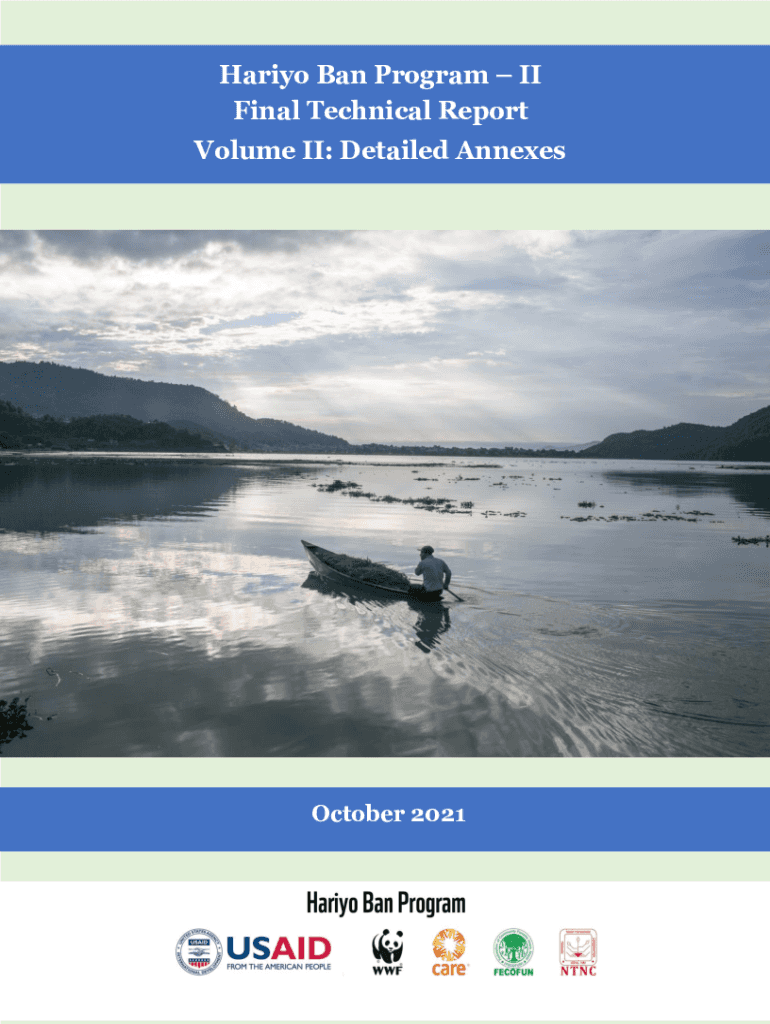







Definition and Meaning
The 'Hariyo Ban Program II Final Technical Report Volume II: Detailed' is an in-depth document showcasing the efforts, activities, and outcomes of the Hariyo Ban Program, a renowned initiative in Nepal focused on biodiversity conservation and community resilience. This report compiles detailed analyses and results from various community-based interventions, highlighting achievements in ecological sustainability and adaptation to climate change. The document serves as a crucial resource for understanding how conservation efforts translate into tangible benefits for both the environment and local communities.
Key Elements of the Report
- Biodiversity Conservation: Outlines successful strategies implemented to preserve flora and fauna in Nepal, including the establishment of anti-poaching units and preservation of critical habitats.
- Community Resilience: Details initiatives that bolster the ability of local communities to adapt and thrive despite environmental challenges, like droughts or floods.
- Stakeholder Engagement: Emphasizes collaboration with civil society organizations, government bodies, and local communities to ensure sustainable resource management.
How to Use the Report
Understanding the 'Hariyo Ban Program II Final Technical Report Volume II: Detailed' requires a methodical approach. Readers should focus on sections most relevant to their interests, whether it's biodiversity initiatives, community resilience projects, or stakeholder collaboration mechanisms.
Steps to Effectively Use the Document
- Identify Key Interests: Determine which elements of the report align with your informational needs or institutional goals.
- Focus on Results: Review sections that present quantitative data and performance indicators to gauge the success of initiatives.
- Analyze Community Impact: Study how interventions have benefited local populations and improved their resilience to environmental changes.
- Case Studies and Examples: Examine specific examples within the report to understand real-world applications and outcomes.
Steps to Complete the Report
Completing and understanding this report involves engaging actively with the content and applying its insights to relevant scenarios.
Detailed Steps
- Initial Review: Conduct a general scan of the report to become acquainted with its structure and content areas.
- Deep Dive: Target in-depth sections that cover projects or outcomes of particular interest, scrutinizing data and results.
- Evaluation: Compare the program’s methodologies and outcomes with standard practices to evaluate innovation and effectiveness.
- Synthesis: Compile findings to derive broader conclusions about conservation and community resilience strategies.
Importance of the Report
The 'Hariyo Ban Program II Final Technical Report Volume II: Detailed' is crucial for policymakers, environmentalists, and community leaders, providing a comprehensive overview of successful conservation tactics and community-based resilience strategies.
Why It Matters
- Guidance for Future Programs: Offers a foundational blueprint for upcoming conservation and community resilience efforts.
- Resource for Policymakers: Acts as a reference point for incorporating effective measures into policy frameworks.
- Educational Tool: Serves as a learning resource for academic institutions studying environmental science and community development.
Who Typically Uses the Report
This document is vital for individuals and groups involved in environmental conservation, community development, and policy planning.


Common Users
- Policy Makers: To inform the development of environmentally sustainable policies.
- Environmental NGOs: For coming up with strategies to support biodiversity and local communities.
- Academics and Researchers: To study and analyze effective conservation and resilience-building techniques.

Legal Use of the Report
The report adheres to legal and regulatory standards set forth to ensure that all interventions and findings comply with local and international laws concerning environmental and community preservation.
Legal Considerations
- Compliance with Environmental Laws: Ensures all activities comply with national conservation laws and international treaties.
- Data Protection and Privacy: Upholds ethical standards in data reporting and community engagement.
Required Documents for Understanding the Report
To fully comprehend the scope and impact of the Hariyo Ban Program as detailed in Volume II of the Final Technical Report, certain foundational documents are recommended for review.
Essential Documents
- Previous Volume Reports: These provide context and background information leading up to the final technical report.
- Annual Statistical Summaries: To understand key metrics in biodiversity conservation and community resilience.
- Government and NGO Reports: Offer external perspectives and corroborate data presented in the technical report.
Software Compatibility
Given the substantial data and technical details included in the report, using specific software tools may enhance the ease of analysis and comprehension.
Relevant Software
- Data Analysis Tools: Programs like Tableau or Excel can support the visualization of complex data.
- Documentation Software: Applications like Adobe Reader or Microsoft Word, to track annotations and notes.
By carefully navigating these sections and utilizing additional resources where needed, users can maximize the utility and insights gained from the 'Hariyo Ban Program II Final Technical Report Volume II: Detailed.'