






Definition & Overview of Men's College Basketball Profit Determinants
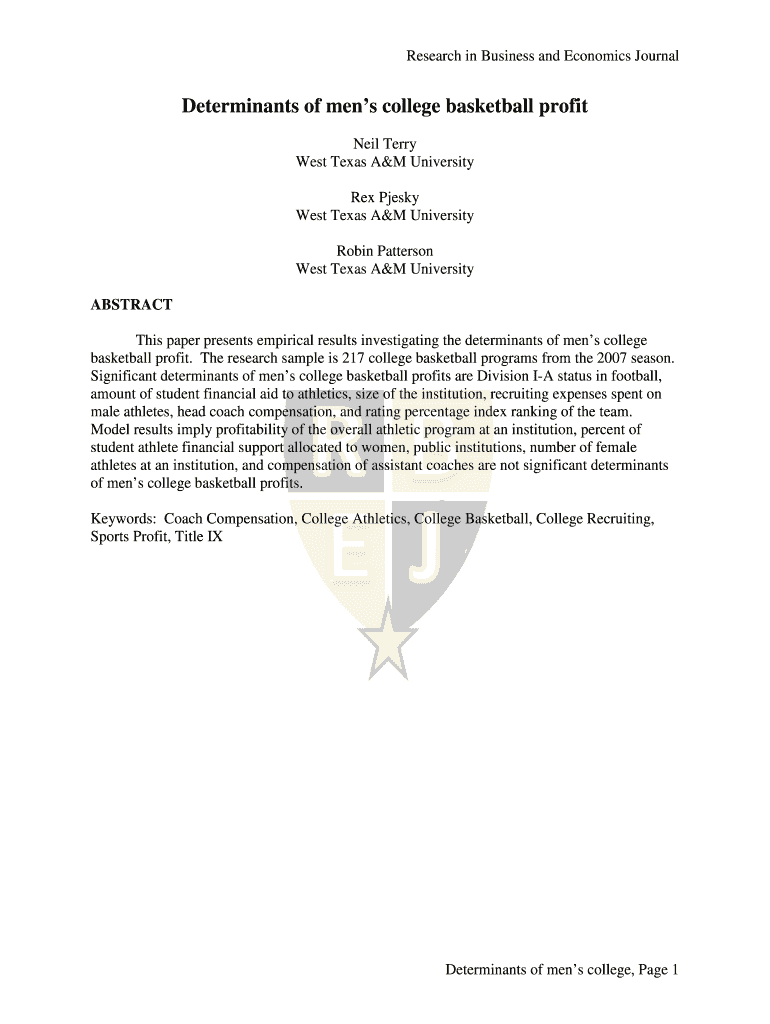
The determinants of men's college basketball profit encompass various factors influencing financial performance within college basketball programs. This includes aspects like Division I-A football status, financial support for athletes, institutional size, recruiting expenses, and head coach compensation. Understanding these factors is crucial for stakeholders aiming to maximize profitability in men's college basketball, while also acknowledging the impact of Title IX on resource allocation.
Key Elements Influencing Profitability
Several critical elements significantly affect the profitability of men's college basketball programs:
- Division I-A Football Status: Programs with a Division I-A football team often receive more media attention and sponsorships, positively impacting basketball profits.
- Financial Aid to Athletes: Providing financial assistance to male basketball players can enhance team performance by attracting talent, leading to increased marketability.
- Institutional Size: Larger institutions typically have more resources and alumni engagement, contributing to higher revenue generation.
- Recruiting Expenses: Investment in recruiting efforts determines the quality of players, which in turn influences program success and profitability.
- Head Coach Compensation: Competitive compensation packages for head coaches can attract experienced leadership, enhancing a team’s performance and financial outcomes.
Understanding Title IX and its Implications
Title IX regulations enforce gender equality in athletic programs. In the context of men's college basketball, this means balancing financial support between men's and women's sports without negatively impacting profitability. Despite concerns, studies show that supporting women's athletics doesn’t necessarily detract from men's basketball profits.
How to Use and Interpret the Form
To effectively utilize and interpret the determinants of men's college basketball profit, stakeholders should:
- Analyze Financial Indicators: Focus on key metrics such as sponsorship revenues, ticket sales, and merchandising to assess profitability.
- Review Recruitment Strategies: Examine recruiting expenditures in relation to player performance and subsequent financial returns.
- Evaluate Institutional Context: Consider the size and football status of the institution, which can significantly impact profitability dynamics.
Typical Users of this Analysis
The analysis of men's college basketball profit determinants is primarily used by:
- Athletic Directors: To make informed decisions on budget allocations and resource distribution.
- Coaches: To understand the financial context and justify requests for resources or salary adjustments.
- University Administrators: To align athletic programs’ profitability with broader institutional goals.
- Financial Analysts: To provide insights into program profitability and assist in strategic planning.
Examples and Real-World Scenarios
Examining historical data from 217 college programs in 2007 reveals:
- Programs that emphasized recruiting saw improved player quality and higher ticket sales, directly affecting profitability.
- Universities with robust football programs typically had higher basketball revenues, indicating synergy between sports programs.
- Institutions offering substantial financial aid observed a higher retention rate of top-tier athletes, boosting long-term profitability.
Important Terms and Concepts
Key terms related to men's college basketball profit determinants include:
- Division I-A: The highest level of intercollegiate athletics sanctioned by the NCAA in the U.S.
- Title IX: A federal civil rights law that prohibits gender discrimination in education programs, including athletics.
- Recruitment Expenditure: Funds dedicated to attracting and securing athletes, crucial for team success and profitability.
Legal and Compliance Considerations
Adhering to Title IX requirements is essential. Compliance ensures:
- Gender Equity: Institutions must provide equal opportunities and funding for male and female athletes.
- Legal Adherence: Meeting federal guidelines to avoid penalties or loss of federal funding.
Differences Across States and Institutions
Profit determinants can vary significantly based on the state and institution:
- State Regulations: States might have additional guidelines affecting resources allocation and compliance.
- Institutional Policies: Internal policies regarding athletics can influence how determinants are prioritized and managed.
By understanding these diverse aspects, stakeholders can strategically navigate the complexities of men's college basketball profitability to maximize their program’s financial success.