






Definition and Meaning
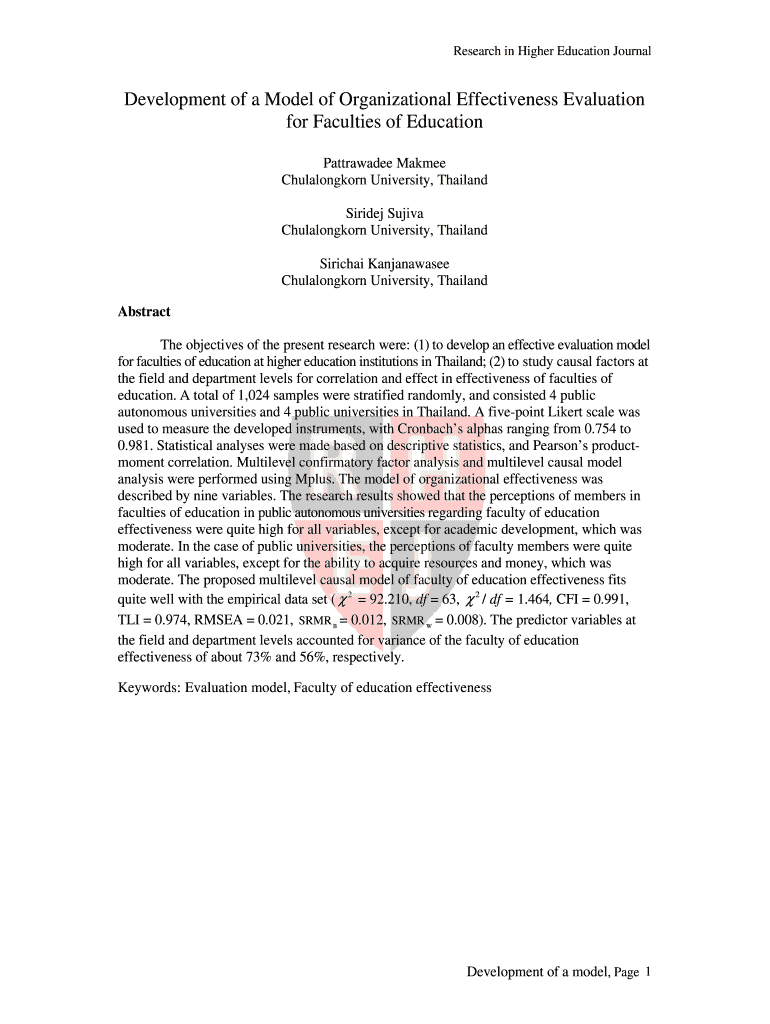
The Development of a Model of Organizational Effectiveness Evaluation bb refers to a structured framework designed to assess how effectively organizations achieve their goals and objectives. This model involves identifying critical factors that impact organizational performance, such as leadership quality, resource acquisition, and strategic management. The evaluation helps in analyzing both quantitative and qualitative elements of an organization's operations to provide an in-depth understanding of its effectiveness.
Key Components of the Model
- Causal Factors: Elements influencing an organization's effectiveness include management policies, resource availability, and employee engagement.
- Evaluation Levels: The model examines effectiveness at multiple levels, such as departmental and organizational-wide assessment.
- Quantitative Metrics: Financial performance indicators, productivity metrics, and other numerical data.
- Qualitative Metrics: Employee satisfaction, customer feedback, and organizational culture.
How to Use the Evaluation Model
Using the Development of a Model of Organizational Effectiveness Evaluation bb involves several steps to ensure comprehensive assessment and actionable insights.
Step-by-Step Process
- Identify Objectives: Clearly define what the organization aims to achieve through the evaluation.
- Select Indicators: Choose appropriate metrics and indicators that align with organizational goals.
- Collect Data: Gather relevant data from various sources, including surveys, financial reports, and interviews.
- Analyze Results: Use statistical and qualitative analysis methods to interpret the data.
- Report Findings: Compile a report highlighting key insights, strengths, areas for improvement, and actionable recommendations.
Practical Tips
- Engage stakeholders from different departments to ensure diverse perspectives.
- Use a mix of both quantitative and qualitative data for a balanced evaluation.
- Regular updates and follow-ups are crucial to track improvement and maintain relevance.
Key Elements of the Evaluation Model
Understanding the essential components of the Development of a Model of Organizational Effectiveness Evaluation bb is crucial for its application.
Primary Elements
- Strategic Alignment: Ensures that organizational activities align with the mission and vision.
- Resource Utilization: Assesses how efficiently resources are allocated and used.
- Leadership and Governance: Evaluates decision-making processes and leadership effectiveness.
- Communication and Collaboration: Looks at internal and external communication channels and teamwork efficiency.
Supporting Elements
- Innovation and Improvement: Focuses on the organization's ability to innovate and adapt to changes.
- Stakeholder Satisfaction: Considers the satisfaction levels of customers, employees, and other stakeholders.
Who Typically Uses the Model
The Development of a Model of Organizational Effectiveness Evaluation bb serves various types of organizations, ranging from educational institutions to private enterprises.


Key Users
- Educational Institutions: Universities and colleges use the model to assess the effectiveness of academic programs and faculty performance.
- Corporations: Businesses employ the model to evaluate operational efficiency and strategic outcomes.
- Non-Profit Organizations: Utilize the model to measure social impact and organizational sustainability.
- Government Agencies: Apply the evaluation to ensure public sector programs meet legislative and public expectations.
Benefits for Different Sectors
- Allows universities to refine academic offerings based on evaluation outcomes.
- Provides businesses with a roadmap for performance enhancement and strategic realignment.
- Helps non-profits align programs with donor expectations and beneficiary needs.
Examples of Using the Evaluation Model
Practical examples illustrate the implementation of the Development of a Model of Organizational Effectiveness Evaluation bb across different sectors.
Educational Sector
- A university uses the model to evaluate faculty performance, resulting in revised professional development programs and improved academic outcomes.
Corporate Sector
- A manufacturing company applies the model to assess production processes, leading to the adoption of new technologies and increased productivity.
Non-Profit Sector
- An NGO uses the evaluation to measure program impact, which helps in securing additional funding and refining service delivery strategies.
Important Terms Related to the Model
Familiarity with essential terminology enhances understanding and application of the evaluation model.
Key Terms
- Causal Analysis: Statistical methods used to determine cause-and-effect relationships.
- Multilevel Analysis: Evaluation at different organizational strata to gain detailed insights.
- 360-Degree Feedback: Comprehensive feedback gathered from peers, subordinates, and supervisors.
- Benchmarking: Comparing organizational performance against industry standards or best practices.
Glossary
- Effectiveness: The degree to which objectives are achieved and desired outcomes met.
- Efficiency: The optimum use of resources to achieve desired results.
- Innovation: The introduction of new ideas, methods, or devices to drive improvements.
Legal Use of the Evaluation Model
Legal considerations ensure that the implementation of the Development of a Model of Organizational Effectiveness Evaluation bb complies with relevant regulations.
Compliance Issues
- Data Privacy: Adhering to privacy laws, particularly when collecting personal data.
- Equal Opportunity: Ensuring the evaluation process is free from bias and discrimination.
- Documentation and Reporting: Maintaining accurate records and reports for transparency and accountability.
U.S.-Centric Legal References
- Compliance with the ESIGN Act for electronic documents.
- Observance of federal and state laws related to workplace assessments and employee data protection.
Versions or Alternatives to the Evaluation Model
Exploring variations of the Development of a Model of Organizational Effectiveness Evaluation bb provides insights into alternative approaches.
Alternative Models
- Balanced Scorecard: Focuses on financial and non-financial performance indicators across perspectives.
- Total Quality Management (TQM): Emphasizes continuous quality improvement in organizational processes.
- Six Sigma: Uses data-driven approaches for process improvement and defect reduction.
Choosing the Right Model
- Consider specific organizational needs and context.
- Evaluate the complexity and resources required for implementation.