






Definition and Meaning
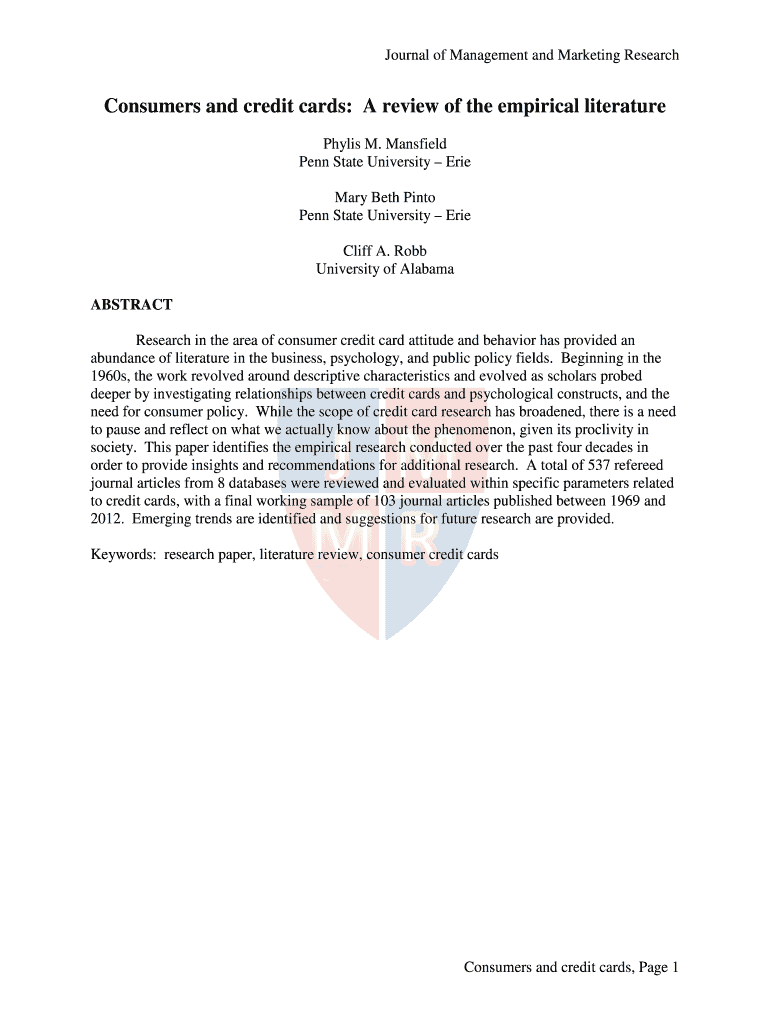
The primary focus of "Consumers and credit cards: A review of the empirical literature" is to provide an in-depth analysis of consumer attitudes and behaviors regarding credit cards. Authored by Phylis M. Mansfield, Mary Beth Pinto, and Cliff A. Robb, this review examines 103 relevant studies out of 537 scholarly articles published from 1969 to 2012. The literature articulates the evolution of consumer research, exploring trends from basic descriptive characteristics to complex psychological constructs and the implications of consumer policy.
Key Elements of the Literature Review
The literature review highlights several key elements, focusing on the behavior and demographics of credit card users:
- Demographic Trends: Analyzes how various demographic groups, particularly college students, use credit cards.
- Credit Card Usage Patterns: Explores how consumers' credit card usage has changed over time.
- Debt and Bankruptcy: Investigates the connection between credit card debt and personal bankruptcy rates.
- Psychological Constructs: Examines the psychological factors influencing consumer credit card behavior.
Steps to Complete a Literature Review
Completing a literature review involves several critical steps that ensure thorough and comprehensive coverage:
- Select Relevant Articles: Identify and select scholarly articles relevant to the research question, focusing on empirical studies.
- Analyze Content: Carefully analyze the selected articles to extract key findings and insights.
- Synthesize Information: Synthesize the information from various sources to form a coherent narrative.
- Highlight Trends: Identify and highlight trends, patterns, and gaps present in the literature.
- Conclude with Future Research: Suggest areas for future research to address identified gaps.
Important Terms Related to the Review
Understanding specific terms is crucial for interpreting the results and recommendations presented in the literature review:
- Empirical Literature: Research based on observed and measured phenomena, derived from actual data.
- Credit Card Debt: The total amount outstanding on the user's credit card that is yet to be paid.
- Consumer Policy: Regulations and directives influencing consumer rights and protections.
Who Typically Uses the Literature Review
This review is valuable for a diverse audience who seek to understand consumer behavior related to credit cards:
- Academics and Researchers: Use the review to inform further research or for educational purposes.
- Financial Analysts and Economists: Analyze trends to forecast consumer financial behaviors and market trends.
- Policy Makers: Consider implications raised in the review to influence consumer protection policies.
- Credit Card Companies: Utilize insights to tailor products and services to target demographics.


Examples of Using the Literature Review
The literature review has practical applications in several fields:
- In academia, professors could incorporate it into curriculum design for finance or economics courses.
- Financial institutions may leverage the insights to refine credit card offerings for college students.
- Consumer advocates might employ the findings to draft policy recommendations focused on reducing bankruptcy rates linked to credit card debt.
Trends in Credit Card Usage Among Demographics
Outlining trends among various demographic groups sheds light on how credit behaviors have shifted:
- College Students: High usage of credit cards with tendencies towards accumulating debt.
- Middle-Aged Consumers: Adopt more strategic borrowing behaviours, often prioritizing rewards and benefits.
- Senior Citizens: Trend towards conservative credit card use, focusing on essential purchases.
Future Research Opportunities
The review identifies potential areas for further exploration:
- Investigating the long-term effects of digital payment platforms on credit card usage.
- Analyzing post-2012 shifts in consumer behavior in response to economic changes.
- Exploring international comparisons on credit card usage to uncover global trends and patterns.