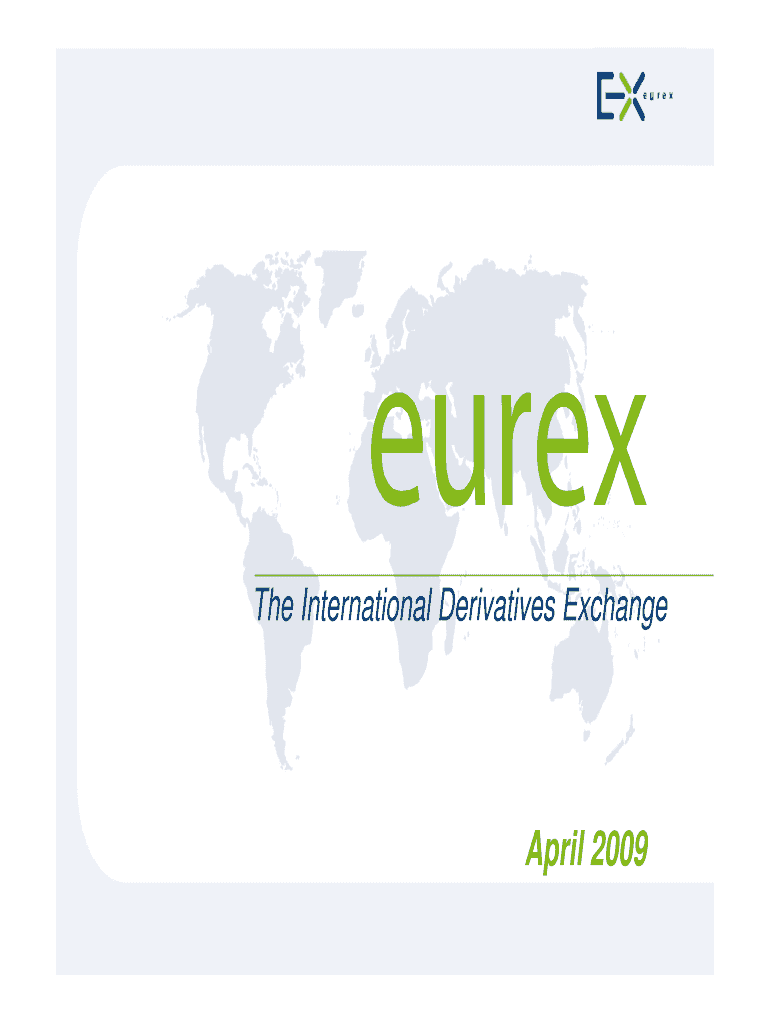







Definition and Meaning of The International Derivatives Exchange
The International Derivatives Exchange (often referred to as an IDE) plays a crucial role in global finance, serving as a marketplace where various types of derivative contracts are traded. These derivatives are financial instruments whose value is derived from an underlying asset, index, or rate. The exchanges facilitate the trading of products like futures, options, and other economic derivatives. Understanding the term involves recognizing its function as a platform for managing financial risks, optimizing investment portfolios, and hedging against price fluctuations.
How to Use The International Derivatives Exchange
When engaging with The International Derivatives Exchange, it is important to understand how to execute trades effectively. The process typically involves:
- Selecting Derivatives: Investors need to choose from a variety of derivatives, including fixed income, equity index, and commodity products.
- Market Participation: Traders access the exchange through brokers or electronically via dedicated platforms.
- Order Execution: Orders can be placed using market or limit orders, depending on the trader's strategy.
- Monitoring and Settlement: Traders must keep track of market trends and ensure proper settlement of contracts upon their expiry.
Steps to Complete Trades on the IDE
Successfully completing a trade on the IDE involves several key steps:
- Opening an Account: Investors must start by establishing a trading account with an authorized brokerage firm.
- Funding the Account: Depositing sufficient funds to meet margin requirements is necessary to cover potential losses.
- Executing Trades: Utilize trading instructions to buy or sell contracts based on market analysis.
- Managing Positions: Regularly review and adjust open positions to align with portfolio goals.
- Closing Contracts: Settle contracts at maturity or trade them actively, depending on the market conditions.
Key Elements of The International Derivatives Exchange
Key elements of The International Derivatives Exchange include:
- Derivatives Offered: A wide array of derivatives such as futures and options covering indices like Dow Jones EURO STOXX 50®.
- Trading Hours: Operations accommodate various time zones, facilitating global participation.
- Risk Management Tools: Mechanisms for hedging risks and leveraging positions to optimize returns.
Legal Use of the International Derivatives Exchange
Utilizing the IDE legally requires compliance with regulatory standards:
- Regulatory Oversight: Exchanges are supervised by financial authorities to ensure market integrity.
- Contract Specifications: Familiarity with terms and conditions specific to each derivative contract is crucial.
- Disclosure Requirements: Key information must be disclosed transparently to comply with legal and ethical standards.
Who Typically Uses The International Derivatives Exchange
The exchange attracts a diverse group of participants:
- Institutional Investors: Pension funds and hedge funds often engage in derivatives for strategic asset allocation.
- Retail Investors: Individuals seeking portfolio diversification and speculative opportunities.
- Corporations: Businesses hedge against commodity price risks or currency fluctuations.


Important Terms Related to The International Derivatives Exchange
Several critical terms are integral to understanding IDE activities:
- Futures Contract: An agreement to buy or sell an asset at a predetermined future date and price.
- Options Contract: Grants the holder the right, not the obligation, to buy or sell an asset.
- Margin: The funds required to open and maintain a position in a derivatives contract.
Software Compatibility and Digital Trading
Trading on the IDE is facilitated by software platforms for efficiency and ease of access:
- Trading Platforms: Compatible with various software solutions like TurboTax and QuickBooks for efficient trade execution and tax reporting.
- Real-Time Data: Users can access market data and analytics for informed decision-making.
- Security Features: Platforms incorporate robust security protocols to protect user transactions.
State-By-State Differences in IDE Participation
Participation in the IDE may vary by state due to regulatory frameworks:
- State Regulations: Each state may have unique rules governing derivatives trading and taxation.
- Tax Implications: Investors must be aware of state-specific tax obligations related to trading activity.
- Licensing Requirements: Brokers may require specific licenses to operate in certain states.
This in-depth coverage of The International Derivatives Exchange ensures comprehensive understanding and effective engagement for market participants.