
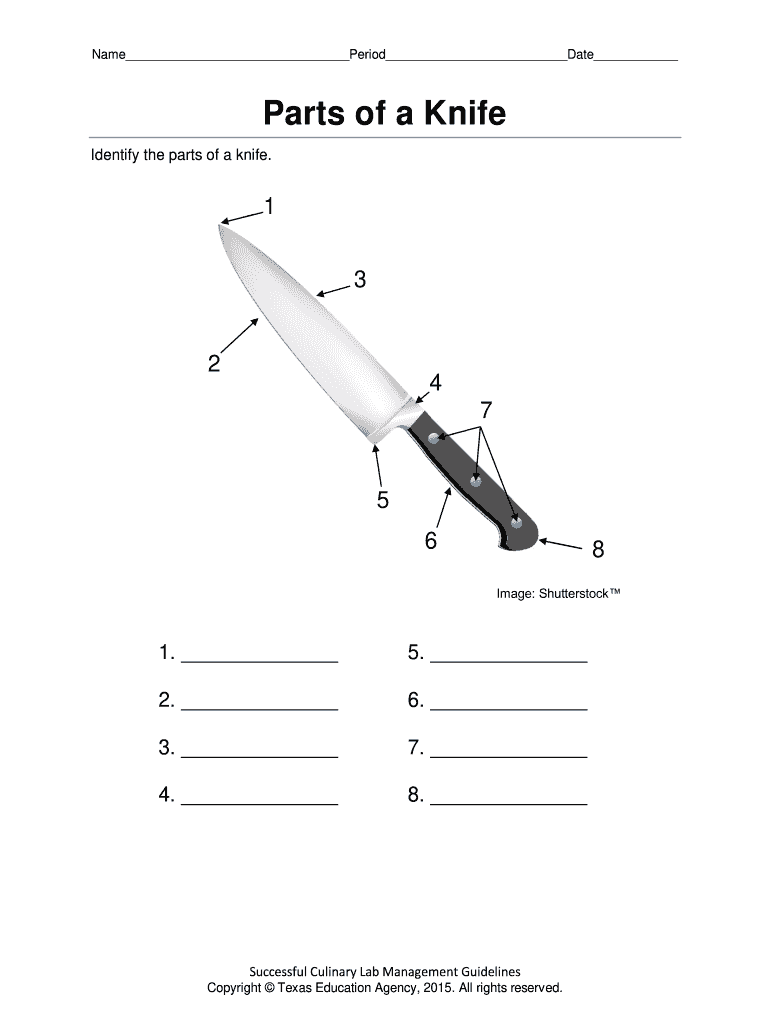







Understanding the Parts of a Knife
Different knives have distinct components that contribute to their functionality in culinary settings. Knowing these parts is crucial for anyone involved in hospitality and tourism education, especially in culinary labs.
Key Components of a Knife
The anatomy of a knife involves several essential parts, each serving a unique purpose:
-
Blade: The primary cutting surface, which can vary in length and thickness depending on the knife's intended use. For example, chef's knives typically have a broad blade, while paring knives feature a smaller, more precise blade.
-
Edge: The sharpened side of the blade that is used for cutting. Knife edges can be straight, serrated, or granton-style, with each type suited for different tasks like slicing bread or cutting vegetables.
-
Tip: The front part of the blade, which is used for piercing and detailed cutting. The tip's shape can vary, influencing the knife's performance in fine tasks.
-
Spine: The top, unsharpened side of the blade that provides strength and balance. A thicker spine generally indicates a sturdier knife, suitable for heavier tasks.
-
Heel: The rear part of the blade, designed for chopping and cutting with force. A robust heel helps in tougher tasks like cutting through thick vegetables.
Ergonomic Features of a Knife
In addition to basic components, ergonomic features enhance the user experience, making knife handling safer and more comfortable.
-
Handle: The part that is held to maneuver the knife. Handles can come in various materials like wood, plastic, or metal, affecting grip and comfort.
-
Bolster: The thick junction between the blade and the handle provides balance and safety by preventing the hand from slipping onto the blade.
-
Tang: The portion of the blade that extends into the handle. A full tang runs the entire length of the handle, offering better stability and weight distribution.
Practical Applications in Culinary Settings
Understanding the parts of knives is essential in culinary education. In a fully equipped kitchen, different knives with specific designs serve various purposes.
- Chef's Knife: Known for its versatility, features a broad blade for slicing, dicing, and chopping.
- Paring Knife: Ideal for intricate tasks like peeling and trimming, characterized by a small blade.
- Utility Knife: Useful for slicing through sandwiches or cutting cheese, offering mid-range functionality.
In practice, a well-rounded understanding of these components allows culinary students and professionals to select the appropriate knife for their tasks, enhancing efficiency and safety in the kitchen.
Safety and Maintenance
Proper handling of knives also entails safety and maintenance practices.
- Storage: Knives should be stored in a knife block, magnetic strip, or protective sheaths to prevent injuries and damage to the blade.
- Sharpening: Regularly sharpening the blade not only maintains the knife's performance but also ensures safe operation, as a dull knife requires more force, increasing the chance of slips.
Conclusion on Knife Knowledge in Culinary Education
While the benefits of understanding the parts of a knife may seem straightforward, they are foundational in culinary education and the larger hospitality and tourism context. Knowledge of these components, ergonomic features, and maintenance practices impacts both the effectiveness of culinary tasks and the overall safety of kitchen environments. Moreover, this expertise helps students and professionals appreciate the craft behind knife-making and selection, elevating their culinary skills.




