





Definition & Role of the Medical Courier Contract Carrier
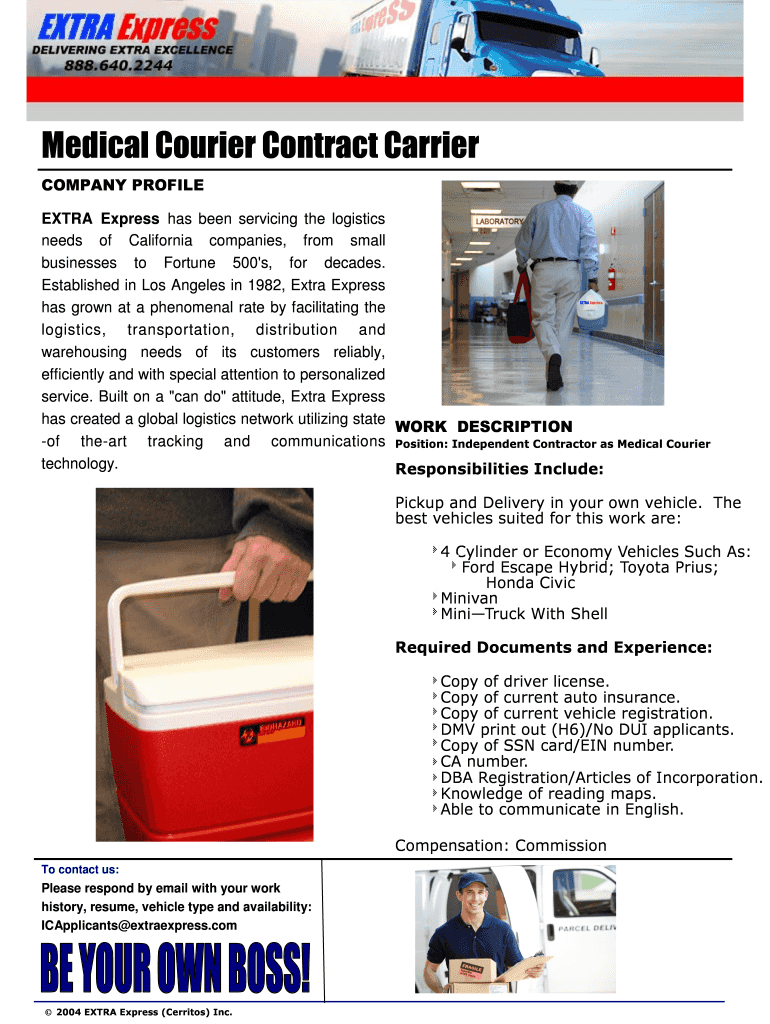
Medical Courier Contract Carriers play a crucial role in the healthcare logistics chain by ensuring the safe and timely transport of medical items, such as lab specimens, pharmaceuticals, and medical equipment. These carriers often operate independently as contract workers, partnering with medical labs, hospitals, and healthcare providers to facilitate transport logistics. Their role extends beyond mere transportation, as they adhere to stringent delivery timelines and regulatory compliance to ensure that deliveries meet health and safety standards.
Responsibilities
- Transport sensitive medical materials reliably and efficiently.
- Adhere to HIPAA and OSHA regulations for medical logistics.
- Maintain temperature control and handling instructions as needed.
- Provide real-time tracking and delivery updates to clients.
How to Use the Medical Courier Contract Carrier
Using the services of a Medical Courier Contract Carrier involves several key steps to ensure proper logistics management. Providers must first establish a partnership with a reliable courier firm or individual. In doing so, they should review the credibility and compliance history of the courier service.
Steps to Engage a Carrier
- Assessment of Needs: Determine the volume and frequency of the items needing transport.
- Partner Selection: Choose a courier with a strong reputation and track record.
- Agreement Formalization: Establish contract details, including delivery schedules and compliance requirements.
Required Documents for Medical Couriers
Medical couriers must prepare a series of documents as part of their operational and regulatory compliance. Proper documentation ensures accountability and compliance with legal standards in medical logistics.
Essential Documents
- Contractual Agreement: A formal contract defining roles, responsibilities, and service expectations.
- Insurance Proof: Liability insurance certificates to cover goods during transit.
- Certification of Compliance: Documents showing adherence to health and safety regulations.
Steps to Complete the Medical Courier Contract Carrier Agreement
Completing the contract carrier agreement involves a thorough understanding of contractual terms and compliance requirements. Negotiation of the contract terms is a critical step towards formalizing a reliable working relationship.
Procedural Steps
- Review Terms: Understand all stipulations within the contract, including responsibilities and limits.
- Negotiate Terms: Discuss operational specifics, such as delivery timelines and quality assurance.
- Finalize Contract: All parties sign the agreement, marking the start of the partnership.
Key Elements of the Medical Courier Contract Carrier
The contract carrier agreement is comprised of several pivotal elements, each critical to the transparent and effective delivery of services.
Contractual Components
- Scope of Work: A clear description of the services provided, such as delivery areas and volumes.
- Payment Terms: Agreement on rates, invoicing, and payment schedules.
- Confidentiality Clause: Protection of sensitive information as per HIPAA guidelines.
Legal Use of the Medical Courier Contract Carrier
Legal considerations in the use of contract carriers are critical to minimizing liabilities and ensuring compliance within the healthcare industry. This includes adherence to transport regulations and data protection laws.
Compliance Considerations
- Regulatory Adherence: Align operations with relevant federal and state healthcare transport regulations.
- Data Protection: Implement privacy measures to safeguard patient information.
- Risk Management: Assess and mitigate potential legal liabilities through risk assessments.
State-Specific Rules for Medical Courier Contract Carriers
State regulations may influence the way medical courier services operate. Understanding these differences is essential for ensuring compliance and maintaining operational integrity.
Regional Variations
- Licensing Requirements: Some states require specific licensing for medical transport.
- Transport Regulations: Varying rules on handling medical waste or controlled substances.
- Insurance Mandates: State-specific insurance requirements to certify business operations.
Collaboration Tools and Digital Version Benefits
The integration of digital tools significantly enhances the efficiency of transportation and logistics services provided by medical couriers. Digital platforms can streamline communications and facilitate seamless operational processes.
Advantages of Digital Platforms
- Real-time Tracking: Automatic monitoring and notifications for package deliveries.
- Data Integration: Simplified reporting through integrated software solutions.
- Secure Communication: Encrypted messaging to secure sensitive information transfers.
Who Issues the Medical Courier Contract Carrier Agreement
The contract carrier agreement is generally issued by the healthcare provider or associated logistics management professionals who require the courier services. This entity plays a pivotal role in outlining the terms and ensuring mutual understanding and agreement.
Issuer Responsibilities
- Drafting Agreements: Prepare comprehensive and legally accurate contract documents.
- Negotiation Facilitation: Mediate terms and conditions with potential carriers.
- Contract Management: Oversee the enforcement and updates of contractual terms during the service period.