






Definition & Meaning
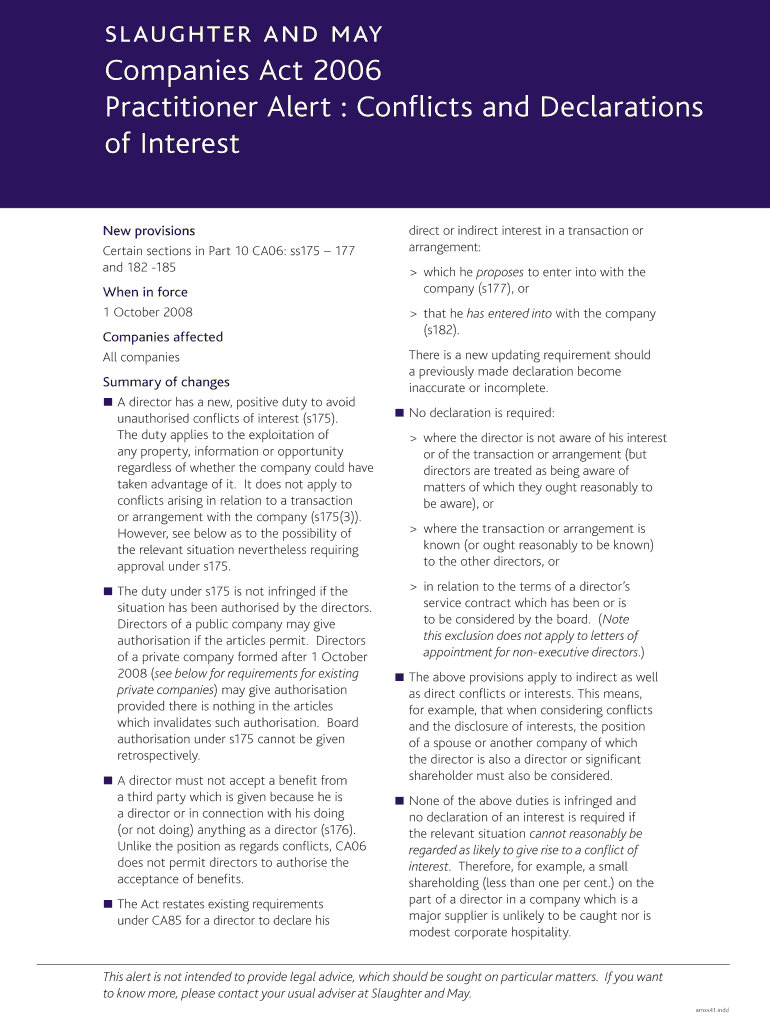
The form "Practitioner Alert: Conflicts and Declarations" is a formal document aimed at notifying directors and stakeholders about potential conflicts of interest and the requirement for declarations. This document aligns with regulations such as the Companies Act 2006 and is essential for ensuring that all parties involved are aware of their responsibilities regarding conflicts and the need for full transparency in business practices. This form plays a crucial role in maintaining ethical standards in corporate governance by enforcing a positive duty on directors to avoid and declare conflicts of interest. This ensures all business dealings are conducted fairly and transparently.
Key Elements of Practitioner Alert: Conflicts and Declarations
Within the "Practitioner Alert: Conflicts and Declarations," several key elements must be noted:
- Conflict Avoidance: Directors must actively avoid any unauthorized conflicts of interest.
- Declaration of Interests: There is a mandate for directors to declare any personal interests in transactions or situations involving the company.
- Authorization Conditions: The form specifies conditions under which conflicts may be authorized, ensuring legal compliance.
- Transitional Provisions: For existing situations, the form highlights transitional measures to align with new laws.
- Review and Management: The document emphasizes the necessity for ongoing review and management of potential conflicts to uphold corporate integrity.
Steps to Complete the Practitioner Alert: Conflicts and Declarations
Completing the "Practitioner Alert: Conflicts and Declarations" involves several precise steps:
- Identify Potential Conflicts: Review existing roles and relationships to identify any conflicts of interest.
- Document Interests: Accurately document all interests and potential conflicts in the prescribed section of the form.
- Seek Authorizations: If necessary, seek approval from the relevant corporate authority to manage any conflicts.
- Complete Required Sections: Fill in all mandatory fields, ensuring accuracy and completeness.
- Review and Sign: Review the completed form for errors before signing.
- Submit for Review: Submit the completed form to the designated authority for final review and approval.
- Maintain Records: Keep a record of the completed declaration for future reference and audits.
Why Use Practitioner Alert: Conflicts and Declarations
The use of the "Practitioner Alert: Conflicts and Declarations" is essential for several reasons:
- Compliance: It ensures compliance with legal requirements, such as the Companies Act 2006.
- Transparency: Facilitates transparency in business operations by making stakeholders aware of any potential conflicts.
- Risk Mitigation: Helps mitigate risks associated with conflicts of interest by requiring full disclosure and authorization.
- Corporate Responsibility: Encourages ethical standards and responsible governance within the organization.
Who Typically Uses the Practitioner Alert: Conflicts and Declarations
The form is generally used by:
- Corporate Directors: Who are responsible for declaring conflicts as part of their fiduciary duties.
- Company Officers: Who may manage and oversee the declaration process within the organization.
- Compliance Departments: Which ensure regulatory and legal adherence within corporate structures.
- Legal Advisors: Who provide guidance on the legal implications of declarations and conflicts.


Legal Use of the Practitioner Alert: Conflicts and Declarations
The legal use of this form is governed by corporate legislation such as the Companies Act 2006. It is an enforceable document that requires:
- Accurate Declaration: Legal obligations necessitate that all interests be declared, and conflicts be managed appropriately.
- Documentation: Proper documentation of all conflicts and resolutions is required for legal and audit purposes.
- Authorization Compliance: Authorizations must comply with legal standards to avoid penalties and ensure ethical governance.
Important Terms Related to Practitioner Alert: Conflicts and Declarations
- Conflict of Interest: Refers to situations where personal interests may influence professional duties.
- Declaration: The formal acknowledgment and public disclosure of conflicts.
- Authorization: The process of officially permitting a conflict under specific legal guidelines.
- Transitional Provisions: Temporary measures in place for adjusting to new regulations.
Penalties for Non-Compliance
Failure to comply with the "Practitioner Alert: Conflicts and Declarations" requirements can result in serious penalties:
- Fines: Financial penalties can be imposed on individuals or the organization for non-compliance.
- Reputational Damage: Negative publicity and loss of trust can affect the company’s public image and stakeholder relationships.
- Legal Action: Non-compliance may lead to legal proceedings against directors or companies that fail to manage conflicts properly.
- Operational Impact: Regulatory breaches can result in operational disruptions or additional compliance scrutiny.
Each of these blocks provides essential details relevant to understanding, completing, and complying with the "Practitioner Alert: Conflicts and Declarations." The content also covers the roles of individuals involved in its application, as well as potential consequences of non-compliance, ensuring comprehensive and practical guidance.