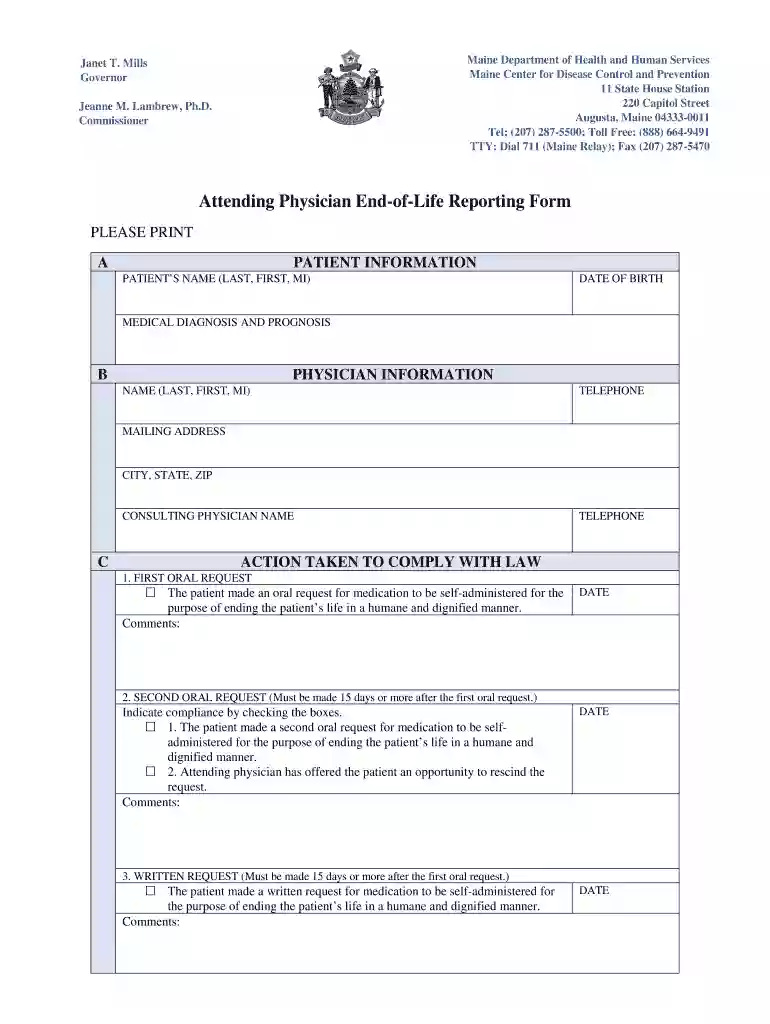
Attending Physician End-of-Life Reporting Form 2026

Get Form
Attending Physician End-of-Life Reporting Form Preview on Page 1

Here's how it works

01. Edit your form online
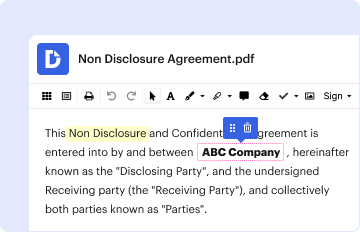
Type text, add images, blackout confidential details, add comments, highlights and more.

02. Sign it in a few clicks
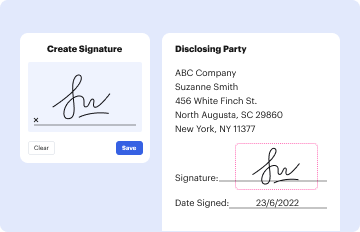
Draw your signature, type it, upload its image, or use your mobile device as a signature pad.

03. Share your form with others
Send it via email, link, or fax. You can also download it, export it or print it out.

Definition and Purpose of the Attending Physician End-of-Life Reporting Form

The Attending Physician End-of-Life Reporting Form is a crucial document used within the framework of the Death with Dignity Act, specifically by healthcare providers in states like Maine. It serves to document and ensure compliance with legal requirements when a physician assists a terminally ill patient who seeks life-ending medication. This form verifies that specific conditions and safeguards have been met, reflecting the physician's role and accountability in this sensitive process.

  • Intended Use: The form is designed to record patient requests for medications, verify informed consent, and confirm the completion of mandatory assessments, thus offering legal protection for both patients and physicians.
  • Context: This form is embedded within ethical and legal frameworks that prioritize patient autonomy and rigorous checks to prevent abuse.

Completing the Attending Physician End-of-Life Reporting Form

Filling out the Attending Physician End-of-Life Reporting Form requires adherence to structured protocols to ensure all legal and ethical guidelines are followed. Physicians must meticulously document and verify the information provided by the patient.

  1. Patient Information: Collect and confirm the patient’s personal details, including name, date of birth, and diagnosis.
  2. Informed Consent: Ensure the patient has been properly informed about their diagnosis, prognosis, and alternative care options, including pain management.
  3. Multiple Requests: Document multiple verbal and written requests from the patient for life-ending medication, verifying the persistence of the patient’s decision over time.
  4. Competency Assessments: Include evaluations confirming the patient's mental competence and ability to make informed decisions related to their end-of-life care.

Key Elements of the Form

The Attending Physician End-of-Life Reporting Form incorporates several critical components necessary for ensuring comprehensive care and compliance with legal stipulations.

  • Patient Requests: Required documentation of multiple requests for medication to establish voluntariness and consistency.
  • Mental Competency: Evaluations conducted by qualified healthcare professionals to ascertain the patient’s decision-making capacity.
  • Consent Verification: Detailed records of conversations with the patient about end-of-life options, risks, and potential outcomes.

Legal Use and Compliance

Legal compliance is of utmost importance when using the Attending Physician End-of-Life Reporting Form, ensuring adherence to state-specific regulations.

  • State Regulations: Different states may have variations in the Death with Dignity legislation, influencing how forms are filled or submitted.
  • Records and Audits: Documentation must be thorough to withstand legal scrutiny and potential audits by health departments.

Eligibility Criteria

Eligibility for completing this form is strictly regulated to prevent abuse and ensure that the patient’s wishes are respected legitimately.


  • Patient Conditions: The patient must be diagnosed with a terminal illness with a prognosis of six months or less to live and deemed mentally competent.
  • Physician Qualifications: Only licensed physicians trained in end-of-life care may complete this form, ensuring professional standards are met.
decoration image ratings of Dochub

How to Obtain the Form

Securing the Attending Physician End-of-Life Reporting Form typically involves navigating administrative channels within healthcare settings.

  • Healthcare Provider Channels: Most forms are available through the hospital’s administrative departments, hospice care facilities, or directly from the state health department's website.
  • State Health Departments: Physicians can often download the form directly from their state’s official health department portal.

Submission Methods and Deadlines

Submitting the Attending Physician End-of-Life Reporting Form involves specific processes to ensure timely and secure delivery.

  • Online Submission: Some states might allow electronic submissions via secure health portals.
  • Mail and In-person Delivery: Traditional methods that might involve mailing the form to designated state health offices are also commonly used.
  • Timelines: There are often specific deadlines by which the form needs to be submitted after the prescription is written, emphasizing prompt action to remain within legal boundaries.

Penalties for Non-Compliance

Failing to appropriately complete and submit the Attending Physician End-of-Life Reporting Form can have significant repercussions.

  • Legal Consequences: Non-compliance can result in criminal charges against the healthcare provider, legal action, or sanctions on their medical license.
  • Moral and Ethical Responsibility: Beyond legal penalties, there are ethical implications, particularly if improper handling leads to patient harm or a breach of community trust.

Software Compatibility

In the digital age, ensuring that forms like the Attending Physician End-of-Life Reporting Form are compatible with various document management systems is vital.

  • Document Platforms: Forms are often used alongside platforms like DocHub for seamless creation, editing, and secure document exchange.
  • Integration with EHR Systems: Compatibility with Electronic Health Records (EHR) systems ensures that information can be shared and stored efficiently without errors.

State-Specific Rules and Variations

Different states may impose unique requirements and modifications to the standard form, necessitating awareness of local law variations.

  • State Guidelines: Familiarize yourself with local regulations as they will affect how the form is completed and what additional documentation may be required.
  • Training and Resources: State health departments often provide education and resources to assist healthcare professionals in properly using the form.

This comprehensive coverage ensures that healthcare providers are fully informed about the necessary procedures and legal context surrounding the use of the Attending Physician End-of-Life Reporting Form.

See more Attending Physician End-of-Life Reporting Form versions

We've got more versions of the Attending Physician End-of-Life Reporting Form form. Select the right Attending Physician End-of-Life Reporting Form version from the list and start editing it straight away!
Versions Form popularity Fillable & printable
2019 4.8 Satisfied (276 Votes)
2019 4.4 Satisfied (56 Votes)
be ready to get more

Complete this form in 5 minutes or less

Get form

Got questions?

We have answers to the most popular questions from our customers. If you can't find an answer to your question, please contact us.
Contact us
An attending physician statement (APS) is a report by a physician, hospital, or medical facility that has treated, or is currently treating, a person seeking insurance. In traditional underwriting, an APS is one of the most frequently ordered additional sources of medical background information.
Physicians have a responsibility to help patients define their goals for end of life care and to respect patients preferences.
We identified 12 domains of physicians skills at providing end-of-life care: accessibility and continuity; team coordination and communication; communication with patients; patient education; inclusion and recognition of the family; competence; pain and symptom management; emotional support, personalization; attention
If you are being cared for at home or in a care home, your GP has overall responsibility for your care.
Once the decision to refer to hospice is made, the family physician typically continues to be the patients primary attending physician. The attending physician is expected to remain in charge of the patients care, write orders, see the patient for office visits, and complete and sign the death certificate.

Security and compliance

At DocHub, your data security is our priority. We follow HIPAA, SOC2, GDPR, and other standards, so you can work on your documents with confidence.

Learn more
ccpa2
pci-dss
gdpr-compliance
hipaa
soc-compliance
be ready to get more

Complete this form in 5 minutes or less

Get form