






Understanding Form MI-1040CR-7: The Home Heating Credit
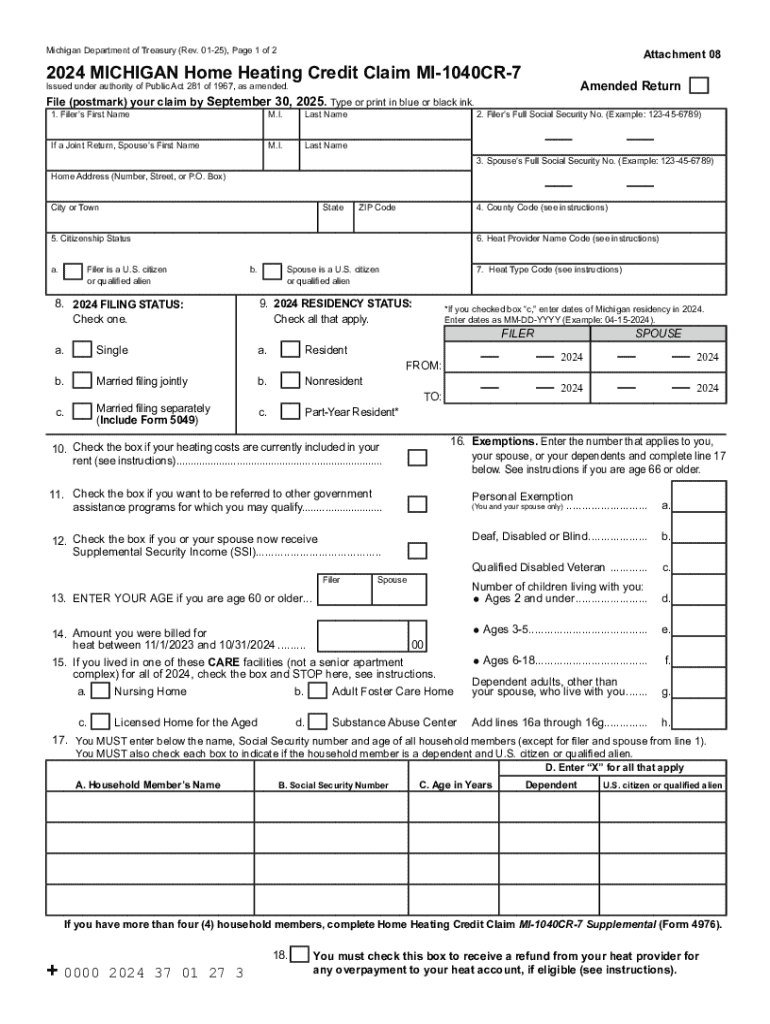
The Michigan Home Heating Credit Claim form, MI-1040CR-7, is designed to help eligible Michigan residents reduce their home heating costs. This credit applies to the current tax year, providing financial assistance for those struggling with energy expenses. It is important to complete the form accurately to ensure eligibility and prevent processing errors.
How to Use the E-file Home Heating Credit Form MI-1040CR-7
To efficiently use the e-file version of the MI-1040CR-7, follow these steps:
-
Gather Necessary Information: Ensure all personal and household information is up-to-date, including income details and heating costs.
-
Access the Form Online: Utilize a compatible digital document management platform to fill out the form directly. DocHub allows for seamless digital editing and submission.
-
Complete All Sections: Carefully fill out personal information, income details, and the specifics of heating expenses. Each section requires attention to detail to avoid errors.
-
Submit Electronically: Once complete, submit the form through the approved e-filing system for a quicker processing time compared to traditional mailing.
Eligibility Criteria for the Home Heating Credit
Not all Michigan residents qualify for this credit. Eligibility primarily depends on the following criteria:
-
Income Level: Your total household resources must fall within the established guidelines.
-
Residency Status: You must be a Michigan resident, and homeowners or renters may apply.
-
Household Composition: Details such as the number of dependents and household type might affect eligibility.


Required Documents for Filing
Accurate completion of the Home Heating Credit form requires specific documentation:
-
Proof of Income: W-2s, Social Security statements, and other income sources.
-
Utility Bills: Recent heating bills to demonstrate costs incurred.
-
Residency Proof: Documents such as a lease agreement or mortgage statement affirm your residency status.
Steps to Complete the MI-1040CR-7
Follow these comprehensive steps to accurately fill out the form:
-
Enter Personal Information: Include your name, Social Security number, and marital status.
-
Detail Heating Costs: Input exact amounts spent on heating over the year as reflected in your utility bills.
-
Calculate Credits: Use the form's worksheet to determine standard or alternative heating credits.
-
Review and Validate: Double-check information for accuracy to prevent errors that could delay processing.
-
Sign and Date: Ensure the form is signed by the applicant before submission.
E-filing Benefits for MI-1040CR-7
E-filing presents several advantages:
-
Faster Processing: Digital submissions are processed more quickly than paper forms.
-
Reduced Errors: Digital platforms often include validations to prevent common errors.
-
Convenience: Fill out and submit the form from any location with internet access.
Error Prevention While E-filing
Common errors can halt the processing of your credit claim. Mitigate them by:
-
Checking Details: Verify all entered data matches your supporting documents.
-
Using Compatible Software: Ensure the platform you use for e-filing supports MI-1040CR-7.
-
Reviewing Calculations: Double-check all math, especially relating to income and expenses.
Filing Deadlines and Important Dates
Mark these critical deadlines to ensure timely filing:
-
Standard Filing Deadline: File by September 30 of the following year to receive the credit.
-
Document Gathering: Start collecting required documents early in the year to avoid delays.
-
Amendments and Corrections: If needed, submit any corrected forms before the official deadline.
IRS Guidelines & State-Specific Rules
While the IRS does not directly govern the MI-1040CR-7, it is essential to adhere to both IRS guidelines and Michigan-specific tax rules:
-
Align Income Reporting: Ensure consistency between federal and state filings to avoid discrepancies.
-
Understand State Variations: Know that Michigan regulations may differ from federal guidelines.
-
Consult Tax Professionals: Consider consulting a tax professional familiar with Michigan tax laws for complex situations.
Software Compatibility for E-filing
Ensure that your software of choice, such as TurboTax or QuickBooks, is compatible with MI-1040CR-7. Confirm:
-
Platform Support: The software must support Michigan-based forms and include state taxes.
-
Integration Options: Look for platforms offering seamless integration for direct imports of necessary data.
-
Updates and Compliance: Ensure the software is updated for the current tax year standards and regulations.