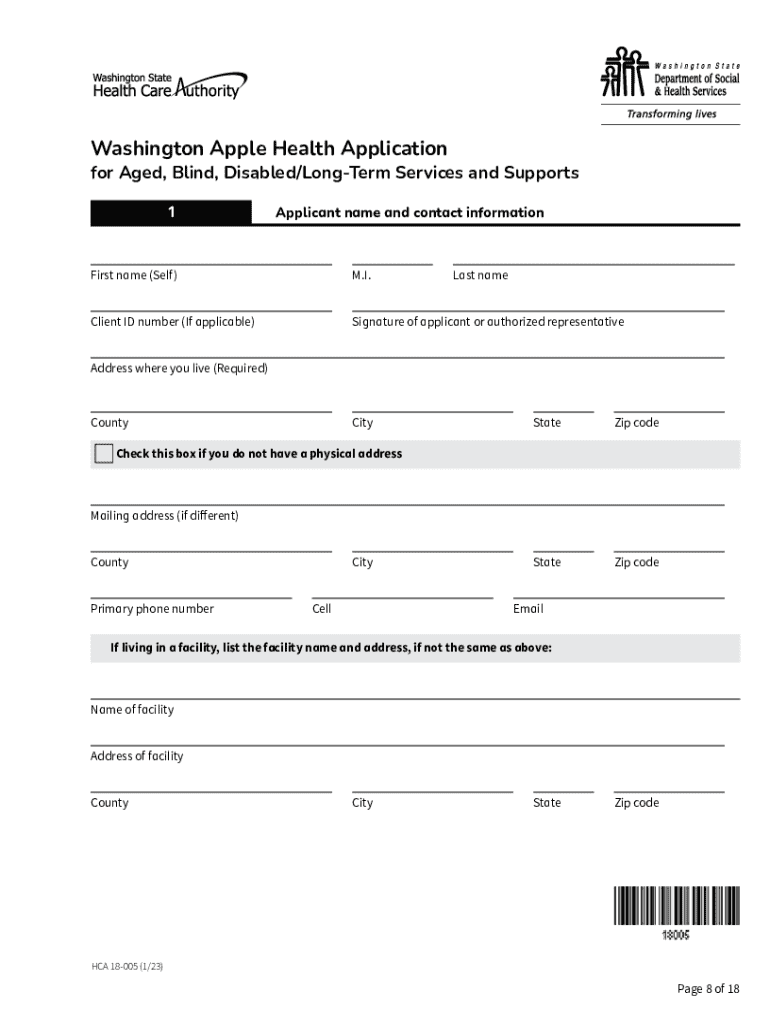







Definition & Purpose of the Application
The "Application for Aged, Blind, Disabled Long-Term Care Coverage" is designed to facilitate access to health care services for individuals who belong to vulnerable groups, including those who are aged, blind, disabled, or require long-term care. This application serves as a critical entry point to support services and health insurance coverage under programs like Medicaid and Medicare. Individuals looking to apply must demonstrate their needs and provide necessary documentation to ensure they qualify for benefits designed to meet their unique health care needs.
Key Features of the Application
- Eligibility Assessment: Evaluates whether applicants meet the criteria for receiving long-term care services.
- Comprehensive Coverage: Provides access to a range of health services tailored for aged, blind, or disabled individuals.
- Data Collection: Gathers essential information such as income, medical conditions, and personal data to process the application.
Eligibility Criteria
Eligibility for the application is based on a set of standardized criteria that help determine the applicant's qualification for long-term care coverage. These include:


Basic Eligibility Requirements
- Age: Applicants must fall within a specific age bracket, typically older adults who need additional support.
- Disability Status: Proof of permanent or substantial disability is required.
- Blindness: Certification from a qualified health professional regarding blindness.
Financial Criteria
- Income Limits: Income thresholds are established to ensure aid is directed to those most in need.
- Asset Evaluation: An assessment of personal assets to ascertain financial need.
How to Obtain the Application
Acquiring the application can be straightforward, with several options available to potential applicants.
Available Methods
- Online Resources: Downloadable forms from the official state health department's website.
- In-Person Visits: Available at designated health offices or centers providing public assistance services.
- Mail Requests: Many states allow for applications to be requested and delivered via postal service.
Steps to Complete the Application
Completing the "Application for Aged, Blind, Disabled Long-Term Care Coverage" requires detailed attention to ensure all necessary information is accurately provided.
Step-by-Step Instructions
- Personal Information: Fill in details like name, address, social security number, and contact information.
- Medical History: Provide documentation of any disabilities or conditions related to aging or blindness.
- Financial Disclosure: Submit complete financial information, including income statements and asset declarations.
- Verification Documents: Attach proof of identity and any medical certifications or reports needed.
Common Pitfalls
- Incomplete Information: Failure to provide all required data may lead to delays in processing or rejection.
- Inaccurate Financial Details: Misreported financial information can impact eligibility decisions.
Key Elements of the Application
The form encompasses several critical elements designed to comprehensively evaluate the applicant's need for care.
Main Sections
- Applicant Information: Personal data required to identify and assess the individual.
- Eligibility Declaration: Questions and statements to determine the applicant's condition and need.
- Third-Party Contributions: Any external financial support or health insurance must be disclosed.
State-Specific Rules
Different states may have variances in how they manage and process these applications. It's important to understand these distinctions to ensure compliance.
Examples of State Differences
- Income Thresholds: Some states may have higher or lower income limits.
- Cultural Competency: States might offer multilingual support and resources for diverse populations.
Required Documents
Certain documents are essential for successfully submitting the application.
Document Checklist
- Identification: Government-issued ID, such as a driver's license or passport.
- Medical Certification: Professional validation of any disabilities or conditions.
- Income Verification: Recent tax returns, pay stubs, or benefit statements.
Application Process & Approval Time
Processing the application involves several steps and can take varying amounts of time depending on workload and state guidelines.
Process Phases
- Initial Review: Examination of submitted materials for completeness and accuracy.
- Interview: In some cases, an in-person or telephone interview may be required to provide additional information.
- Decision Notification: Applicants will receive official communication regarding their application's outcome.
Timelines
- Standard Processing: Approval or denial typically communicated within 30 to 60 days.
- Expedited Processing: Available under specific conditions where urgent care is required.
By understanding these components, applicants can navigate the application process effectively, ensuring they receive the long-term care coverage necessary to meet their health needs.