
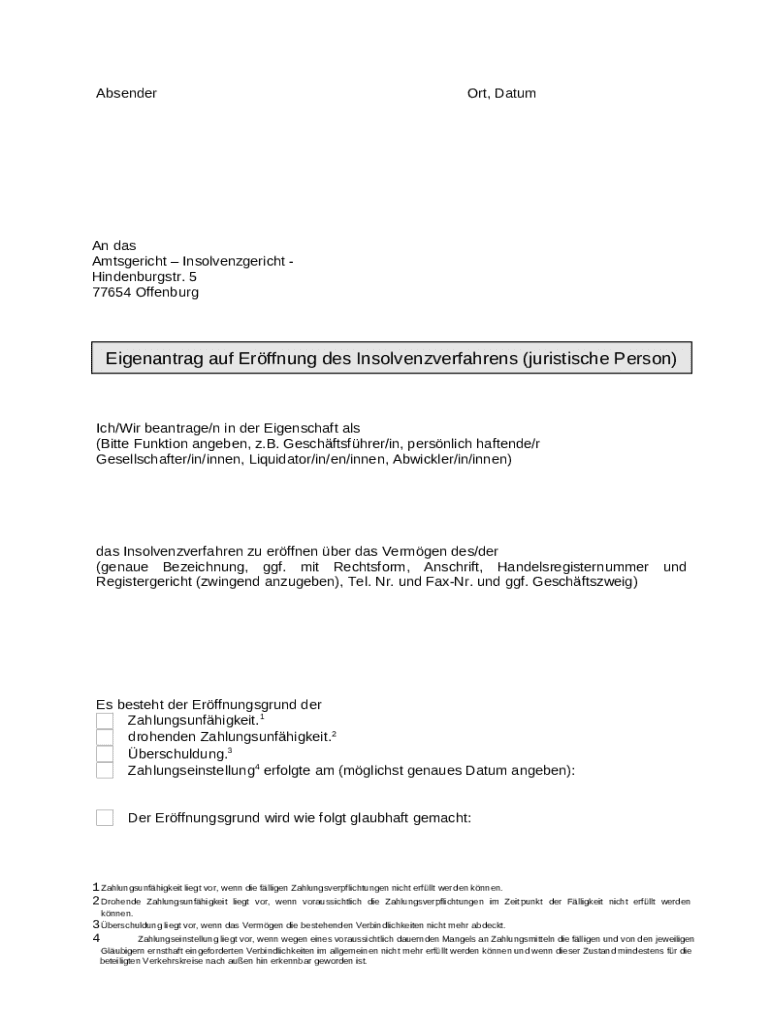







Definition and Meaning of Eigenantrag auf Eröffnung des Insolvenzverfahrens
The "Eigenantrag auf Eröffnung des Insolvenzverfahrens" is an application for initiating insolvency proceedings for a legal entity. This form is used to formally request the opening of insolvency proceedings in cases where a debtor is unable to meet their financial obligations. Typically, reasons for such a request include insolvency, imminent insolvency, or over-indebtedness. The document serves as a formal declaration by the debtor or their representatives of the financial difficulties faced, and it provides the necessary details required to examine the fiscal situation thoroughly, including assets, liabilities, and creditor information.
Key Elements of the Form
- Debtor Information: Includes detailed personal or business information to identify the applicant.
- Financial Details: Comprehensive evidence of the debtor's financial status, including assets and liabilities.
- Creditor List: A detailed list of all creditors, specifying the nature and amount of each debt.
- Over-indebtedness Evidence: Demonstrates the debtor's inability to pay debts when they are due.
Steps to Complete the Eigenantrag auf Eröffnung des Insolvenzverfahrens
Completing the Eigenantrag form involves a meticulous process to ensure all necessary information is accurately documented.
- Gather Financial Documents: Collect all financial records, including balance sheets, income statements, and lists of assets and liabilities.
- Compile Creditor Information: Document all creditor details, including names, addresses, and the amounts owed.
- Complete the Form Sections: Fill in each section carefully, ensuring accuracy and completeness.
- Review and Verify: Double-check all entered data to avoid discrepancies and potential delays in processing.
- Submit the Application: Depending on jurisdiction, submit the completed form via the specified method, whether online, by mail, or in person.
Important Considerations
- Legal Obligations: Ensuring the provision of truthful and comprehensive information is a legal requirement.
- Professional Assistance: In complex cases, consulting legal or financial professionals can ensure the application is correctly completed.
Reasons for Filing an Eigenantrag auf Eröffnung des Insolvenzverfahrens
Initiating insolvency proceedings through an Eigenantrag can be necessary under several circumstances:
- Prevention of Legal Action: It can potentially halt ongoing legal actions from creditors.
- Debt Restructuring: Allows for the possibility of reorganizing debts and creating a manageable repayment plan.
- Financial Transparency: Provides a documented and controlled approach to handle financial distress legally.
- Protection of Assets: Might offer some protective measures against asset seizure during the proceedings.
Who Typically Uses the Eigenantrag auf Eröffnung des Insolvenzverfahrens
The application is primarily used by:
- Business Entities: Such as corporations, partnerships, or limited liability companies experiencing financial difficulties.
- Insolvent Individuals: Financially distressed individuals looking to legally manage their debt scenarios.
- Creditors and Insolvency Practitioners: Those who must ensure the proceedings are carried out.


Legal Use of the Eigenantrag auf Eröffnung des Insolvenzverfahrens
This form serves as a legal instrument under insolvency law to declare financial insolvency and initiate the judicial examination:
- Court Procedure: Commences the formal court procedure for reviewing the application and deciding on the opening of insolvency proceedings.
- Judicial Decision: Leads to a formal decision from the court, which may necessitate further actions.
Compliance Requirements
- Accurate Information: Ensures compliance with legal requirements for filing.
- Authorization: Must be signed and submitted by authorized representatives to validate the application.
Key Terms Related to Eigenantrag auf Eröffnung des Insolvenzverfahrens
Understanding these key terms is crucial:
- Insolvency: The inability to pay debts as they come due.
- Creditor: A person or entity to whom the debtor owes money.
- Over-indebtedness: A state where debts exceed assets.
- Insolvency Proceedings: Legal processes addressing debt issues.
Required Documents for Filing an Eigenantrag
A thorough list of documents can ease the filing process:
- Financial Statements: Latest balance sheets and profit and loss statements.
- Creditor Lists: Comprehensive list of creditors with account details.
- Debt Inventory: Classification of all outstanding debts.
- Asset Documentation: Proof of ownership and valuation of assets.
Form Submission Methods
The form can be submitted through various channels, depending on jurisdictional requirements:
- Online Submission: Via legal or financial portals that allow electronic filing.
- Mail Submission: Sending physical documents through registered postal service.
- In-Person Filing: Direct submission at local insolvency courts or offices.
Penalties for Non-Compliance
Failure to adhere to insolvency filing requirements could lead to penalties:
- Legal Consequences: Potential for fines or legal action for inaccurate or false information.
- Delayed Proceedings: Can cause delays or complications in the insolvency process.
State-Specific Rules for Eigenantrag auf Eröffnung des Insolvenzverfahrens
Different states might have unique rules and regulations:
- Variance in Court Procedures: Rules may differ on how proceedings are initiated and managed.
- Specific Requirements for Documentation: Additional documents might be required based on local insistences.
It is essential to verify the state-specific guidelines to ensure compliance and accuracy when filing the Eigenantrag form.




