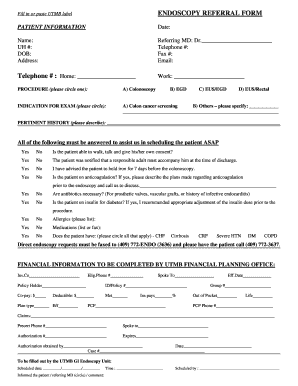
Gen215b form 2026

Get Form
gen215b Preview on Page 1

Here's how it works

01. Edit your gen215b online
Type text, add images, blackout confidential details, add comments, highlights and more.
02. Sign it in a few clicks
Draw your signature, type it, upload its image, or use your mobile device as a signature pad.
03. Share your form with others
Send gen215b form via email, link, or fax. You can also download it, export it or print it out.

How to use or fill out gen215b form with our platform

Form edit decoration
9.5
Ease of Setup
DocHub User Ratings on G2
9.0
Ease of Use
DocHub User Ratings on G2
  1. Click ‘Get Form’ to open the gen215b form in the editor.
  2. Begin with Part A, which must be completed in all cases. Fill in the Annual Test year, Public Water Supply details, and the Name & Address of the Facility.
  3. Next, provide the Location of Device, Block, Lot, Manufacturer & Model of Device, and Size & Serial # of Device.
  4. Move to Part B for certified testers. Document test results for Check Valve No. 1 and No. 2, including pressure readings and any repairs made.
  5. In Part C, if applicable, have a Professional Engineer or Registered Architect certify the installation by filling in their details and approval number.
  6. Finally, complete Part D by having a Licensed Master Plumber sign off on the form with their information and required seals.

Start using our platform today to easily fill out your gen215b form online for free!

See more gen215b form versions

We've got more versions of the gen215b form form. Select the right gen215b form version from the list and start editing it straight away!
Versions Form popularity Fillable & printable
2019 4.9 Satisfied (42 Votes)
2018 4.3 Satisfied (64 Votes)
2008 4.2 Satisfied (53 Votes)
be ready to get more

Complete this form in 5 minutes or less

Get form

Got questions?

We have answers to the most popular questions from our customers. If you can't find an answer to your question, please contact us.
Contact us

With DocHub, it’s quite simple. The service offers users an add-on called DocHub for Gmail, which you can locate in the Google Workspace Marketplace free of charge. Install it and give it access to your Google account. Open your email with your gen 215b attached and click on the add-on button in the right-side panel. Sign in to your DocHub account, and upload the form to our editor, where you can complete it and sign.

You can easily complete, edit, and even eSign your gen 215 form using DocHub. Create a new profile and start your free trial. After that, you can add the file with the form and simply make all the required edits. No need to print on paper or use a third-party application to sign it, as you can place your electronic signature on your document faster through DocHub.

Understand that it is necessary to a backflow preventer in any situation where incoming water and wastewater have a chance of being cross-connected. This serves to protect you and your home, keeping your drinking, bathing, and cleaning water safe.
First, in most places, local laws will actually require that you use a licensed plumber with a backflow certification to your backflow preventer. In addition, its a more complicated task than it looks like, and installing one the wrong way could contaminate your clean water supply.
The average cost for installing or replacing a residential backflow preventer typically ranges around $300. This amount can vary based on factors such as location, type of device, and plumbing complexity.

Security and compliance

At DocHub, your data security is our priority. We follow HIPAA, SOC2, GDPR, and other standards, so you can work on your documents with confidence.

Learn more
ccpa2
pci-dss
gdpr-compliance
hipaa
soc-compliance

People also ask

The average cost of sewer backflow preventer installation is $150 to $450, with a national average of $350. Budget for annual backflow testing and maintenance. The type of backflow preventer and where you it are the most impactful cost factors.
The cost to a backflow preventer typically ranges from $130 to $1,200, with many homeowners averaging around $300. This investment ensures that your water system complies with local regulations and prevents potential health hazards.

Related links