
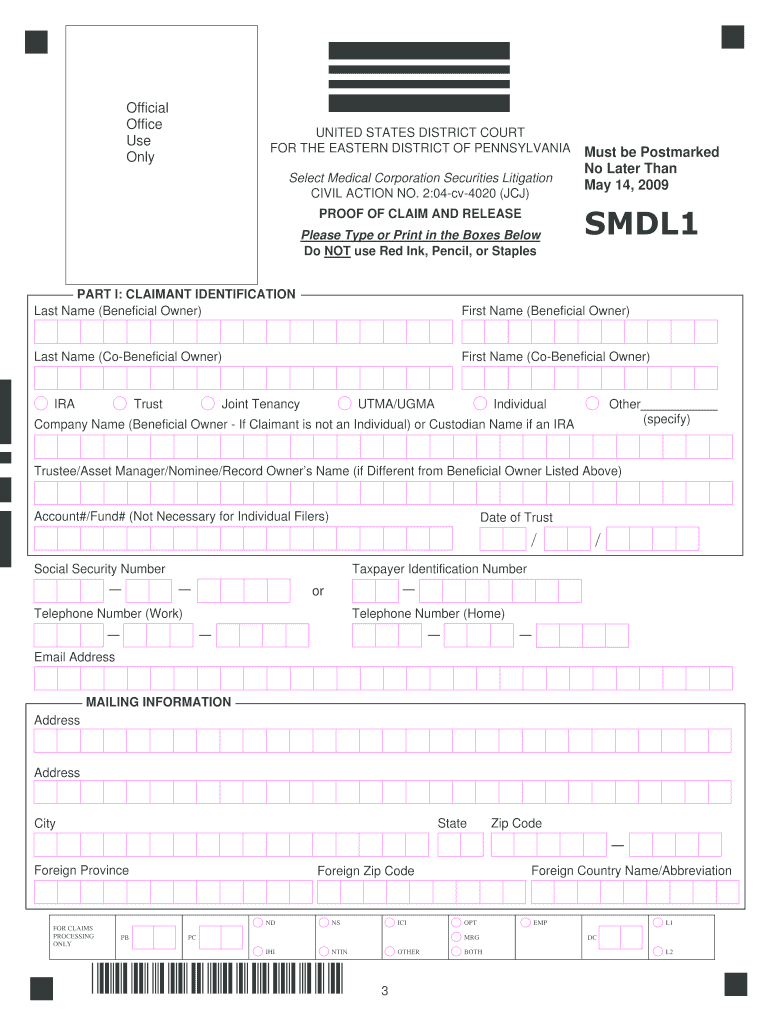







Definition and Meaning of Proof of Claim and Release
A Proof of Claim and Release form is a legal document used primarily in class action lawsuits, where individuals assert their right to receive a portion of a settlement. This form serves multiple purposes. It confirms the claimant's status as a class member eligible for compensation and releases the settling defendant from any further legal liability concerning the claims addressed in the lawsuit. Essentially, it is a critical bridge between the claimant and their share of the settlement, solidifying the legal transaction.
Understanding this form involves recognizing its dual function as both a claim mechanism and a legal release. The claimant declares their entitlement to the settlement under the specified conditions of the class action, often in response to a notice provided by a settlement administrator. The release portion legally binds the claimant not to pursue additional claims related to the same dispute against the settling defendants.
How to Use the Proof of Claim and Release
Utilizing the Proof of Claim and Release form involves specific steps that must be followed carefully to ensure successful submission. Here are the basic steps involved:
-
Receive Notice: As a potential class member, you will receive a notice indicating your eligibility to submit a proof of claim. This typically comes from the Claims Administrator.
-
Review Documentation: Thoroughly review the legal notice and documentation to understand your rights, responsibilities, and the specifics of the settlement.
-
Fill Out the Form: Complete the form with accurate personal and claim-related information. This often includes details such as the number of shares or financial interest affected by the lawsuit.
-
Attach Supporting Documents: Gather any required documentation that supports your claim, such as purchase confirmations or transaction records.
-
Submit Before Deadline: Ensure that the completed form and any supporting documents are submitted before the filing deadline. Late submissions are typically not accepted, negating your claim to the settlement.
The form requires precision and honesty in its completion, as any discrepancies could lead to a denial of the claim or a legal challenge.
Steps to Complete the Proof of Claim and Release
Filling out the Proof of Claim and Release form demands attention to detail. Here's a step-by-step breakdown:
-
Personal Information: Enter basic details such as name, address, and contact information to identify yourself as the claimant.
-
Transaction Details: Provide specifics about your transactions that pertain to the lawsuit. This may involve inputting dates, types of transactions, and quantities.
-
Certification and Signature: Certify the truthfulness of the information provided and sign the form. This legally affirms your claim and the release terms.
-
Supplementary Details: Depending on the complexity of the case, you may need to provide additional information or explanations. Follow any explicit instructions included with the form.
-
Attach Documents: Enclose copies of required documents like transaction records to verify your claim. Ensure all attached documents are clear and legible.
-
Final Review: Double-check all entries for accuracy and completeness. Mistakes or omissions can delay your claim processing.
-
Submit: Send the completed form and documents as instructed, typically to the address specified on the form or via an online portal.
Filing Deadlines and Important Dates
Meeting prescribed deadlines is crucial when dealing with the Proof of Claim and Release process:
-
Filing Deadline: The specific deadline for claim submission is typically highlighted in the legal notice. Missing this deadline disqualifies you from receiving a settlement. Mark the date on your calendar and aim to submit well in advance.
-
Other Critical Dates: Pay attention to any dates related to hearings, appeals, or correspondence deadlines with the Claims Administrator.
Failure to comply with these dates may result in forfeiture of rights, requiring vigilant tracking of all relevant timelines.
Required Documents for Claim Submission
The effectiveness of your Proof of Claim and Release relies heavily on the supporting documents:
-
Transaction Records: Provide evidence of purchases or financial interest related to the lawsuit. Ensure these are accurate and within the specified date range.
-
Identification: Some cases may require identification documents to verify your identity.
-
Certification of Loss: In financial cases, a statement certifying your incurred loss and how it relates to the lawsuit.
Prepare these documents ahead of time, ensuring they are organized and readily available for submission.
Who Typically Uses the Proof of Claim and Release
The Proof of Claim and Release form is most commonly used by:
-
Class Members: Individuals who have been notified as part of a defined group eligible under a class action lawsuit.
-
Investors: Shareholders in a company that is part of a class action due to securities fraud or other related issues.
-
Consumers: Individuals affected by product defects or false advertising in a collective lawsuit seeking redress.
Understanding your role and eligibility as a claimant is fundamental to effectively utilizing this form.


Legal Use and Importance of the Proof of Claim and Release
This form serves as both a legal instrument and a key step in class action participation:
-
Legal Reliability: Once signed, the release aspect legally frees the defendant from further lawsuits on the settled matter, ensuring closure for the defendant.
-
Claimant Protection: Protects claimants by ensuring their settlement eligibility is recognized legally.
Legal adherence in the completion and submission of the form is vital to uphold its enforceability and the integrity of the settlement process.
Form Submission Methods
Several options exist for submitting the Proof of Claim and Release:
-
Online Submission: Many claim forms allow for online completion and submission, providing convenience and speed.
-
Mail Submission: Traditional mail remains an option, requiring forms and documents to be postmarked by the deadline.
-
In-Person Submission: Though less common, some cases may allow for or require physical delivery to an office or Claims Administrator directly.
Choosing the right submission method depends on personal preference, accessibility to technology, and convenience in ensuring the deadline is met.




