






Definition and Meaning
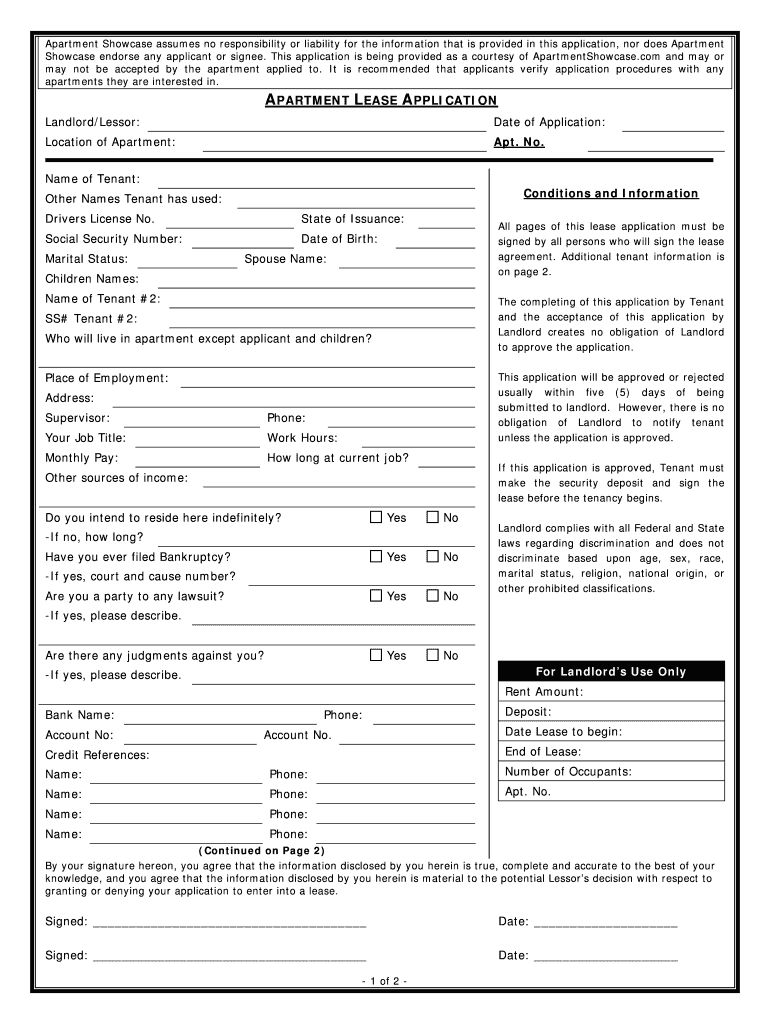
An "Apartment Lease Application" is a formal document used by landlords or property managers to evaluate potential renters. It serves as a comprehensive tool that helps property owners gather pertinent information from applicants to assess their qualifications for leasing an apartment. By completing this form, applicants provide personal details, consent for background and credit checks, and other essential information that assists in making an informed leasing decision. This document is an initial step in the rental process, and although completing it does not guarantee apartment approval, it allows landlords to review and choose qualified tenants.
Key Components of the Application
- Personal Information: Includes applicant's name, contact details, and Social Security number for identification and verification purposes.
- Rental History: Information on previous residences and landlords to evaluate renting patterns and reliability.
- Employment Details: Current job title, employer, and salary to assess financial capability.
- Consent for Credit Check: Authorizes the landlord to examine credit scores and history.
- References: Personal or professional contacts who can vouch for the applicant's character or financial reliability.
Practical Example
Imagine you are a potential tenant looking for an apartment. Filling out an application helps the landlord verify you are a reliable renter by providing your history, employment details, and permission to check your credit. This process reduces risks for the property owner and improves your chances of securing the lease if you meet their criteria.
Steps to Complete the Apartment Lease Application
Completing an apartment lease application is straightforward yet requires careful attention to detail. Following these steps can streamline the process:
-
Gather Required Documents: Before starting the application, collect necessary documents such as identification, proof of income, rental history, and references. This preparation ensures a smooth application process.
-
Complete Personal Details: Fill in your full name, contact information, and Social Security number accurately. Errors in this section could delay the processing of your application.
-
Provide Rental History: Accurately list your previous addresses and landlord contact information. Be prepared to discuss your rental history in further detail during a potential interview.
-
Enter Employment Information: Provide your employer's name, your role, salary, and length of employment. This section helps landlords gauge your ability to afford rent consistently.
-
Sign Consent for Credit and Background Checks: Review the consent section carefully and understand that this authorizes the landlord to run these checks as part of the approval process.
-
Submit References: Provide contact information for references who can verify your reliability and character.
Tips for Success
- Double-check your details: Ensure all provided information is accurate and current to avoid any miscommunication.
- Be honest: Transparency in reporting financial and rental history builds trust with landlords.
Required Documents
To support the information provided in an apartment lease application, applicants typically need to submit several documents. The following are common requirements:
-
Proof of Identity: A government-issued ID such as a driver's license or passport to verify the applicant's identity.
-
Income Verification: Recent pay stubs, tax returns, or a letter from an employer to confirm the applicant's salary.
-
Rental History Documentation: We may require rental agreements or letters from previous landlords to substantiate the applicant's rental history.
-
Credit Report: Although landlords often conduct their checks, some applications might require a recent credit report.
-
References: Professional or personal reference letters about the applicant's character or reliability.
Practical Scenario
An applicant with a stable job and positive rental history would provide three months of pay stubs, a reference letter from the previous landlord, and a driver's license. This documentation will support the leasing application and potentially expedite the approval process.
Legal Use of the Apartment Lease Application
The apartment lease application serves several legal functions that protect both landlords and tenants. Understanding these legalities can inform better decision-making for both parties.
Landlord Protections
-
Tenant Screening: Allows landlords to evaluate potential tenants' financial and rental backgrounds, minimizing the risk of future rental issues.
-
Legal Documentation: The signatures and consent provided in the application form establish a legal basis for conducting background checks, protecting landlords from potential legal disputes over privacy violations.
Tenant Rights
-
Non-Discrimination: Applications must comply with Fair Housing Laws, ensuring that applicants are not discriminated against based on race, gender, age, etc.
-
Data Protection: Personal information collected must be handled in compliance with data protection laws, safeguarding applicant privacy.
Case Study
Consider a scenario where a landlord uses credit history to determine tenant eligibility but applies this standard equally to all applicants. This consistent use of criteria ensures legality and compliance with discrimination laws.
Key Elements of the Apartment Lease Application
A successful apartment lease application includes several vital components that collectively present a comprehensive profile of the applicant.
Personal and Contact Information
Collecting basic personal and contact information is critical for identification and further communication.
Employment and Income Details
Information on employment status and income provides insight into the applicant's ability to meet rent obligations regularly.
Credit and Background Checks
Consenting to these checks allows landlords to assess financial reliability and potential risks associated with the applicant’s background.
Previous Rental History
Detailing past rental experiences helps landlords evaluate the applicant's responsibility and stability as a tenant.
Authenticated Signatures
Securely signing the application verifies the applicant's consent to the terms outlined, transforming the document into a binding agreement.
How to Obtain the Apartment Lease Application
Potential tenants must be proactive to obtain an apartment lease application. The following methods are common ways to acquire one:
Contact Property Managers
Directly contacting the property manager or leasing office is typically the most straightforward way to receive an application. Many offices offer the form in person, via mail, or electronically.
Visit Real Estate Websites
Several real estate and property management websites allow potential renters to download applications directly online. Alternatively, the platform may facilitate in-line applications.
Attend Open House Events
During property viewings or open house events, real estate professionals often distribute lease applications. These events can also provide opportunities to ask detailed questions about the process directly.
Example Scenario
A college graduate looking for their first apartment might visit several listings on a popular real estate website, contact property managers directly, and download a few applications from different properties.
Important Terms Related to Apartment Lease Application
Understanding critical terminology enhances comprehension of the application form and the renting process, particularly for first-time renters.
Lease Terms
Refers to the specific conditions and duration agreed upon by both landlord and tenant, detailing responsibilities and rights.
Security Deposit
The amount of money paid upfront to cover potential damages, typically refundable at the end of the lease if no damage is found.
Credit Score
Numerical representation of the applicant's creditworthiness, heavily influencing application approval.
Co-Signer
An individual who agrees to share financial responsibility, potentially improving the applicant’s approval chances if their credit or income is insufficient.
Eviction History
Records of past evictions can significantly impact application outcomes, necessitating clarity and explanation if applicable.
State-Specific Rules for the Apartment Lease Application
Each state in the U.S. may impose different regulations on rental applications, affecting both lease terms and the application process.
Security Deposit Regulations
Some states regulate the maximum allowable security deposit amount, affecting the financial burden on renters.
Screening Criteria
States may have guidelines on what criteria landlords can use, ensuring fairness throughout the application process.
General Timeline Regulations
Certain states mandate response times for application approvals or denials, helping tenants manage expectations.
Disclosure Requirements
Landlords often need to inform applicants about specific property conditions, such as the presence of radon gas or other hazards and infestations, which vary by state.
Case Example
In California, landlords can charge equivalent to two months' rent as a security deposit for unfurnished apartments. Yet, this number may significantly differ in another state, such as Texas, where the amount is unregulated.
Taking these state variations into account helps applicants prepare and understand the expectations for their specific geographic area.