
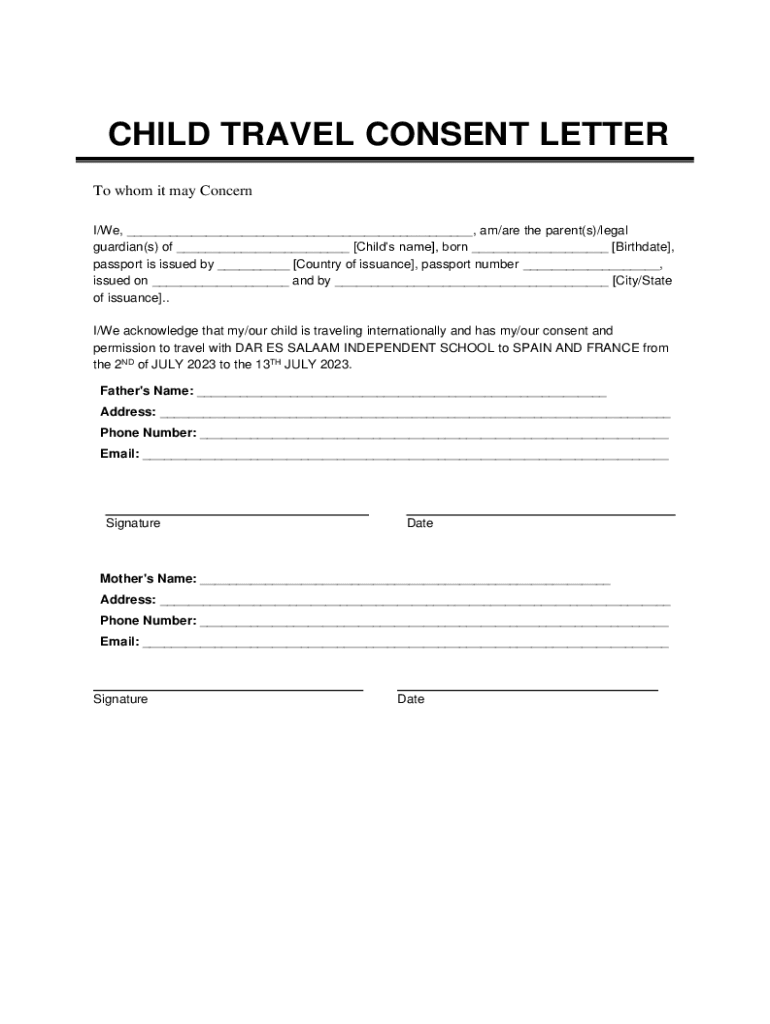







Definition & Meaning
A Child Travel Consent Letter is a formal document that grants permission for a minor child to travel without one or both of their legal guardians. It includes the consent of parents or guardians, the details of the travel itinerary, and necessary personal information about the child and guardians. This letter is crucial for ensuring that a child travels internationally with appropriate authorization, typically involving school trips, family vacations, or cultural exchanges. In the case of international travel, this document helps satisfy legal requirements and assures authorities that the journey is authorized.
How to Use the Child Travel Consent Letter
To utilize the Child Travel Consent Letter effectively, the document must be prepared accurately and signed by the parent or guardian who is not accompanying the child. This letter is presented to airlines or border authorities as proof of consent. The process involves:
- Filling out the child's full name, age, and passport details.
- Including the full names and contact information of the guardians.
- Stating the travel dates, destinations, and the purpose of travel.
- Ensuring the presence of both the written consent and the signatures of both guardians, even if only one is traveling with the child.
Steps to Complete the Child Travel Consent Letter
Completing the Child Travel Consent Letter involves the following steps:
- Gather Information: Collect personal details of the child and parents, travel itinerary, and information about who will accompany the child.
- Draft the Document: Use clear language to outline travel specifics and guardians’ consent.
- Review Legal Requirements: Understand jurisdiction-specific requirements for the document’s validity.
- Signatures: Obtain signatures from the parental guardians listed on the letter.
- Notarization: In some cases, notarization is recommended or required to ensure the letter's legal standing.
- Copies: Create multiple copies for the child to carry and for your own records.
Key Elements of the Child Travel Consent Letter
Important components of the Child Travel Consent Letter include:
- Name and Age of the Minor: Details such as age, date of birth, and passport number.
- Travel Information: Destination(s), travel dates, and the name of the accompanying individual or organization.
- Parental Consent: Full names and contact information of the consenting guardians, along with their signatures.
- Health and Safety Details: Optional emergency contact information and medical insurance details.
- Legal and Notarization Clauses: If applicable, a statement acknowledging the document's legal purpose, supplemented by notarization.
Legal Use of the Child Travel Consent Letter in the U.S.
In the United States, the Child Travel Consent Letter is used to assure that international travel conducted with a minor is consensual and fully authorized by the appropriate guardians. This document is often required by airline companies, travel agencies, and border controls to prevent child abduction or unauthorized travel. U.S. law enforcement officials may request this document for verification during transit. The ESIGN Act governs the use of electronic signatures in securing this consent, ensuring that e-signed documents are legally valid.
Who Typically Uses the Child Travel Consent Letter
The Child Travel Consent Letter is typically used by:
- Parents and Legal Guardians: When their child is traveling with only one parent, a relative, or unaccompanied.
- Educational Institutions: Schools arranging international trips for educational purposes.
- Travel Agents and Group Tour Leaders: Facilitating smoother processing of minors traveling abroad.
- Airlines and Transportation Authorities: Verifying consent when minors are boarding flights or crossing borders.


Why Should You Use a Child Travel Consent Letter
The necessity of using a Child Travel Consent Letter stems from:
- Legal Requirements: Meeting international travel laws and regulations for minors.
- Safety Assurance: Protecting children by documenting authorized consent.
- Abduction Prevention: Offering proof of consent helps deter unauthorized travel or abductions.
- Travel Ease: Eases travel bureaucracy at airports and border control points when traveling with children.
Examples of Using the Child Travel Consent Letter
Consider a scenario where a child is participating in a school trip to France. The school would require a Child Travel Consent Letter signed by both parents to proceed. Alternatively, if a child is traveling to visit grandparents abroad with only one parent, the accompanying parent should carry a consent letter from the non-traveling parent to handle any inquiries efficiently at customs or border checks. These proactive measures facilitate smooth travel experiences for minors, reducing stress for caregivers and travel authorities alike.




