






Definition and Meaning
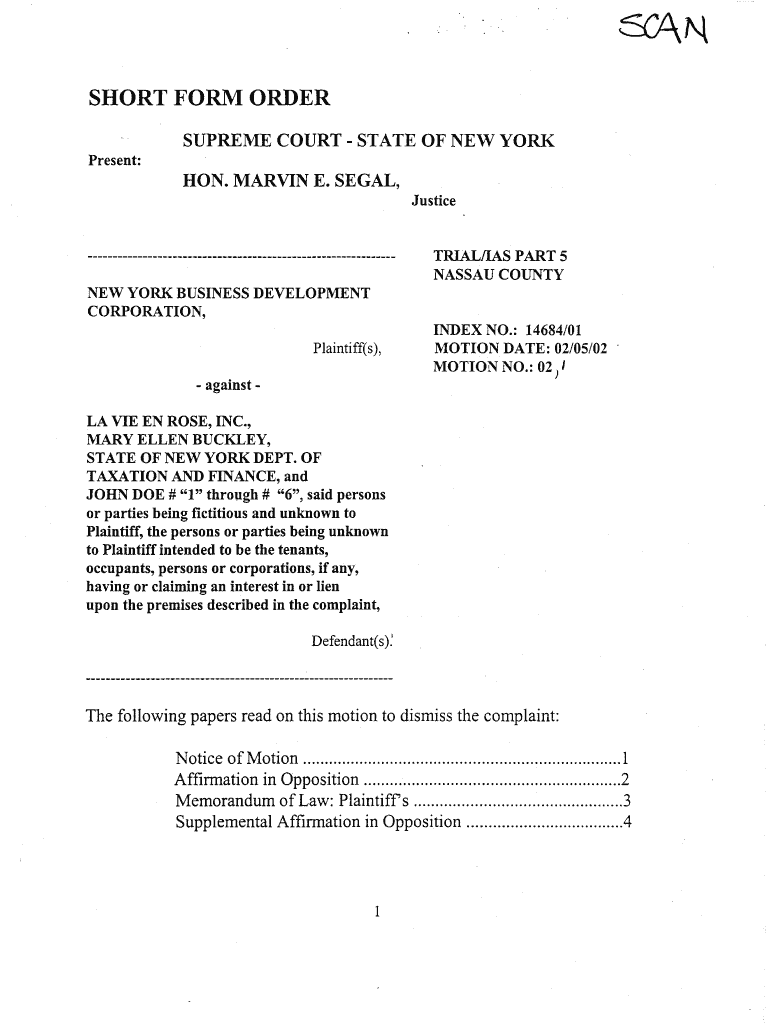
The Short Form Order is a legal document issued by the Supreme Court of New York. It typically pertains to specific rulings or decisions made by the court, often used as a concise version of the court's full opinion or decision. This form is instrumental in providing a clear and direct summary of the court's directions, allowing involved parties to understand the legal outcome without delving into extensive legal jargon. It is a crucial element for parties involved in legal proceedings, as it simplifies the conveyance of judicial decisions.
How to Use the Short Form Order
To effectively utilize the Short Form Order, especially in the context of judicial rulings, it is important to:
-
Identify the Case: Understand which legal case the order pertains to. This information will often be at the beginning of the document and include parties involved and the case number.
-
Interpret the Decision: Recognize the court’s decision or instructions. The short form will explicitly state whether a motion is granted, denied, or details the specific actions ordered by the court.
-
Follow Directions: Parties involved should adhere to the instructions provided, whether it means making further legal submissions, refraining from certain actions, or understanding the next steps in the legal process.
-
Consult Legal Counsel: It is crucial to discuss the implications of the order with a lawyer to ensure full compliance and to understand any potential legal strategies moving forward.
Steps to Complete the Short Form Order Process
-
Review the Court's Decision: Analyze the short form order as released by the court. Legal professionals typically undertake this review to ensure accuracy in understanding.
-
Ensure Compliance: Parties involved need to implement any actions or changes stipulated by the order. This could involve filing additional documentation or altering a legal position as mandated by the court's decision.
-
Document Submission: Where necessary, complete any required forms that are mentioned in the order and submit them within stipulated timelines.
-
Monitor Timelines: Ensure that any deadlines associated with the Short Form Order are adhered to, including but not limited to appeals, additional filings, or compliance checks.
Importance of the Short Form Order
Understanding the significance of a Short Form Order is vital:
-
Efficiency: Provides a concise version of a court's decision, saving time for legal professionals and the parties involved.
-
Clarity: Offers clear instructions which are easy to understand and follow, reducing ambiguity in legal proceedings.
-
Legal Precedent: It can serve as a quick reference for future legal cases or decisions, highlighting how similar cases may be ruled.
Legal Use of the Short Form Order
The Short Form Order is primarily used:
-
In Court Decisions: It addresses motions during legal proceedings, offering a simplified view of the court's decision without needing a full, detailed opinion document.
-
For Legal Appeals: In cases where a party chooses to appeal a decision, the Short Form Order can outline the basis for the appeal and the court’s stance.
-
Recording Legal Transactions: When documenting official court rulings, this form acts as a reliable and accepted record of the decision.
Who Typically Uses the Short Form Order
Typically, the following groups are primary users:
-
Legal Professionals: Lawyers and paralegals reference these documents for quick understanding and action regarding a case.
-
Judicial Officials: Judges use them to convey decisions succinctly.
-
Litigants: Parties involved in the case refer to these orders to know their responsibilities and rights post-decision.


Key Elements of the Short Form Order
-
Parties Involved: Lists the plaintiff, defendant, and any third parties directly affected by the order.
-
Court’s Decision: Clearly outlines the ruling — whether motions are granted or denied.
-
Conditions or Directives: Any specific conditions or actions required by the parties following the decision.
-
Relevant Case Details: Includes case number, names of the presiding judge, and decision date for accurate reference.
State-Specific Rules for the Short Form Order
In New York, specific rules apply:
-
Filing Requirements: Adheres to the state's procedure for lodging orders within the legal system.
-
Timelines: New York enforces strict timelines for the appeal process or compliance following these orders.
-
Presiding Jurisdiction: This type of order typically originates from state-level trials, though it may be connected to broader judicial reviews or appeals.
Examples of Using the Short Form Order
-
Mortgage Foreclosure Action: A recent order involved the denial of motions to dismiss a complaint in a foreclosure case, demonstrating its applicability in real estate law.
-
Business Disputes: Used in rulings involving business disagreements, where quick resolutions are necessary.
-
Personal Injury Claims: Provides a summary in cases where the court needs to pass preliminary judgments on liability.
Through understanding these sections, stakeholders gain clarity on their roles and responsibilities following a court decision, leading to more efficient legal proceedings and compliance.