
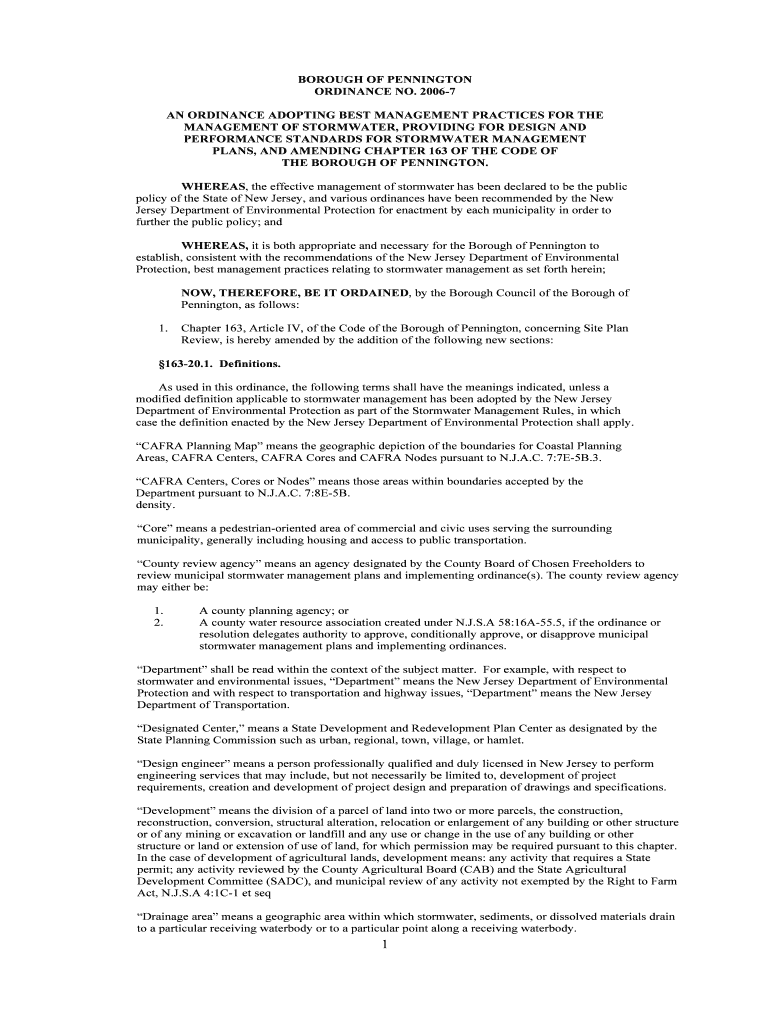







Definition and Meaning of the Ordinance
The ordinance on adopting best management practices for stormwater management is a legal document enacted by municipalities like the Borough of Pennington. It aims to regulate and improve the management of stormwater to prevent flooding, recharge groundwater, and reduce pollutants. This ordinance aligns local management efforts with state policies, ensuring community-specific standards and definitions are met.
Key Elements of the Ordinance
- Design and Performance Standards: The ordinance outlines specific design and performance criteria for stormwater management plans, covering the construction and maintenance of necessary infrastructure.
- Applicability and Enforcement: Details the scope and jurisdiction of the ordinance, including penalties for non-compliance, ensuring adherence to established standards.
- Definitions and Terms: It introduces technical terms and definitions crucial for understanding and applying the ordinance correctly within legal and regulatory frameworks.
Steps to Complete Compliance with the Ordinance
- Review the Ordinance: Understand all requirements and definitions to ensure full compliance.
- Develop a Stormwater Management Plan: Create plans that meet the ordinance's design and performance standards.
- Submit for Approval: Present the management plan to the corresponding municipal authority for review and approval.
- Implement the Plan: Construct and maintain stormwater facilities as outlined in the approved plan.
- Regular Audits and Updates: Monitor, report, and update the stormwater management plan regularly, ensuring ongoing compliance and effectiveness.
Importance of the Ordinance
Implementing the ordinance addresses critical environmental and public health issues, aiding in:
- Flood Control: Reducing the risk of flood damage to urban and rural areas through effective water management.
- Groundwater Recharge: Maintaining the local water table for sustainable community water use.
- Pollution Reduction: Ensuring water quality by minimizing surface runoff pollutants entering the ecosystem.
State-Specific Rules and Variances
- New Jersey Policies: The ordinance aligns with New Jersey's environmental regulations for effective stormwater management. Variations may exist between municipalities, reflecting local geographic and legal contexts.
- Adaptations: Adjustments to the ordinance may be necessary to integrate specific state or local environmental criteria, particularly concerning vulnerable ecosystems or water bodies.
Legal Use and Compliance
Legal utilization of the ordinance involves adherence to both municipal and state guidelines. This includes proper documentation submission for permits and adherence to defined construction and maintenance standards, ensuring legal protection and community safety.
Examples of Stormwater Management in Practice
- Urban Developments: Integration of green roofs, permeable pavements, and retention basins to manage stormwater in high-density areas.
- Agricultural Lands: Ditches and swales constructed to manage excess rainwater and prevent erosion.
- Industrial Sites: Custom systems ensuring that wetlands and natural water bodies are protected from runoff contamination.
Required Documents for Ordinance Compliance
- Stormwater Management Plan: Includes site-specific strategies for managing stormwater.
- Site Evaluations and Environmental Impact Studies: To assess current conditions and predict future impacts.
- Maintenance Logs and Inspection Reports: Critical for ongoing compliance verification and auditing purposes.
Penalties for Non-Compliance
Failure to comply with the ordinance can result in fines, mandatory corrective measures, and even legal action. These penalties ensure that environmental integrity and community safety are upheld, serving as a deterrent to negligence.




