






Definition & Purpose of the 2009 Municipal Data Sheet
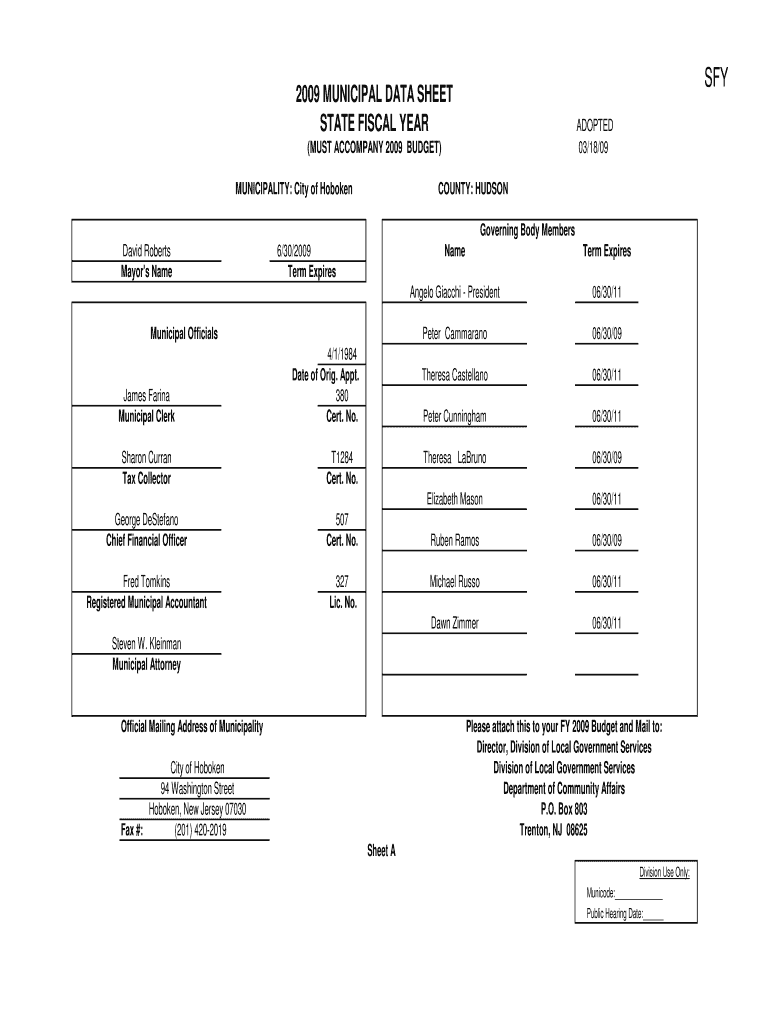
The 2009 Municipal Data Sheet serves as a comprehensive record for municipalities, detailing essential aspects of their financial operations for the fiscal year. This document encompasses a variety of components including budget certifications, anticipated revenues, appropriations, and more. Fundamentally, it acts as both a planning tool and an accountability mechanism, ensuring that municipal finances are transparent and well-organized. Its informational nature makes it indispensable for local governments, auditors, and public stakeholders who are interested in understanding a municipality's financial health and governance.
Key Components of the 2009 Municipal Data Sheet
The Municipal Data Sheet contains several critical elements that provide a snapshot of a municipality's finances. Key sections include:
- Governing Body and Municipal Officials: This outlines who is accountable for financial decisions within the municipality.
- Budget Certifications: Certifications affirm that the budget has been properly prepared and approved.
- Anticipated Revenues: A breakdown of expected income from various sources, including taxes, grants, and fees.
- Appropriations: Details on how funds are allocated across different sectors and services.
Each component is vital for documenting and summarizing the fiscal activities of the year, offering insights into both expected and actual financial performance.
Procedures for Using the 2009 Municipal Data Sheet
To successfully utilize the 2009 Municipal Data Sheet, follow these steps:
- Gather Required Information: Collect all necessary financial data, including previous budgets, revenue reports, and expenditure records.
- Input Data Correctly: Ensure that all figures are accurately entered into the sheet, maintaining a clear distinction between anticipated and actual figures.
- Review and Verify: Cross-verify each entry with financial statements to ensure accuracy.
- Finalize and Distribute: Once completed and verified, the sheet should be approved by appropriate municipal officials before being made available for audit or public scrutiny.
Adhering to these steps can improve the reliability and functionality of the data sheet.
How to Obtain the 2009 Municipal Data Sheet
The 2009 Municipal Data Sheet is generally distributed by local government offices. To obtain a copy:
- Visit the Municipal Clerk’s Office: The office should provide physical or digital copies to authorized personnel.
- Request via Email or Phone: Often, municipalities provide information remotely; contacting them through official channels can secure a copy.
- Access through Government Websites: Many municipalities have digital archives where past data sheets are available for download.
Ensure to verify the authenticity of the document with official seals or digital signatures where available.
Important Terms Related to the 2009 Municipal Data Sheet
Several terms are critical for understanding the data sheet:
- Appropriations: Allocated funds for specific expenditures.
- Revenues: Income from taxes, fees, or other sources.
- Certificates of Budget Compliance: Documents certifying adherence to budgetary standards.
- Capital Budget Plan: Proposals for long-term investments and improvements.
These terms are crucial for interpreting financial data outlined in the sheet.
Legal Implications of Using the 2009 Municipal Data Sheet
This document is governed by state laws that mandate transparency and accuracy in municipal financial reporting. Legal uses of the data sheet include:
- Audit Preparation: Used to prepare for state or federal audits.
- Public Reporting: Meets requirements for public disclosure of financial data.
- Funding Applications: Often necessary when applying for grants or state aid.
Compliance with these legal benchmarks safeguards municipal entities from penalties or loss of funding.
Examples of Using the 2009 Municipal Data Sheet
Practical applications of this form include:
- Budget Planning: Assists municipal leaders in crafting future budgets by analyzing past financial data.
- Financial Assessment: Auditors use it to evaluate fiscal health and expenditure efficiency.
- Public Awareness: Community organizations employ it to understand resource allocation and advocate for policy changes.
Through these examples, the utility of the data sheet extends beyond simple record-keeping to impactful civic planning and advocacy.
Penalties for Non-Compliance with the 2009 Municipal Data Sheet
Non-compliance with the requirements for the Municipal Data Sheet can lead to several consequences:
- Financial Penalties: Fines may be imposed for failing to submit or complete the data sheet accurately.
- Loss of Funding: Inaccuracy or non-submission can lead to withdrawal of state or federal funding.
- Reputational Damage: Non-compliance may incur a loss of public trust and credibility within the community.
Adhering to submission guidelines is crucial for maintaining financial and legal standing.
Impacts of the 2009 Municipal Data Sheet on Different Business Types
The 2009 Municipal Data Sheet is particularly beneficial for organizations that interact closely with municipal operations, such as:
- Developers: Use the sheet to discern financial stability and project feasibility.
- Policy Advocates: Assess the data to push for economic reforms or public investment.
- Financial Institutions: Evaluate municipal creditworthiness and loan assessments based on documented financial health.
These entities rely on the data sheet for informed decision-making related to municipal engagements.