New Property Information Sheet 2026

Get Form
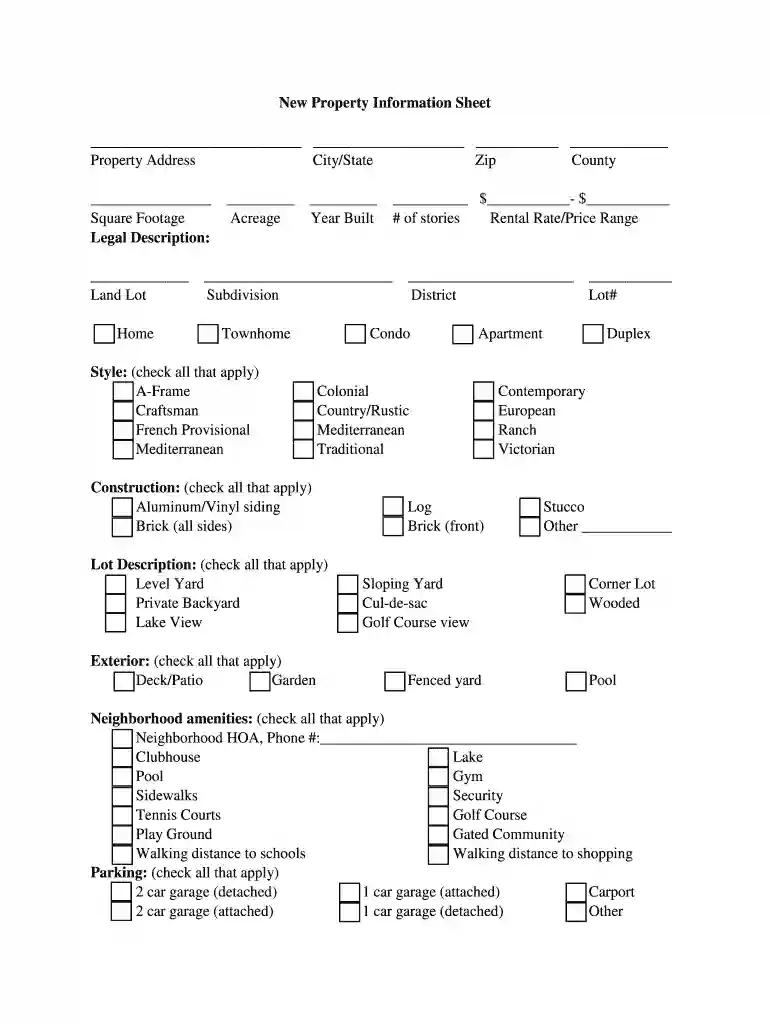
New Property Information Sheet Preview on Page 1

Here's how it works

01. Edit your form online
Type text, add images, blackout confidential details, add comments, highlights and more.

02. Sign it in a few clicks
Draw your signature, type it, upload its image, or use your mobile device as a signature pad.

03. Share your form with others
Send it via email, link, or fax. You can also download it, export it or print it out.

Definition and Purpose of the New Property Information Sheet

The New Property Information Sheet serves as a comprehensive document for gathering detailed data regarding real estate properties. It functions as a template to support real estate professionals in cataloging essential property attributes to present to potential buyers or renters. This form typically encompasses various critical details such as the property's address, square footage, and legal description, ensuring all necessary information is succinctly organized.

Essential Components

  • Address & Contact Information: Includes the full address of the property, such as street name, locality, city, state, and ZIP code, as well as contact details for the owner or agent.
  • Property Details: Covers fundamental details like the property's square footage, layout style (e.g., colonial, ranch), and year of construction.
  • Legal Description: Provides a formal legal description of the property, which is vital for any formal transactions or legal considerations.

Key Elements of the New Property Information Sheet

The sheet presents a structured overview of the property’s critical elements, ensuring potential buyers perceive a clear and complete understanding.

Major Features

  • Construction Style: Describes the architectural style of the building, giving potential buyers a sense of the aesthetic and structural choices.
  • Amenities: Lists available amenities such as swimming pools, garages, and basements, enhancing the property's marketability.
  • Utilities: Details existing utility connections including water, gas, electricity, and sewage systems, crucial for day-to-day living.

Steps to Complete the New Property Information Sheet

Completing the New Property Information Sheet requires accurate and thorough acquisition of property details.

  1. Gather Property Data: Start by collecting all relevant information and documents about the property, including title deed, previous sales records, and current utility bills.
  2. Fill in Basic Details: Enter the address, contact information, and legal description.
  3. Include Property Features: Document notable features, such as lot size, construction style, and available amenities.
  4. Add Utility Information: Ensure entries for all utilities are comprehensive, covering both availability and recent bills for transparency.

Practical Example

Suppose an agent is listing a suburban home. They would include distinct features like the number of bedrooms, backyard size, and any recent renovations like a new roof or kitchen refit.

How to Use the New Property Information Sheet

Effectively utilizing the New Property Information Sheet involves strategic presentation and distribution.

Best Practices

  • For Agents: Use the sheet during open houses or showings to provide clear information to potential buyers.
  • For Buyers: Utilize the sheet as a basis for comparisons between different properties to make informed decisions.

Legal Use of the New Property Information Sheet

The sheet can be a critical component in the legal sales process, serving as a standardized document to ensure both parties are informed about the property specifics.

Considerations

  • Disclosure Requirements: Ensure compliance with state and federal disclosure requirements by including any known defects or pending property disputes.
  • Document Retention: Keep copies of the completed sheet for both parties to reference in the event of a future dispute or query.

State-Specific Rules for the New Property Information Sheet

Real estate practices can vary significantly by state, requiring customization of the New Property Information Sheet.

Variations Across States

  • Zoning Laws: State-specific zoning regulations may impact the information required on the sheet.
  • School District Information: In some states, providing school district details is mandatory as it influences property value and buyer decisions.

Examples of Using the New Property Information Sheet

Providing real-life scenarios where the New Property Information Sheet has proven invaluable will help illustrate its utility.

Case Study

A real estate firm in California used the form to streamline the process of identifying key selling points of a beachfront property, such as proximity to schools and access to public transportation, resulting in a quicker sale than anticipated.

Digital Versus Paper Version

Deciding between a digital and a paper version of the New Property Information Sheet depends on the user’s needs and technological capabilities.

Advantages and Considerations

  • Digital: Offers easier editing and updating capabilities, and is more environmentally friendly.
  • Paper: Provides a physical copy for meetings or presentations without reliance on technology access.

Each of these elements ensures the New Property Information Sheet effectively meets its purpose, offering well-rounded and detailed insights into property details for interested parties.

be ready to get more

Complete this form in 5 minutes or less

Get form

Got questions?

We have answers to the most popular questions from our customers. If you can't find an answer to your question, please contact us.
Contact us
This form is now used in every transaction involving the sale of residential property and can often cause headaches for sellers who are unfamiliar with them. The Property Information Form is completed by the seller to give a potential buyer detailed information about the property being sold.
TA6 Property information form (5th edition) (2024) This form is for the seller to give the prospective buyer detailed information about the property. Youre likely to need a TA6 for every purchase. The TA6 (5th edition) form was updated in March 2024.
Is a TA6 form mandatory? Its not currently mandatory to complete the TA6 from, although the Law Society is looking to make it mandatory in January 2025. That said, leaving out crucial information about your property, or delays in providing information about it, may delay your sale.
The Sellers Property Information Form (TA6) is an important document that provides vital information about the property you are considering buying or selling. It is important for sellers to complete the form accurately and honestly, as any misrepresentations or omissions could give rise to legal claims by the buyer.
The TA7 form, also known as the Leasehold Information Form, is an essential document that contains specific questions relating to the lease associated with the property. These questions will cover issues relating to service charges, details of the management company, any work youve done on your property and much more.

Security and compliance

At DocHub, your data security is our priority. We follow HIPAA, SOC2, GDPR, and other standards, so you can work on your documents with confidence.
Learn more
ccpa2
pci-dss
gdpr-compliance
hipaa
soc-compliance

People also ask

The TA6 Form, otherwise known as the Sellers Property Information Form, is essentially a questionnaire for anyone selling a home in which youre forced to spill the beans. Its one of the protocol documents your solicitor will send to you as you move through the selling process.
TA forms, or transaction forms, are essential in the house-sale process, providing detailed information about a property. Sellers must complete certain forms, while others are advised to speed up the process, these help buyers understand the property, including recent building work and neighbour disputes.
Property Information means all information concerning the Property, including details of leases and supplemental documents, tenants and occupiers of the Property, accounts, receipts, insurance policies and particulars, property registers, VAT records, employment records and computer records (including disks and

Related links