
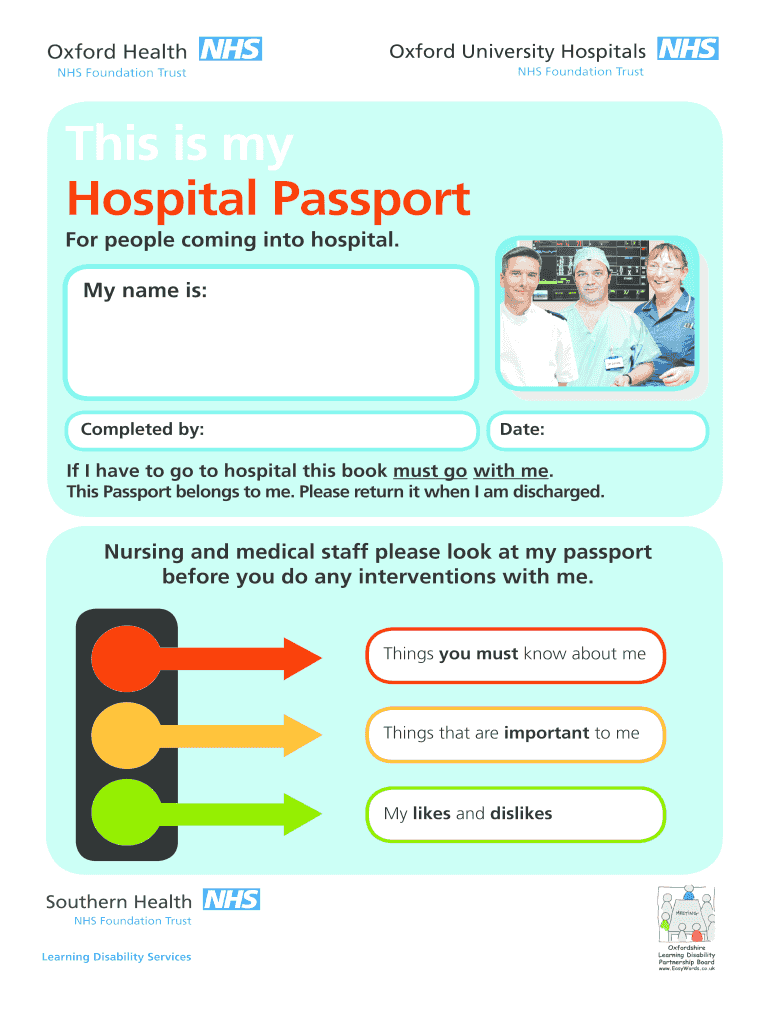







Definition and Purpose of a Hospital Passport
A Hospital Passport serves a crucial role in facilitating effective communication and care during a hospital stay. This document contains vital personal information about a patient, ensuring that medical staff can provide personalized care tailored to the individual's specific needs. A Hospital Passport typically includes personal identification details, medical history, medications, communication preferences, and emergency contacts, helping caregivers understand and support the patient better.
Key Components of a Hospital Passport
- Personal Identification: Essential information such as the patient's full name, date of birth, and photograph allow for quick identification, ensuring that healthcare staff can match the individual with the correct treatment plan.
- Medical History: A detailed account of existing medical conditions, allergies, and previous surgeries helps medical staff make informed decisions about the patient's care.
- Medications: Current medications and dosages provide healthcare providers with crucial information to avoid adverse drug interactions and ensure effective management of the patient's health.
- Communication Preferences: Details about preferred methods of communication, including sign language or translators, ensure that patients are fully understood and can express their needs effectively.
- Emergency Contacts: Lists of primary caregivers and emergency contacts facilitate immediate communication with loved ones during crucial moments.
How to Use the Hospital Passport
Using a Hospital Passport effectively involves understanding its importance and ensuring it is up to date and readily available. Patients or their caregivers should review and update the passport regularly, ensuring that all medical and personal information is current and accurate.
Practical Steps for Utilizing a Hospital Passport
- Preparation: Gather all relevant personal and medical information, including recent medical appointments, medication adjustments, and new diagnoses.
- Customization: Tailor the passport to include specific preferences for care, such as preferred hospital wards, dietary needs, and religious considerations.
- Distribution: Provide copies to primary healthcare providers, designated family members, and store a digital version for easy access during emergencies.
- Review During Hospital Visits: Present the Hospital Passport to medical staff upon admission and remind them to refer to it throughout the patient's stay.
How to Obtain a Hospital Passport
Obtaining a Hospital Passport is a straightforward process that varies slightly depending on the healthcare institution or local health authority.
Methods for Acquiring a Hospital Passport
- Healthcare Provider: Many clinics and hospitals offer standardized Hospital Passports, which can be obtained directly from a patient's primary care provider.
- Online Resources: Numerous healthcare websites offer downloadable templates that patients can personalize according to their individual needs.
- Community Health Organizations: Local health and community centers may provide assistance and resources for creating a Hospital Passport tailored to specific community needs, including disabled or elderly individuals.
Steps to Complete the Hospital Passport
Completing a Hospital Passport involves careful input of essential information. This ensures that all details are accurate and reflects the patient's current status.
Detailed Process for Completing It
- Personal Information: Begin by accurately filling out demographic details such as name, address, and any identification numbers.
- Medical Details: Record current medical conditions, treatment plans, and any known allergies.
- Medications: List all medications, including dosages and times, to provide a complete picture of the patient's pharmaceutical regime.
- Preferences and Needs: Include communication preferences, dietary restrictions, and any specific requests for accommodations.
- Contact Information: Ensure emergency contacts and primary healthcare provider details are clearly listed for quick communication during emergencies.
Legal Use of the Hospital Passport
Hospital Passports hold no legal standing but serve as a valuable communication tool between patients and healthcare providers. They are used to express the patient's verbal or written preferences for their care.
Legal Implications and Considerations
- Voluntary Document: The Hospital Passport does not replace legal documents such as medical directives or living wills; it supplements them for quality care.
- Confidentiality: Ensure that personal information included in the passport follows privacy regulations, such as HIPAA, to protect against unauthorized disclosure.
- Consent: While not legally binding, maintaining updated passports with patient consent underscores the importance of patient autonomy in care decisions.
Key Elements of a Hospital Passport
Understanding the structure of a Hospital Passport enhances its effectiveness as a communication tool.
Essential Sections of the Passport
- Patient Profile: Includes name, photograph, and personal identifiers to reduce misidentification.
- Healthcare Information: Contains medical alerts, current conditions, and history for contextually relevant care.
- Communication Guidelines: Provides instructions for effective communication tailored to the patient’s needs.
- Care Instructions: Notes regarding daily care routines, comfort needs, and personal preferences to optimize the hospital experience.
State-Specific Rules for Hospital Passports
While Hospital Passports generally follow a standard template, state-specific nuances might affect how these documents are used and recognized.
State Variations and Compliance
- Regulatory Differences: Some states have guidelines or support services uniquely tailored for implementing Hospital Passports in specific healthcare settings.
- Integration with State Systems: In certain areas, Hospital Passports may be more widely integrated into electronic health records due to state initiatives enhancing patient-centered care.
Examples of Using a Hospital Passport
Real-world implementations illustrate how Hospital Passports can enhance medical care and patient experience.
Case Studies and Scenarios
- In Emergency Situations: A Hospital Passport expedited emergency care for a non-verbal patient by providing clear communication preferences and allergy alerts.
- Chronic Illness Management: A patient with complex medical needs used their passport to ensure continuity of care across multiple hospital visits, leading to improved outcomes.
By leveraging the detailed information in a Hospital Passport, patients, caregivers, and healthcare professionals work collaboratively to ensure optimal health management and personalized care.




