







Definition & Meaning
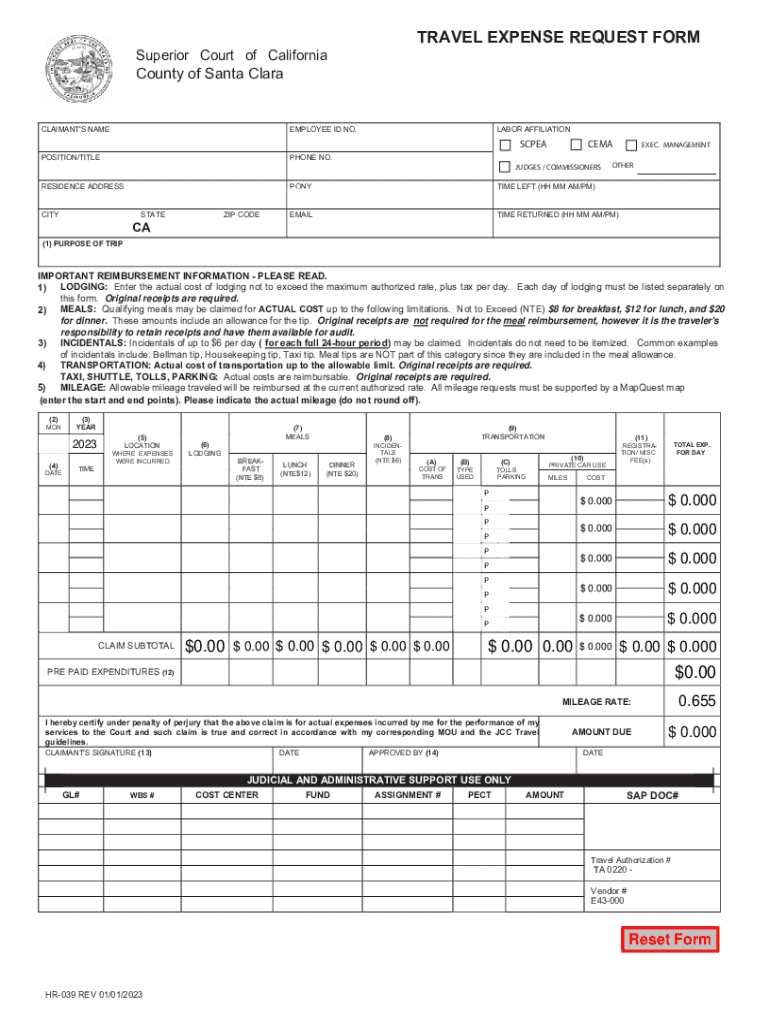
The "Travel Expense Request Form" is a formal document used to either request approval for travel-related expenses or to report and seek reimbursement for expenses incurred during business travel. This form generally helps organizations maintain records of travel expenses and ensures that financial operations align with company policies and budget guidelines. Designed to categorize various costs, the form guarantees clarity and transparency in financial reporting.
Common expenses reported include lodging, meals, transportation, and other incidentals, split into detailed sections to simplify tracking and approval processes. Ultimately, the form facilitates accountability by documenting planned or incurred expenditures, ensuring that employees adhere to predefined guidelines while seeking reimbursement.
How to Use the Travel Expense Request Form
Using a Travel Expense Request Form involves several key steps. Primarily, it requires gathering all expense details, such as receipts and confirmations, to accurately fill out the form. Here's how you can effectively use the form:
-
Preparation: Collect all relevant receipts, travel itineraries, and booking confirmations before starting the form. This ensures that all necessary data is readily available for input.
-
Filling the Expenses: Input details for each expense category. This might include:
- Lodging: Record the hotel name, dates of stay, and total cost.
- Transportation: Detail the mode of transport, travel route, and expenses incurred.
- Meals and Incidentals: Provide itemized costs for each incurred meal.
-
Approval Section: Often includes a section for managerial or departmental approval. Make sure that the relevant authority reviews and signs off on the requested or reported expenses.
-
Submission: Depending on the organizational procedure, submit the completed form either physically or digitally. Check for necessary signatures and confirmations before submission.
Key Elements of the Travel Expense Request Form
A robust Travel Expense Request Form includes several key components that capture the full scope of travel expenditures and ensure compliance with organizational travel policies:
- Traveler Information: Includes the traveler's name, employee ID, department, and contact details.
- Travel Details: Details such as the purpose of travel, destination, and travel dates are crucial for context.
- Expense Breakdown: An itemized list of anticipated or actual expenses by category (e.g., accommodation, meals, transportation).
- Total Costs and Advances: A summary of total expected or incurred costs and any travel advances received.
- Approval Section: Space for signatures from the traveler and an authorized approver, confirming the validity and necessity of expenses.
- Guidelines and Limits: Information on company policies regarding expense limits and required documentation.
Steps to Complete the Travel Expense Request Form
A sequential approach to completing the Travel Expense Request Form ensures accuracy and compliance:
- Review Guidelines: Familiarize yourself with your company's travel and expense policies, including any limits on spending.
- Gather Documentation: Collect all receipts and relevant documents to support your expenses.
- Fill Out Personal and Travel Information: Start by completing personal information and travel specifics to set the context of your expenses.
- List Expenses: Enter each expense carefully, categorizing them and ensuring that you include all required details, such as dates and amounts.
- Attach Documentation: Ensure all receipts and supporting documents are attached or submitted as instructed.
- Review and Submit: Double-check for accuracy and completeness, then submit the form for approval as per your organizational protocol.
Why You Should Use the Travel Expense Request Form
Employing a Travel Expense Request Form provides numerous benefits, streamlining financial operations and upholding organizational integrity:
- Clarity and Accountability: It ensures that all travel expenses are clearly documented, facilitating easy tracking and approval.
- Policy Compliance: Encourages adherence to company expense guidelines, reducing financial discrepancies and potential misuse.
- Streamlined Reimbursements: Facilitates efficient processing of reimbursement requests, speeding up the reimbursement cycle.
- Budget Management: Aids in managing department budgets by outlining projected and actual expenses.
Who Typically Uses the Travel Expense Request Form
While the Travel Expense Request Form is widely utilized in various industries, there are specific roles and sectors that benefit most from its use:
- Corporate Professionals: Employees in sales, consulting, and executive roles who frequently travel for business purposes.
- Government Employees: Those involved in state or federal travel, who must report expenses for accountability.
- Non-Profit Workers: Individuals in charitable organizations, often needing to justify expenses due to detailed donor reporting requirements.
- Educational Institution Staff: University staff and faculty engaging in research or attending conferences.


Examples of Using the Travel Expense Request Form
Real-world scenarios illustrate the flexibility and necessity of the Travel Expense Request Form:
- Sales Conferences: A sales executive attending a nationwide conference uses the form to pre-approve and report expenses like airfare, lodging, meals, and ground transportation.
- Training Seminars: Employees sent for external training can request travel advances and later report actual expenses upon return.
- Field Research Projects: Academic staff traveling for field studies can document total project costs, ensuring coverage of travel expenditures under research grants.
Legal Use of the Travel Expense Request Form
The Travel Expense Request Form serves not only a budgeting purpose but also a compliance and legal accountability function. Proper usage involves:
- Adherence to Regulatory Standards: Ensuring compliance with federal travel regulations and company policies.
- Tax Reporting: For businesses, accurately reported travel expenses may qualify as deductions, thus influencing financial accounting standards and tax filings.
- Audit Trail Creation: Maintaining records that support audits, showing responsible usage of organizational funds in line with specified guidelines.
These comprehensive elements and considerations within the Travel Expense Request Form structure facilitate a smooth, efficient, and compliant travel expense process, tailored to meet corporate and regulatory requirements.




