






Definition and Meaning of Controlled Dangerous Substance Registration
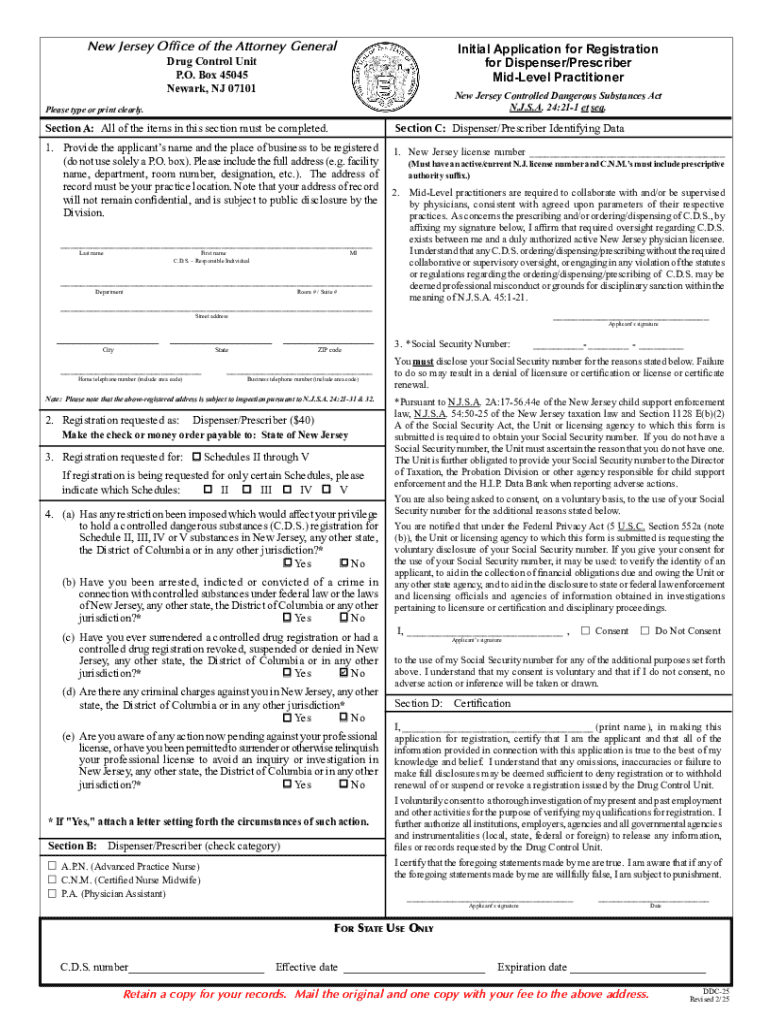
The Controlled Dangerous Substance (CDS) Registration Initial Application is a crucial document for individuals or entities involved in the handling of controlled substances. This registration is mandatory for prescribing, manufacturing, distributing, or dispensing controlled substances in compliance with state and federal laws. The application ensures that the handling of such substances is strictly regulated to prevent misuse.
Steps to Complete the CDS Registration Initial Application
-
Federal DEA Registration: Prior to applying, ensure you have a valid DEA number, which is a prerequisite for the CDS application. The DEA registration verifies your eligibility to handle controlled substances at the federal level.
-
Application Form: Obtain the CDS registration form, typically available on the relevant state’s health department website. Make sure to download the latest version to avoid discrepancies.
-
Fill Out Personal and Professional Information: Provide details such as name, address, and professional qualifications, ensuring accuracy to prevent application delays.
-
Provide DEA Details: Input your DEA registration number and any relevant state license numbers. This information is critical for cross-verification.
-
Fee Payment: Include the application fee as specified. Some states offer online payment options, while others may require a check or money order.
-
Submit the Application: Depending on state provisions, applications can be submitted online, by mail, or sometimes in person. Follow submission guidelines to ensure proper delivery.
-
Track Application Status: After submission, keep track of your application status to address any issues promptly.
Required Documents for CDS Registration
- DEA Registration Certificate: Proof of federal registration.
- State Professional License: Valid license verifying your professional status.
- Proof of Identity: Government-issued ID to confirm the applicant’s identity.
- Application Fee Payment: Receipt or proof of payment included with submission.
Legal Use of the CDS Registration
Holding a CDS registration authorizes the legal handling of controlled substances strictly within the confines of the law. Registrants must adhere to regulations surrounding prescription, storage, and distribution to prevent abuse. Misuse or handling without registration is subject to legal action, and the registration aims to maintain public safety.
Important Terms Related to CDS Registration Initial Application
- Controlled Substance: A drug or chemical whose manufacture, possession, and use are regulated by the government.
- DEA Number: Identifier issued by the Drug Enforcement Administration to permit the handling of controlled substances.
- Registrant: An individual or entity that has obtained CDS registration for legal handling of controlled substances.
State-Specific Rules for CDS Registration
Rules and requirements for CDS registration can vary significantly by state. While some states have streamlined online processes, others might require detailed documentation and manual submission. Being aware of your state-specific rules is essential for compliance and successful registration.
Penalties for Non-Compliance
Failure to obtain or renew a CDS registration can lead to significant penalties, including fines, suspension of practice licenses, or criminal charges. Compliance with all application steps, timely renewals, and adherence to regulations is imperative to avoid legal repercussions.
Examples of Using CDS Registration in Practice
A licensed pharmacist uses the CDS registration to order controlled substances for a pharmacy. Physicians rely on it to prescribe pain management medication legally. Hospitals require registration to obtain and administer controlled substances to patients according to medical necessity.
Who Typically Uses the CDS Registration Initial Application
The application is commonly used by healthcare professionals, including doctors, pharmacists, veterinarians, and hospital administrators. Entities involved in pharmaceutical manufacturing and distribution also need this registration to comply with regulatory requirements.