






Definition & Meaning
The Chicago Style Template is a structured format used for writing and organizing academic papers, particularly in the humanities and social sciences. It provides guidelines on how to properly cite sources, format text, and structure essays. As a flexible and widely recognized formatting style, it is invaluable for maintaining consistency and clarity in scholarly communication. The template encompasses several key elements, such as title pages, footnotes, and bibliographies, enabling writers to present their work in a systematic and professional manner. The use of this template helps to ensure that academic papers are not only aesthetically pleasing but also adhere to the standards of academic integrity and credibility.
How to Use the Chicago Style Template
To effectively utilize the Chicago Style Template, it's essential to understand its core components. The process begins by setting up your document in a word processor. Ensure that your text is double-spaced, with margins set to one inch on all sides, and use a readable font like Times New Roman set to 12-point size.
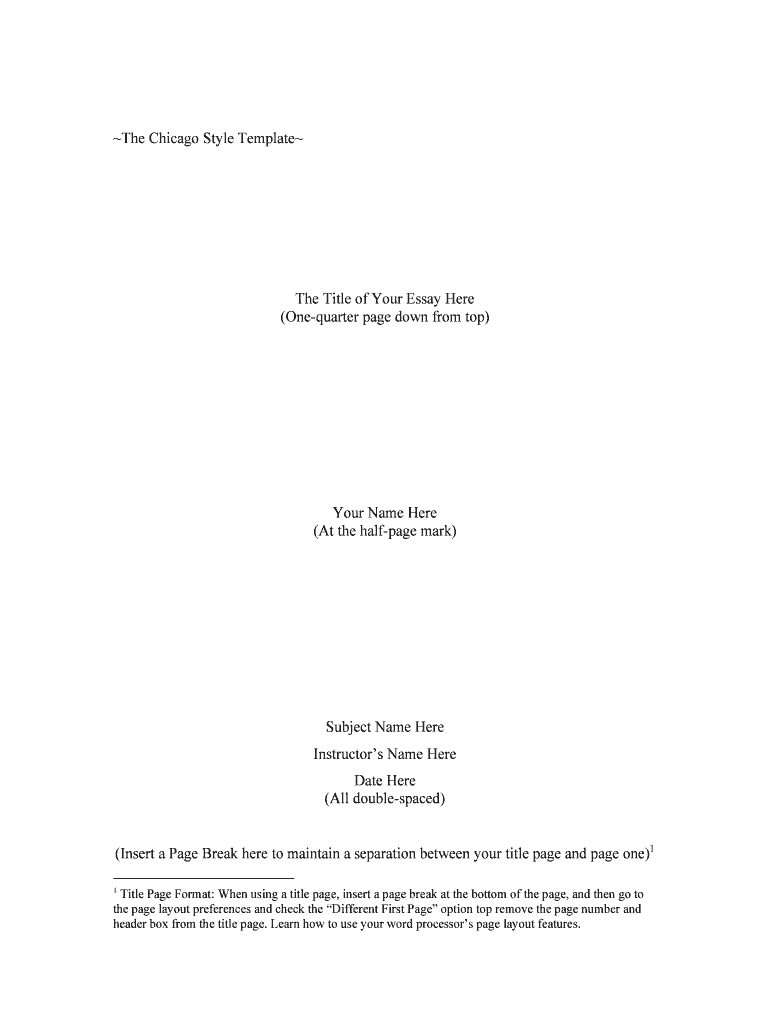
- Title Page: Create a title page that includes the title of your work, your name, the course name, and the date of submission.
- Page Numbers: Place page numbers in the header at the top right corner of each page, beginning with the main body.
- Headings and Subheadings: Use a hierarchical format with clear distinction between main sections and subsections.
- For primary headings, use bold text.
- For secondary ones, use italicized text.
- Tertiary headings can be in regular font.
- Citation and Bibliography: Use footnotes for in-text citations and have a separate section for bibliography at the end of the paper.
By adhering to these steps, you can ensure that your document meets the Chicago Style requirements and is well-organized for readers to follow.
Key Elements of the Chicago Style Template
Understanding the key elements of the Chicago Style Template is critical to implementing it correctly in your academic writing. These elements serve as the building blocks for creating a well-organized academic paper.
- Title Page: Includes the main title, author's name, institutional affiliation, and date of submission.
- Abstract: Optional element providing a brief summary of the main topics.
- Main Body: Structured by headings and subheadings to organize content.
- Footnotes and Endnotes: Used for citing sources and providing additional context.
- Bibliography: Comprehensive list of all sources referenced within the paper.
By integrating these components, the Chicago Style Template helps maintain a cohesive and professional standard in academic writing.
Steps to Complete the Chicago Style Template
Completing the Chicago Style Template involves a detailed approach to each section of your document, ensuring adherence to the style's format requirements.
- Set Up Document: Choose a suitable font, set margins, and format the document for double-spacing.
- Create Title Page: Enter the relevant details, including the title and author information.
- Outline the Structure: Use headings to outline each section, ensuring logical flow and comprehensive coverage of the topic.
- Incorporate Citations: Use footnotes for all sources, providing full details in the bibliography.
- Format the Bibliography: Organize sources alphabetically by author's last name, employing consistent formatting details per entry.
By following these steps, you can create a document that is professionally formatted and adheres to the Chicago Style's academic requirements.
Importance and Benefits of Using the Chicago Style Template
Employing the Chicago Style Template in your academic work offers numerous benefits, contributing to both the quality and credibility of your research.
- Consistency: Provides a uniform structure across different documents.
- Clarity: Enhances readability and comprehension for academic audiences.
- Credibility: Ensures proper attribution of sources, underpinning ethical scholarship practices.
- Flexibility: Adaptable for various document types and subject areas.
These advantages make the template an essential tool for academic writers aiming to present their work in a professional and scholarly manner.
Who Typically Uses the Chicago Style Template
The Chicago Style Template is widely used by scholars, researchers, and students, especially in the fields of history, literature, and the arts.
- Humanities Scholars: Frequently utilize the template for organizing complex arguments and ensuring accurate citations.
- Social Science Researchers: Apply the style in writing papers where detailed source annotation is crucial.
- Academic Students: Use the template to meet class requirements and enhance the presentation of their work.
- Publishing Professionals: Editors and authors rely on this style for creating publishable content in books and journals.
These users rely on the template's structured framework to facilitate effective communication of their ideas.


Examples of Using the Chicago Style Template
Real-world examples demonstrate the practical application of the Chicago Style Template in various academic and professional contexts.
- History Research Papers: Scholars cite primary and secondary sources through footnotes, supporting their analytical discourse.
- Literature Reviews: Use the template to structure extensive commentary and critique on literary works.
- Art Analyses: Detailed citation of artworks and visual elements is facilitated by the template's nuanced requirements.
By examining these examples, writers can better understand how to apply the Chicago Style Template effectively in their own work.
Digital vs. Paper Version of the Chicago Style Template
The choice between a digital and paper version of the Chicago Style Template can impact the writing and submission process.
- Digital Version: Offers flexibility with editing tools, easily adjustable formatting, and integration with digital citation tools.
- Paper Version: May be required for traditional submissions, providing a tangible format for discussions and reviews.
Both versions maintain the same fundamental structure and formatting, though the digital version often simplifies the complex citation and referencing processes through automation and software aids.