






Definition and Meaning of Council Meeting Memorandum
The Council Meeting Memorandum is an official document used by municipal bodies, such as city councils, to outline and convey the agenda, decisions, and discussions of a council meeting to relevant stakeholders. It serves as both a record and a communication tool, ensuring transparency and accessibility of council activities. Typically, these memorandums are used by city officials, department heads, and other stakeholders who require detailed information about the proceedings of a council meeting.
Steps to Complete the Council Meeting Memorandum
- Review Meeting Agenda: Begin by accessing the meeting agenda, which outlines the topics to be discussed and the order of deliberations. This foundation is critical for structuring the memorandum.
- Attend the Meeting: Attend the council meeting to take detailed notes on discussions, motions, and decisions. Record the names of attendees and key participants.
- Draft the Memorandum: Using your notes, draft the memorandum, ensuring it captures all pertinent details, including outcomes and any resolutions passed.
- Include Appendices: Attach any relevant documents, such as reports or presentations, as appendices to the memorandum.
- Proofreading and Approval: Review the draft for accuracy and clarity, then submit it for approval by the relevant authority within the council.
- Distribution: Once approved, distribute the memorandum to designated recipients, which may include council members, department heads, and the public.
Important Terms Related to Council Meeting Memorandum
- Quorum: The minimum number of members required to be present for the meeting to be valid.
- Motion: A formal proposal put forward for debate and decision.
- Resolution: A formal decision or statement adopted by the council.
- Minutes: The written record of the discussions and decisions made during the meeting.
- Ordinance: A law or regulation enacted by the council.
Key Elements of the Council Meeting Memorandum
The Council Meeting Memorandum typically includes several essential elements to ensure comprehensive coverage of the meeting's proceedings:
- Title and Date: Indicating the type of meeting and the date it was held.
- Participants: Listing names of officials and other attendees.
- Agenda Items: Detailed description of each agenda item discussed.
- Decisions Made: Outcomes of deliberations and decisions reached.
- Signatures: Authentications from key officials confirming the memorandum's validity.
Examples of Using the Council Meeting Memorandum
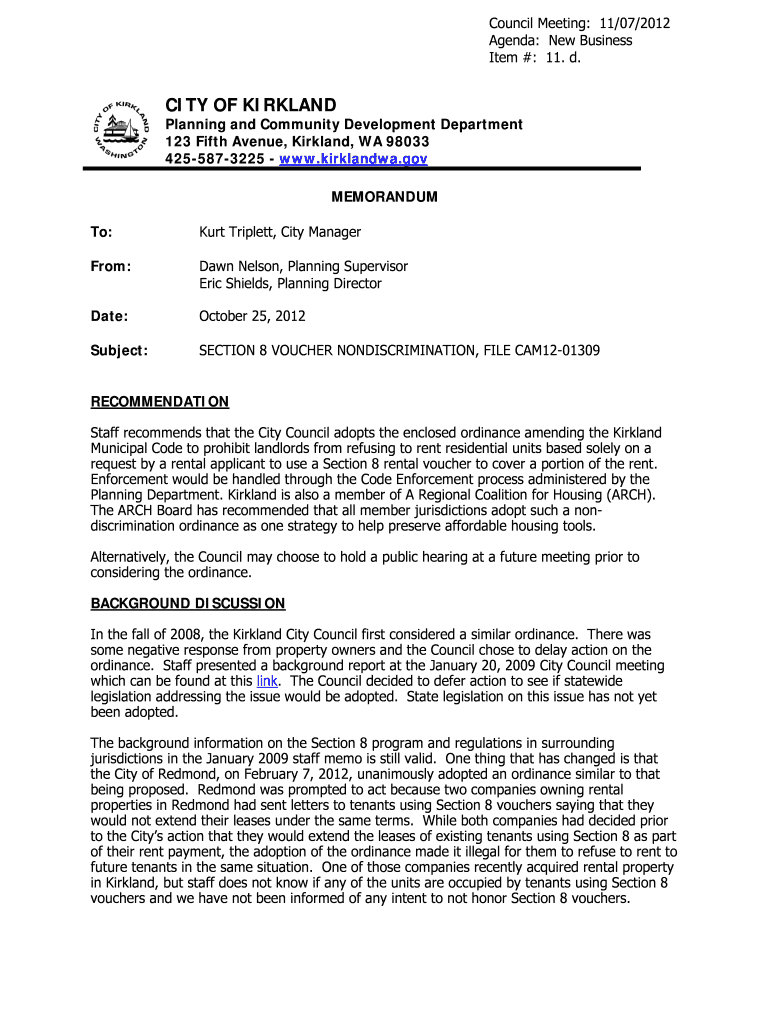
Consider the City of Kirkland's memorandum highlighting an ordinance to prevent discrimination against Section 8 voucher holders, as a practical example. It would typically document the council's discussions, the legal framework involved, the anticipated impact on low-income families, and any exceptions or legal considerations.
Legal Use of the Council Meeting Memorandum
Legally, the Council Meeting Memorandum serves as an official record of the decisions and actions of a council meeting. It is often used in audits, legal reviews, or public inquiries to verify compliance with municipal and state regulations. Its accuracy is vital, as discrepancies may lead to legal challenges or disputes.
How to Use the Council Meeting Memorandum
To effectively utilize the Council Meeting Memorandum, stakeholders should:
- Consult for Information: Reference the memorandum to understand decisions or policies affecting their responsibilities or interests.
- Prepare for Meetings: Use previous memorandums to anticipate upcoming business and prepare accordingly.
- Track Implementation: Follow up on actions required as per the memorandum's outcomes.
Who Typically Uses the Council Meeting Memorandum
The primary users of the Council Meeting Memorandum include:
- City Council Members: To review past decisions and prepare for subsequent meetings.
- Municipal Employees: For implementing council decisions and policies.
- Community Groups: To track public policy changes and participate in civic engagement.
- Legal Entities and Auditors: During audits or legal assessments to confirm compliance with established procedures and regulations.