






Definition and Meaning of Meeting Minutes
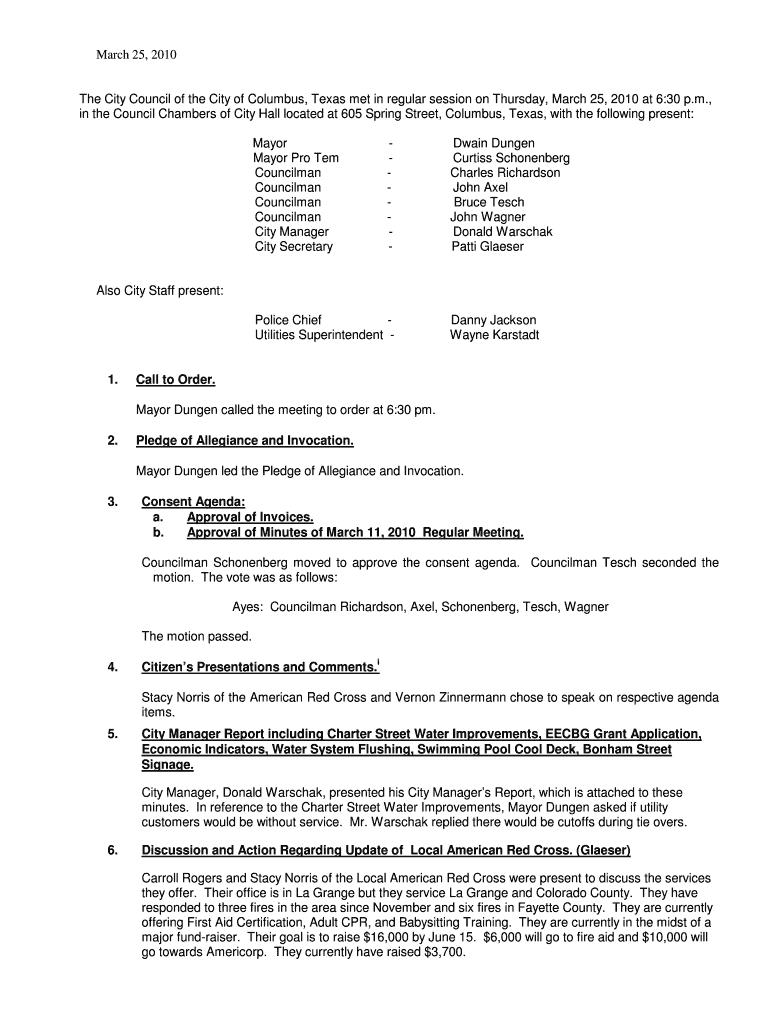
Meeting minutes are formal, written records of the discussions and decisions made during a meeting. For the City Council of Columbus, Texas on March 25, 2010, these minutes serve as an official account of the council's deliberations and actions. They typically include a list of attendees, agenda items, significant discussions, final decisions, and any motions passed. Proper documentation ensures transparency and accountability in governance, allowing stakeholders and the public to stay informed about council activities. Accurate minutes are essential for legal purposes and future reference.
How to Use the Meeting Minutes
Individuals interested in the governance of Columbus, Texas can use these minutes to gain insight into the city's decision-making process. The document can be utilized by citizens to understand past decisions, track the progress of ongoing projects, and follow local governance issues. Researchers and journalists can analyze these records for trends or patterns in council decisions. Additionally, council members can use the minutes to review past meetings before future sessions, ensuring continuity and preventing redundant discussions.
Examples of Use
- Citizens: To validate council actions with promises made during election campaigns.
- Businesses: To understand regulatory changes that may impact operations.
- Historians: For archival purposes, tracing sociopolitical developments over time.
How to Obtain the Meeting Minutes
The minutes from the March 25, 2010, meeting can typically be obtained from the official website of the City of Columbus, Texas. They may also be available through the city's public records department or the city clerk's office. Residents can request physical copies from city hall, although electronic versions are often accessible online.
Steps to Obtain
- Visit the City Website: Search under the 'City Council' or 'Public Records' sections.
- Contact City Hall: Call or visit in person for inquiries about obtaining copies.
- Use Public Libraries: Some libraries archive city council minutes for public access.
Key Elements of Meeting Minutes
Certain key elements must be captured accurately in the minutes to ensure their usefulness.
- Attendance: A list of council members and attendees, including absences.
- Agenda Items: Detailed descriptions of each topic discussed.
- Decisions and Resolutions: Any outcomes, motions, or votes taken.
- Presentations and Reports: Summaries of information presented by the City Manager or Police Chief.
- Public Input: Citizen presentations and public comments.
Legal Use of Meeting Minutes
Meeting minutes serve as legal documentation of the decisions made by the City Council. They validate resolutions passed during meetings and serve as a reference in any potential legal proceedings. Accurate minutes ensure accountability by providing a transparent record of council activities.
Legal Necessities
- Authenticity: Must be approved and signed by the appropriate authority.
- Accuracy: Must reflect true and honest records of the meeting.
- Accessibility: Must be available for public inspection as part of transparency in governance.
Important Terms Related to Meeting Minutes
Understanding specific terminology can help in decoding the meeting minutes:
- Resolution: A formal expression of opinion or intention by the council.
- Adjournment: The suspension of proceedings to another time or indefinitely.
- Quorum: The minimum number of members needed to conduct official business.
- Amendment: A formal change or addition proposed during discussions.
State-Specific Rules for City Council Meetings
Each state may have specific regulations governing how city council meetings are conducted and recorded.
- Open Meetings: Many states require that council meetings be open to the public.
- Public Notification: There may be mandates on how and when meetings must be announced.
- Record Keeping: Regulations on how minutes should be documented and stored.
Examples of Using the Meeting Minutes
Analyzing meeting minutes can offer valuable insights into community governance.
- Traffic Sign Placements: Reviewing discussions on Bonham Street improvements for local advocacy.
- Budget Amendments: Understanding city priorities through financial decisions, like fire truck repairs.
- Emergency Services: Tracking updates on American Red Cross services can guide community preparedness.
State-by-State Differences
Although the minutes pertain to Columbus, Texas, understanding that each state may differ in meeting protocols is crucial.
- Texas Specificities: Texas Open Meetings Act requires meetings to be publicly announced and recorded.
- Varied Compliance: Neighboring states might have different disclosure or privacy rules governing minutes.
- Meeting Procedures: Differences in procedural norms or council operations between states might affect meeting outcomes.
Digital vs. Paper Version
With technological advancements, meeting minutes can be accessed both digitally and physically.
- Digital Accessibility: Electronic versions allow for easier search and distribution.
- Paper Records: Essential for archival purposes and those without internet access.
- Legal Validity: Both versions must be maintained for potential audits or legal disputes.
Benefits for Business Entities
Businesses in Columbus, Texas might find meeting minutes particularly useful.
- Regulatory Changes: Understanding any local government regulations that could impact business operations.
- Infrastructure Developments: Insights into projects like roadwork that could affect logistics or commuting times.
- Community Engagement: Opportunities to align corporate social responsibility efforts with city initiatives.