




01. Edit your form online
Type text, add images, blackout confidential details, add comments, highlights and more.

Type text, add images, blackout confidential details, add comments, highlights and more.

Draw your signature, type it, upload its image, or use your mobile device as a signature pad.

Send it via email, link, or fax. You can also download it, export it or print it out.
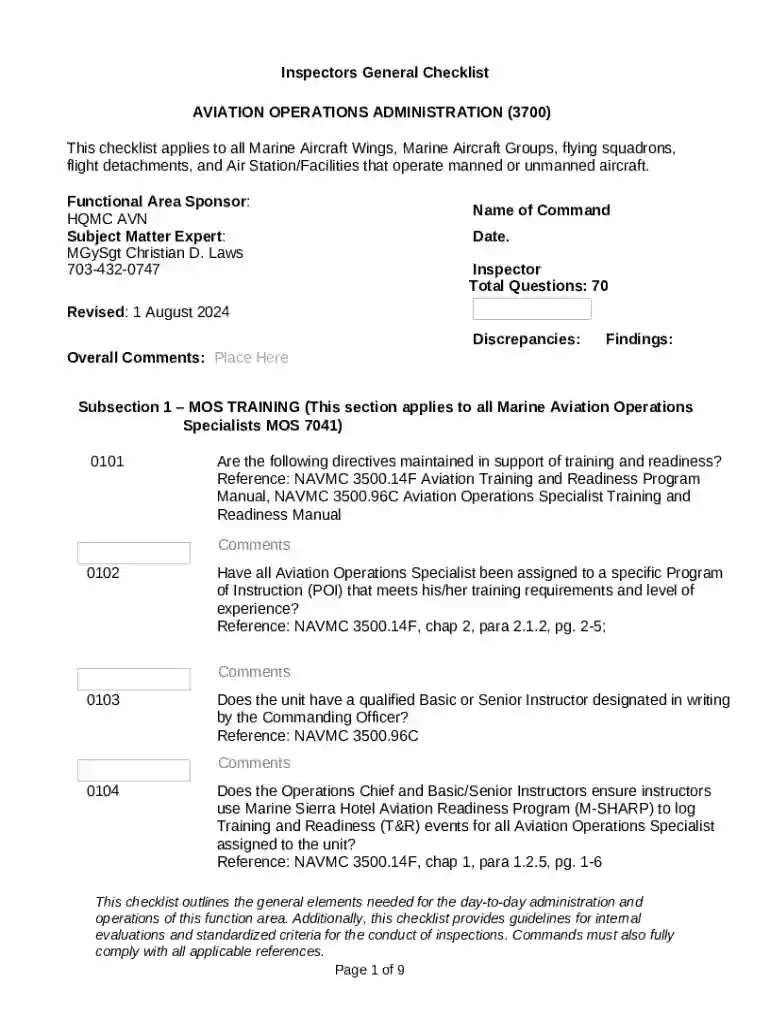
The "Inspectors General Checklist" is a specialized form used within the Aviation Operations Administration, particularly applicable to various Marine Corps aviation units. This checklist serves a critical role in ensuring that aviation operations comply with established directives and standards. It contains 70 questions across multiple subsections that cover essential areas such as training, record-keeping, and operational compliance for Aviation Operations Specialists and flying squadrons. By using this checklist, units can systematically verify adherence to the required standards, making it an indispensable tool for maintaining the integrity and safety of aviation operations.
Using the Inspectors General Checklist involves a step-by-step approach to assess and document compliance across various operational areas. Here are the steps to effectively utilize this tool:
Familiarize with the Categories: Begin by understanding the distinct categories of the checklist questions, which might include training requirements, documentation practices, and flight performance evaluations.
Schedule Regular Reviews: Plan periodic reviews to systematically work through the checklist. This ensures that you address each aspect at regular intervals.
Collaborate with Team Members: Involve relevant team members, such as Aviation Operations Specialists, in the review process for comprehensive input. Collaboration ensures accuracy and thoroughness.
Document Responses: Accurately record the responses to each question to provide a clear record of compliance or areas requiring improvement.
Identify Non-Compliance Issues: Use the checklist to pinpoint any non-compliance areas and prioritize these for immediate corrective actions.
Review and Update: Regularly update the checklist results to reflect changes or improvements in operations, ensuring that the documentation remains up to date.
Filling out the Inspectors General Checklist requires precise attention to detail and a clear understanding of aviation operational standards. Here's how to complete it:
Collect All Necessary Documentation: Prior to starting, ensure that all required records, training logs, and operational documents are readily available.
Methodically Answer Each Question: Progress through the checklist systematically, ensuring each question is answered meticulously considering current protocols and practices.
Highlight Questionable Areas: Mark items that require follow-up actions for areas where compliance might be lacking or documentation is incomplete.
Consult with Subject Matter Experts: If any checklist item is ambiguous, consult subject matter experts to get clarification and guidance.
Draft a Summary Report: After completing the checklist, prepare a summary report that highlights the key findings and lists any action items.
Submit for Review and Approval: Forward the completed checklist and summary report to relevant supervisors or commanding officers for review and necessary endorsement.
The Inspectors General Checklist encompasses several key elements essential for successful implementation and compliance verification:
Training Verification: Ensures that all personnel have met required training and certifications.
Documentation Accuracy: Confirms that all operational records are maintained accurately and consistently.
Operational Compliance: Evaluates adherence to flight operation protocols and performance standards.
Safety Checks: Validates that safety measures and equipment are up to code and operational.
Corrective Actions: Outlines necessary steps for addressing non-compliance and areas needing improvement.
Each element is integral to maintaining high standards of aviation operations and protecting the welfare of personnel and equipment.
The legal use of the Inspectors General Checklist is crucial for regulatory compliance and operational integrity. This checklist is primarily used to:
Meet Regulatory Standards: Ensure compliance with federal and military aviation regulations mandated by authorities.
Avoid Legal Liabilities: Identify potential areas of negligence that could result in legal liabilities if unaddressed.
Reporting Requirements: Fulfill official reporting obligations to military and regulatory bodies, ensuring transparency and accountability.
Audit Trail: Provide a documented audit trail for inspections and reviews, critical during audits or investigations.
Adhering to the checklist not only fulfills legal obligations but also upholds the safety and effectiveness of aviation operations.
Assessing how the checklist is used in real-world scenarios helps illustrate its applicability and effectiveness:
Routine Inspections: Aviation units routinely use the checklist for periodic inspections to maintain consistent compliance and readiness.
Pre-Deployment Checks: Before deployments, the checklist is invaluable in ensuring all aviation units meet the required operational and safety standards.
Training Audits: During training audits, the checklist provides a structured approach for evaluating training program effectiveness and areas for improvement.
Post-Incident Reviews: Following incidents, the checklist helps in reviewing the circumstances and identifying potential deviations from standard protocols.
These examples highlight the practical application of the checklist across various operational contexts within aviation units.
The Inspectors General Checklist is primarily used by specific roles within aviation units, including:
Aviation Operations Specialists: Utilize the checklist for daily operational checks and compliance verification.
Commanding Officers: Review the completed checklist as part of their oversight responsibilities for unit readiness.
Safety Officers: Use the checklist to ensure that all safety protocols and requirements are consistently met.
Auditors and Inspectors: Engage with the checklist to perform detailed audits and inspections for ensuring regulatory compliance.
Each of these roles ensures that the checklist is effectively implemented to maintain operational standards and safety.


At DocHub, your data security is our priority. We follow HIPAA, SOC2, GDPR, and other standards, so you can work on your documents with confidence.



The checklist covers general workplace cleanliness, fire safety (like exit signs and extinguishers), and earthquake safety (anchoring tall items and securing
Dec 4, 2024 Onboarding checklist workflow for recording new employee information along with multiple approval stages pre-assigned to placeholder users.


