







Definition and Purpose of a Request for Court Trial
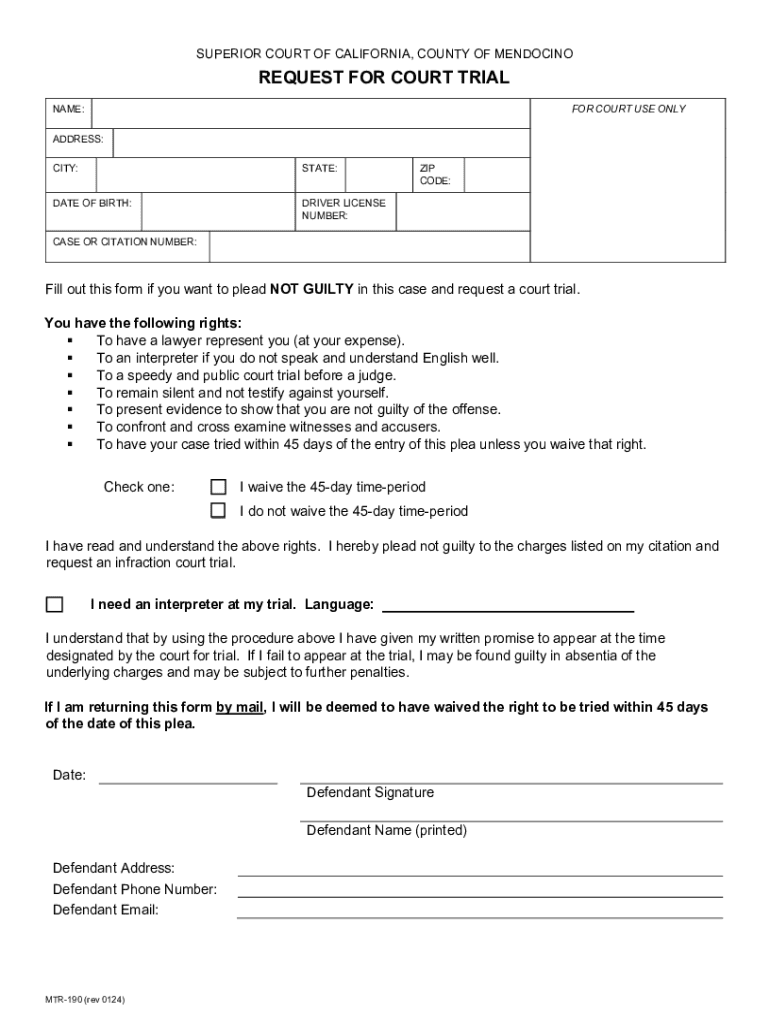
The "Request for Court Trial" is a formal document used in legal proceedings, specifically from the Superior Court of California, County of Mendocino. It serves as the defendant's means to officially plead not guilty to a case or citation and to initiate a court trial. This form is essential for individuals who wish to contest charges brought against them in a legal setting, affirming their desire to resolve the matter through judicial proceedings rather than settling outside of court or through alternative dispute resolutions. The document also provides critical information about defendants' rights, such as the right to legal representation, access to an interpreter if needed, and the option to waiver or maintain the 45-day trial period.
Key Considerations for Defendants
- Legal Representation: You have the right to be represented by an attorney throughout the trial process.
- Interpreter Services: If applicable, you may request an interpreter to ensure clear communication during court proceedings.
- Speedy Trial Right: You can waive your right to a speedy trial, which is typically within 45 days, or choose to maintain it to expedite the proceedings.
How to Obtain the Request for Court Trial Form
To obtain the "Request for Court Trial" form, you can visit the Superior Court of California's website or the physical courthouse of the county where your case is being heard. It is crucial to utilize the correct form specific to your jurisdiction to ensure compliance with local legal procedures. You may also contact the court clerk's office for further assistance in accessing and understanding the form.
Steps to Complete the Request for Court Trial
- Provide Personal Information: Enter your full name, address, and contact details accurately.
- Case Information: Include case or citation number, type of violation, and details pertaining to the hearing.
- Trial Date Preference: Indicate whether you will waive or not waive the 45-day trial period.
- Acknowledgment of Rights: Review the list of rights and initial or sign to confirm your understanding.
- Signature: Sign and date the form to validate your request officially.
Common Mistakes to Avoid
- Incomplete Personal Details: Ensure all personal information is filled out completely and correctly.
- Accurate Case Numbers: Double-check the accuracy of the case number or citation details.
- Understanding Waivers: Carefully consider the implications of waiving the 45-day trial right, which affects the trial schedule.
Who Typically Uses the Request for Court Trial Form
The form is predominantly utilized by individuals who are involved in legal disputes and are pleading not guilty to traffic violations, misdemeanors, or other minor infractions within the jurisdiction of the Californian courts. Individuals seeking to exercise their legal rights to a formal trial in the judicial system, rather than opting for alternative resolutions, are advised to submit this form to set their trial dates and prepare their defense.


Legal Implications of Filing a Request for Court Trial
When a defendant files the "Request for Court Trial," they signal their intent to resolve the dispute through court adjudication. This requires the defendant to prepare evidence, possibly acquire legal representation, and ensure they are ready to attend court sessions. It is crucial to meet all predefined filing deadlines and adhere to the local court rules to avoid penalties or dismissal of the case.
Penalties for Non-Compliance
Failure to comply with the trial process requirements, such as missing the filing deadlines or not attending court dates, can result in fines, legal penalties, or automatic judgment in favor of the prosecution.
State-Specific Rules for the Request for Court Trial
The rules and regulations surrounding the filing and processing of a "Request for Court Trial" may vary across different counties and states. For instance, while the form discussed is specific to the Superior Court of California, County of Mendocino, similar forms may have differing processing times, consent requirements, or additional documentation in other jurisdictions. It is advisable to consult legal counsel or the local court's resources to understand the specific expectations in your area.
Key Elements of the Request for Court Trial Form
The form is structured to capture the essential details necessary for court administration, including:
- Defendant Information: Full contact information and identification details.
- Case Details: Comprehensive integration of case number, trial preferences, and acknowledgment of rights.
- Defendant's Signature: Final section to confirm the defendant's request and commitment to appearing for trial.
Important Terms Related to Request for Court Trial
- Defendant's Rights: Legal entitlements such as the right to representation and trial.
- Court Jurisdiction: The legal authority within which your case will be heard.
- Waiver: The voluntary relinquishment or surrender of a known right, such as the 45-day trial period.
- Citation: A formal notice to appear in court regarding a legal infraction.
Thorough understanding and precise completion of the "Request for Court Trial" form are critical for defendants wishing to exercise their legal rights and achieve fair outcomes in the judicial process.




