




01. Edit your form online
Type text, add images, blackout confidential details, add comments, highlights and more.

Type text, add images, blackout confidential details, add comments, highlights and more.

Draw your signature, type it, upload its image, or use your mobile device as a signature pad.

Send it via email, link, or fax. You can also download it, export it or print it out.
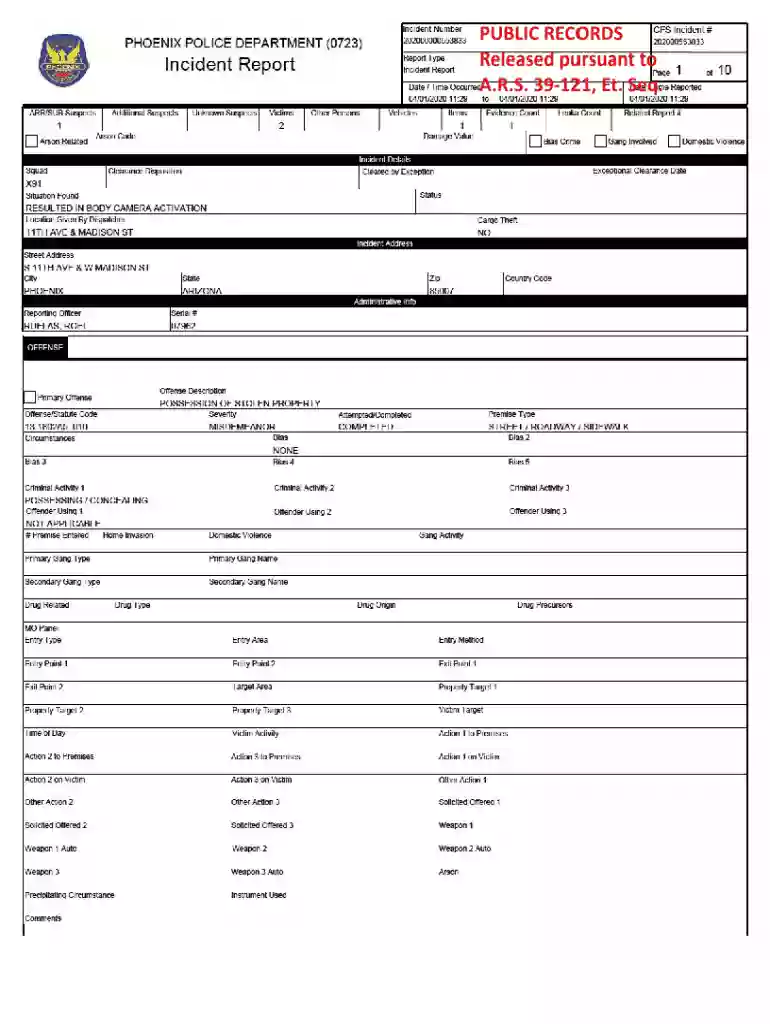
An incident report is a formal document that records the details and facts surrounding an event, incident, or situation. It is commonly used to document any irregularities, accidents, or unexpected occurrences that happen within an organization. The primary purpose of an incident report is to provide a comprehensive account of the event to prevent future incidents and to ensure compliance with safety and legal standards. In business environments, these reports often include the time, location, individuals involved, and a description of the events that took place.
This document plays a crucial role in addressing the aftermath of an incident and mitigating risks. To effectively use an incident report, one should first gather all pertinent information about the incident. Ensure that the account is clear, factual, and unbiased. Once completed, the report should be submitted to the appropriate department or authority for review and further action.
Filling out an incident report requires careful attention to detail. It's crucial to capture all relevant information accurately to ensure the report's effectiveness.
Every incident report should consist of specific elements to ensure comprehensive coverage of the event.
Incident reports are utilized across various industries, each with unique requirements and standards. Common users include:


Incident reports serve as legal documents that can be essential during investigations or lawsuits. They provide a written record that may influence the outcome of legal proceedings.
Incident reports are used in a variety of situations to document occurrences concisely and formally.
Different states may have specific regulations and requirements concerning the filing and content of incident reports. Understanding these rules is important for compliance.
At DocHub, your data security is our priority. We follow HIPAA, SOC2, GDPR, and other standards, so you can work on your documents with confidence.




The confidentiality of an incident report may be very important to an organization, depending on the information it may contain. Our platform provides layers of
Writing Incident Reports-Tips and Examples. How to write a helpful and professional incident report. Be specific, detailed, factual, and objective
The Illinois Department of Natural Resources compiles annual summary information on reported boating accidents, hunting incidents, and snowmobile accidents.


