
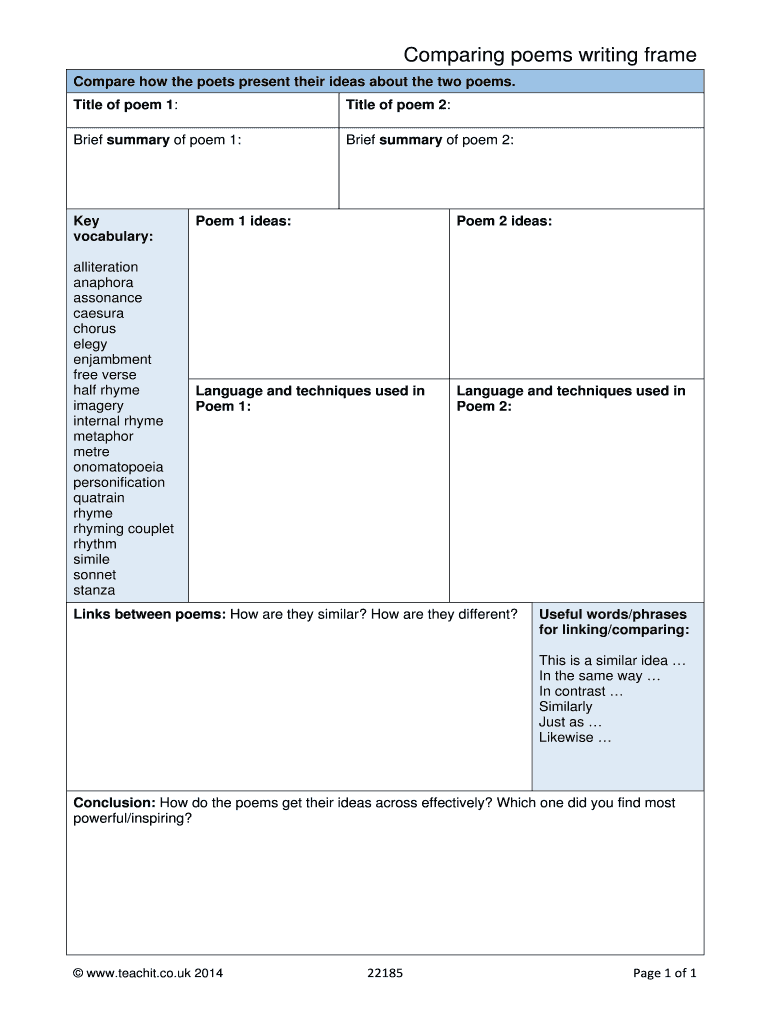







Definition and Purpose of the Comparing Poems Writing Frame
The Comparing Poems Writing Frame is an instructional tool designed to aid individuals in analyzing and evaluating two poems. This framework provides a structured way to compare themes, language, techniques, and overall effectiveness of poems. By using this frame, users can systematically break down each poem's elements, which facilitates a deeper understanding or critique. This comparison approach is essential for students, educators, and poetry enthusiasts who want to explore the nuances of poetic expression.
How to Use the Comparing Poems Writing Frame
To effectively utilize the Comparing Poems Writing Frame, it is important to follow a step-by-step process:
- Summarize Each Poem: Start with a brief summary of each poem, highlighting the main theme or message.
- Identify Key Vocabulary: Note essential poetic devices and terminology used in each poem, such as metaphors, similes, and personification.
- Analyze Themes: Compare the central themes of each poem, discussing similarities and differences in their exploration of those themes.
- Examine Language and Style: Evaluate the language choices and stylistic elements of each poem, discussing how these contribute to the poem's impact.
- Assess Techniques: Discuss the poetic techniques employed by each poet and their effectiveness in conveying the poem's intent.
Through these steps, users can methodically analyze the poems, leading to a comprehensive comparative study.
Steps to Complete the Comparing Poems Writing Frame
Completing the Comparing Poems Writing Frame involves a series of steps that guide users through the analysis process:
- Preparation: Choose two poems that offer comparable elements for analysis. Gather prior knowledge and any relevant notes on the poets or literary context.
- Documentation: Utilize the frame to systematically document observations, starting with a summary of each poem.
- Comparison: Side by side, compare each element of the poems as outlined in the frame, ensuring all aspects, including thematic and technical details, are covered.
- Conclusion: Reflect on which poem resonates more or effectively conveys its theme and why.
This structured approach ensures a thorough analysis and encourages critical thinking.
Key Elements of the Comparing Poems Writing Frame
The essential components of the Comparing Poems Writing Frame include:
- Theme Evaluation: Focus on understanding the central theme and messages.
- Language and Vocabulary: Highlight specific language choices and their effectiveness.
- Poetic Techniques: Identify literary devices and their contribution to the poem's overall impact.
- Emotional and Intellectual Response: Consider the emotional effect on the reader and intellectual engagement stimulated by each poem.
- Personal Reflection: Allow space for personal interpretation and preference.
These elements guide users in undertaking a comprehensive comparison of the selected poems.
Important Terms Related to the Comparing Poems Writing Frame
When working with the Comparing Poems Writing Frame, familiarity with key poetry-related terms enhances the analysis:
- Metaphor and Simile: Comparing differing ideas using direct or implied comparisons.
- Alliteration and Assonance: Repetition of consonant and vowel sounds for emphasis or effect.
- Stanza and Meter: The structure of verses and the rhythmic pattern of a poem.
- Imagery and Symbolism: Use of vivid descriptions and symbols to convey meaning and evoke emotions.
Understanding these terms is crucial for engaging effectively with the writing frame.
Examples of Using the Comparing Poems Writing Frame
Practical examples illustrate how one might apply the writing frame:
- Example 1: Comparing Robert Frost's "The Road Not Taken" with Langston Hughes's "Dreams," focusing on divergent themes of choice and aspiration.
- Example 2: Analyzing Emily Dickinson’s use of metaphor and simile in "Hope" is the Thing with Feathers, contrasted with Sylvia Plath's vivid imagery in "Mirror."
These examples showcase the versatility of the writing frame in exploring various poetic styles and themes.
Who Typically Uses the Comparing Poems Writing Frame
The Comparing Poems Writing Frame is a valuable resource for:
- Students: Assists in developing critical analysis skills for coursework or exams.
- Educators: Provides a tool for teaching poetry comparison and fostering discussion.
- Literary Enthusiasts: Helps in deepening understanding and appreciation of poetry.
- Researchers: Offers a methodical approach for scholarly examination of poetic works.
This wide range of users reflects the utility of the frame across different contexts and purposes.


Versions or Alternatives to the Comparing Poems Writing Frame
While the Comparing Poems Writing Frame is a structured approach, there are alternative frameworks and versions:
- Venn Diagrams: For visually mapping similarities and differences.
- Comparison Charts: Tabular forms that allow for a more linear comparison of elements.
- Digital Tools: Software and online platforms that offer templates for poetry analysis, such as poetry analysis apps or interactive writing aids.
These alternatives provide users with versatile options tailored to varying analysis preferences.




