






Definition & Meaning
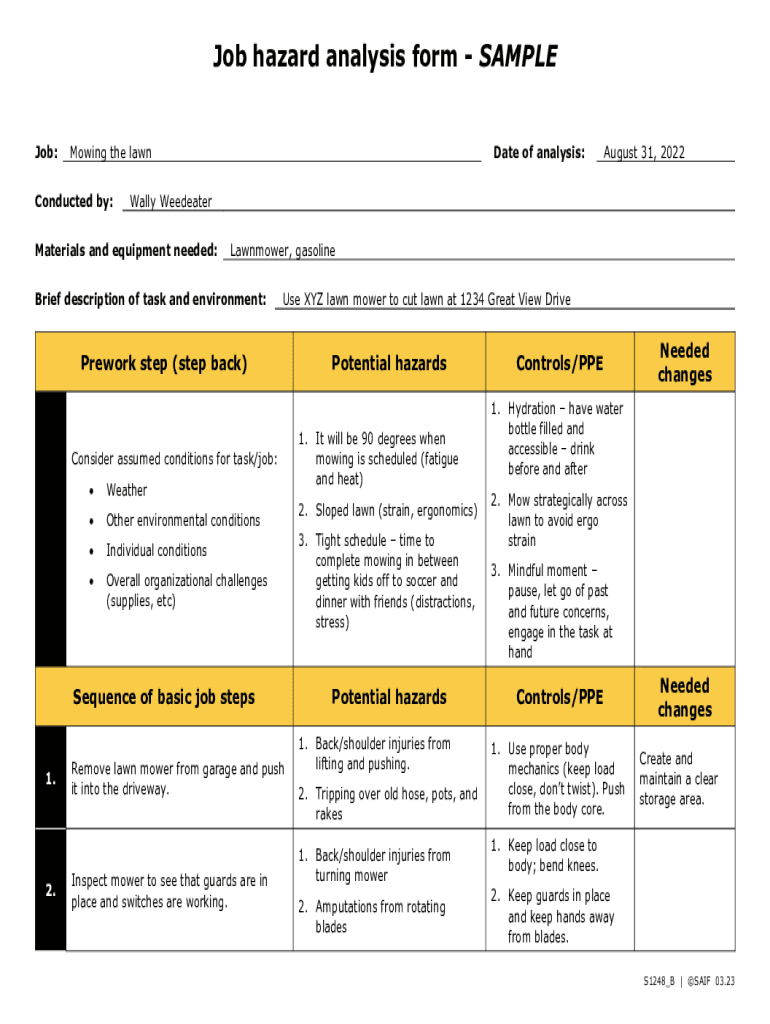
The Job Hazard Analysis (JHA) Form - SAMPLE S1248B is a structured tool designed to enhance workplace safety by identifying potential hazards associated with specific tasks. It comprehensively outlines the task steps, potential risks, and appropriate controls to mitigate identified hazards. JHA forms are crucial in promoting proactive measures to prevent workplace accidents and injuries, fostering a culture of safety awareness. By highlighting risks such as ergonomic strain, heat fatigue, and equipment-related injuries, the form guides the implementation of preventive strategies like using personal protective equipment (PPE) and adhering to best practices.
Key Elements of the Job Hazard Analysis Form
Essential components of the JHA form include:
- Task Steps: A detailed breakdown of each step involved in the task to accurately identify potential risks.
- Hazard Identification: Specific types of hazards such as chemical, physical, or biological that could cause harm during the task.
- Control Measures: Recommendations on how to control identified hazards, including engineering controls, work practices, and PPE.
- Personnel Involved: Information on the workers or teams responsible for completing each task step.
- Review and Approval: A section for supervisor review and signature to ensure thorough assessment and compliance with safety standards.
How to Use the Job Hazard Analysis Form
To effectively use the JHA form, follow these steps:
- Identify the Task: Clearly define the task to be analyzed and document each step.
- Assess Hazards: Examine each step to identify potential hazards associated with the activity.
- Implement Controls: Determine and detail effective measures to eliminate or reduce hazards.
- Document Responsibilities: Assign each task step and hazard control measure to specific personnel.
- Review and Finalize: Have supervisors and safety officers review the form for completeness and effectiveness.
Steps to Complete the Job Hazard Analysis Form
Completing the JHA form involves:
- Preparation: Gather existing safety data, task procedures, and previous incidents related to the task.
- Task Breakdown: List each task step sequentially for a clear, structured analysis.
- Hazard Identification: Use checklists and past data to pinpoint potential hazards.
- Control Strategies: Identify existing controls and propose additional measures to enhance safety.
- Worker Input: Involve workers familiar with the task for a comprehensive perspective on practical risks.
- Approval: Obtain endorsements from supervisors to validate the analysis.
Importance of Using the Job Hazard Analysis Form
The JHA form is essential for:
- Workplace Safety Enhancement: By identifying and mitigating hazards, it reduces the risk of accidents.
- Regulatory Compliance: Ensures adherence to occupational safety standards and regulations.
- Awareness and Training: Serves as a training tool for educating employees about potential hazards and safe practices.
- Resource Allocation: Guides decision-making regarding safety investments, such as PPE and training sessions.
Who Typically Uses the Job Hazard Analysis Form
JHA forms are commonly used by:
- Safety Officers: For conducting risk assessments and developing safety protocols.
- Supervisors: To understand potential job risks and oversee the implementation of safety measures.
- Employees: To raise awareness and equip them with the knowledge to perform tasks safely.
- Regulatory Auditors: To evaluate compliance with health and safety regulations.


Legal Use of the Job Hazard Analysis Form
The legal use of JHA forms involves:
- Documentation: Serving as proof of due diligence in safety management and compliance with standards.
- Regulatory Compliance: Aid in meeting Occupational Safety and Health Administration (OSHA) requirements.
- Risk Management: Demonstrates proactive steps taken by an organization to mitigate potential legal liabilities related to workplace accidents.
Examples of Using the Job Hazard Analysis Form
Practical applications of JHA forms include:
- Construction Projects: Analyzing tasks like scaffolding assembly to mitigate fall hazards.
- Manufacturing: Evaluating machinery operation to prevent ergonomic injuries.
- Environmental Services: Assessing spill cleanup procedures to manage chemical exposure risks.
- Office Tasks: Reviewing ergonomic setups to reduce repetitive strain injuries.
State-Specific Rules for the Job Hazard Analysis Form
Adapting the JHA form to state-specific guidelines involves:
- Understanding Local Regulations: Reviewing local OSHA standards and integrating applicable state-specific safety requirements.
- Tailoring Controls: Customizing hazard control measures based on regional climatic or environmental conditions.
By addressing these key areas, the Job Hazard Analysis form - SAMPLE S1248B becomes a vital document for ensuring a safer workplace through strategic evaluation and mitigation of task-related hazards.