






Definition & Meaning
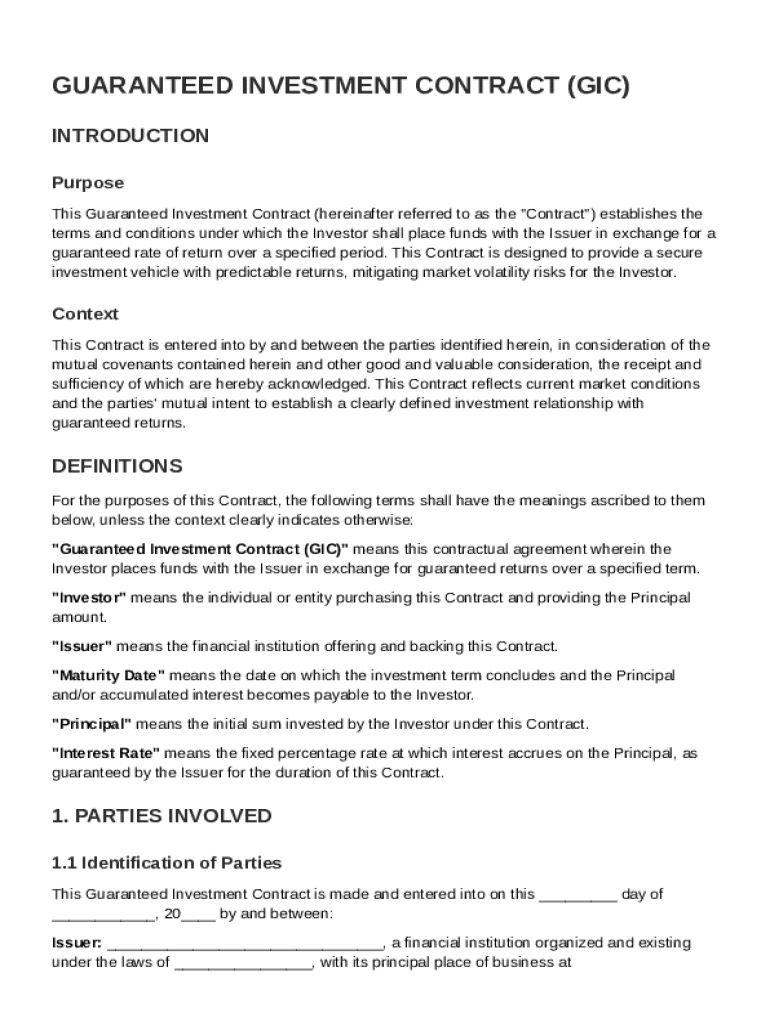
A Guaranteed Investment Contract Template is a document used to formalize an agreement between an investor and a financial institution or insurance company, often referred to as the "issuer." This contract guarantees a specified rate of return on invested funds over a set period of time. Key components of this contract include the principal investment amount, interest rate, investment duration, and specific terms and conditions governing the investment and its payout. Typically utilized by institutions managing pension or retirement plans, GICs are designed to provide a steady, predictable income stream, minimizing investment risk for policyholders.
Key Elements of the Guaranteed Investment Contract Template
The contract template encapsulates critical elements that outline the framework of the investment. These elements typically include:
- Principal Amount: Specifies the initial investment sum that the issuer will manage.
- Interest Rate: The guaranteed rate of return on the invested principal, expressed as a percentage.
- Investment Period: The duration over which the contract remains active, commonly ranging from one to ten years.
- Return Guarantees: Specific guarantees ensuring the return of both the principal and the agreed interest upon contract maturity.
- Issuer's Obligations: Details the responsibilities and constraints of the issuer, including maintaining sufficient reserves to meet payout obligations.
- Investor's Rights: Outlines the rights of the investor, particularly regarding early withdrawal and payout terms.
Steps to Complete the Guaranteed Investment Contract Template
Completing the Guaranteed Investment Contract Template requires a systematic approach to ensure all sections are accurately filled out:
- Input Basic Details: Begin by inserting the names and contact information of both the investor and the issuer.
- Define the Investment Terms: Specify the principal amount, interest rate, and duration of the investment. Include any additional terms such as compounding frequency.
- Agreement of Parties: Ensure both parties review and mutually agree on the terms. This can involve legal consultation to confirm compliance with regulatory standards.
- Review Risk Disclosures: Include any necessary disclosures about potential risks involved, whether due to market volatility or issuer creditworthiness.
- Secure Signatures: Both the investor and a representative of the issuing institution should sign the document, often facilitated through electronic signature tools adhering to the ESIGN Act.
- Documentation and Filing: Maintain copies of the signed contract for personal records and submit it to any applicable financial regulatory bodies, if necessary.
Legal Use of the Guaranteed Investment Contract Template
The legal use of a Guaranteed Investment Contract Template comprises guidelines that ensure compliance with federal and state financial regulations. These templates must adhere to standards set by the Securities and Exchange Commission (SEC) and the Financial Industry Regulatory Authority (FINRA) for insurance products. Obligations include providing clear descriptions of investment terms and associated risks, ensuring the contract's enforceability in legal disputes, and incorporating stipulations for amendments. Legal review is often recommended to address state-specific mandates applicable to investment contracts.
State-Specific Rules for the Guaranteed Investment Contract Template
While federal regulations guide the overarching standards for GICs, state-specific rules may dictate nuances such as:
- Tax Treatment: Some states have unique tax implications on interest earned from GICs, affecting the investor's after-tax returns.
- Fiduciary Duties: Variations in requirements for financial advisors and issuers to act in the investor's best interest.
- Regulatory Filings: States may require registration or notification for certain investment products with state securities agencies or insurance commissions.
- Consumer Protections: Different states have consumer protection laws affecting disclosure requirements or permissible contract terms.
Practical Examples of Using the Guaranteed Investment Contract Template
Consider how an institutional investor, such as a pension fund manager, uses GICs to guarantee fixed returns on invested capital, offering stability and predictability to their fund's performance. Alternatively, an individual nearing retirement may opt for a GIC to secure a steady retirement income with minimal risk exposure.
In another scenario, a corporation aiming to invest excess cash reserves might engage a GIC to balance its investment portfolio with a low-risk, guaranteed-return instrument. This contract template ensures predefined returns and mitigates exposure to market volatility.
Who Typically Uses the Guaranteed Investment Contract Template
Guaranteed Investment Contracts are predominantly used by:
- Institutional Investors: Such as pension funds, insurance companies, and other entities requiring low-risk fixed income streams.
- Corporations: Companies managing surplus funds in stable, predictable investments.
- Retirees: Individuals looking to secure fixed income during retirement without exposure to equity market risks.
Entities involved in issuing these contracts include insurance companies, banks, and other financial institutions capable of providing guarantees and managing large-scale investments.


Important Terms Related to Guaranteed Investment Contract Template
Understanding the terminology associated with GICs is critical for effective utilization:
- Book Value: The amount invested in the contract, adjusted for deposits, withdrawals, and interest earned.
- Market Value Adjustment: A mechanism used to adjust payouts based on prevailing interest rates and market conditions.
- Termination Clause: Outlines conditions under which the contract can be prematurely terminated, often involving penalties or adjustments.
- Surrender Period: The period during which the investor is restricted from withdrawing funds without incurring penalties.
- Liquidity Provisions: Terms related to accessing funds if needed before the contract's maturity.
These terms are pivotal for stakeholders to comprehensively understand their rights, obligations, and potential financial outcomes associated with the investment.