



Definition and Purpose of the Software Outsourcing Contract Template
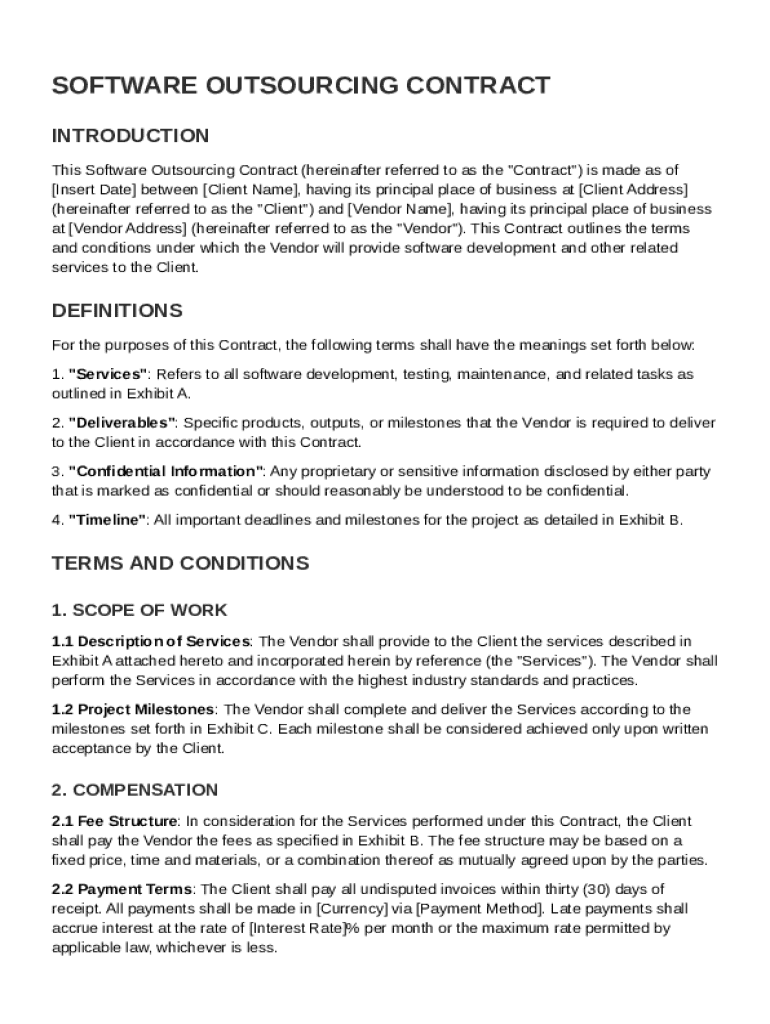
The Software Outsourcing Contract Template defines the agreement terms between a client and a vendor for software development services. This template provides a structured framework for laying out the expectations, responsibilities, and deliverables of both parties involved. By clearly outlining key terms and conditions, including scope of work and payment details, it serves as a crucial reference point throughout the software development lifecycle. It's designed to minimize misunderstandings and disputes, ensuring seamless collaboration between clients and service providers.
Key Elements of the Software Outsourcing Contract Template
This template includes several critical sections, such as:
- Scope of Work: Defines the specific services and deliverables provided by the vendor.
- Compensation Details: Details the payment terms, including rate structures and billing cycles.
- Confidentiality Obligations: Outlines the measures for protecting sensitive information shared during the project.
- Intellectual Property Rights: Clarifies ownership of any developed software and related materials.
- Warranties and Dispute Resolution: Includes guarantees provided by the vendor and the process for resolving disagreements.
- Termination Conditions: Specifies scenarios under which the contract may be ended by either party.
These elements ensure that all parties understand and agree on their responsibilities, reducing the potential for conflict.
Steps to Complete the Software Outsourcing Contract Template
Successfully completing the template involves a series of steps:
- Identification of Parties: Clearly list both the client’s and vendor’s names, addresses, and contact information.
- Define the Project Scope: Clearly describe the software development services, deliverables, and timelines.
- Set Compensation Terms: Agree on pricing, payment methods, and schedules.
- Include Confidentiality Clauses: Detail how proprietary and sensitive information will be protected.
- Outline Dispute Resolution: Establish procedures for addressing disagreements or breaches.
- Specify Termination Clause: Set out the conditions under which the contract can be terminated.
Each step requires careful attention to ensure the contract is comprehensive and legally binding.
How to Use the Software Outsourcing Contract Template
To effectively use this template, stakeholders must:
- Customize the Template: Adapt it to fit the specific needs of the project by adjusting sections like scope and compensation.
- Engage Legal Counsel: Consult with a legal expert to verify that the contract complies with relevant regulations and industry standards.
- Discuss with Stakeholders: Ensure both parties understand and agree to the terms laid out in the document.
- Secure Signatures: Obtain signatures from authorized representatives of both the client and the vendor to validate the contract.
Using the template as a guide helps streamline negotiations and formalize agreements efficiently.
Parties that Typically Use the Software Outsourcing Contract Template
Several parties find this contract template indispensable:
- Tech Startups: Engage in short-term or project-based software development with external vendors.
- Corporate Enterprises: Outsource large-scale software projects to specialized development firms.
- Freelance Developers: Formalize agreements with clients for custom software solutions.
- IT Consultants: Establish clear service parameters with clients while managing multiple projects.
Each party benefits from the template by providing a clear and enforceable structure for their software development transactions.
Legal Considerations for the Software Outsourcing Contract Template
Legal considerations play an essential role in the template's adequacy:
- Ensure compliance with local and federal regulations, such as data protection laws.
- Incorporate proper licensing agreements and intellectual property clauses.
- Provide clauses for indemnity to protect against unforeseen legal liabilities.
Consulting with a legal professional ensures that the template meets all necessary legal standards, protecting both parties from potential disputes.
Examples of Using the Software Outsourcing Contract Template
Several scenarios illustrate the utility of this template:
- A startup company hiring a third-party developer to build a mobile application uses this contract to outline milestones and deliverables.
- A multinational corporation outsourcing the development of internal software tools uses the template to specify service levels and performance metrics.
- An IT consultant drawing up contracts with multiple clients for custom solutions uses the template to swiftly create contracts with consistent terms.
These examples demonstrate how different businesses leverage the template to streamline development projects with external partners.
Alternatives to the Software Outsourcing Contract Template
While this template is versatile, several alternatives may better suit specific needs:
- Service-Level Agreements (SLAs): Focus on performance metrics and expectations for ongoing services.
- Agile Contracts: Cater to projects employing agile methodologies with iterative development cycles.
- Fixed-Price Contracts: Ideal for projects with well-defined scopes and deliverables from the outset.
Exploring these options can help companies choose the structure that best fits their software outsourcing needs.