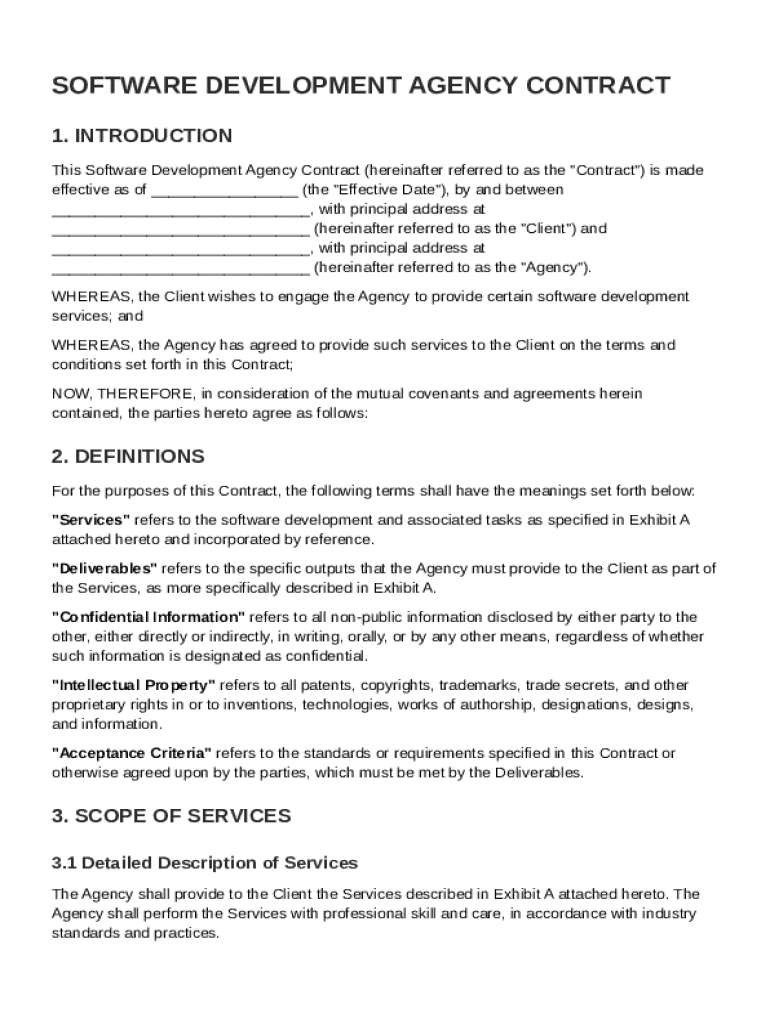







Definition & Meaning
A Software Development Agency Contract Template serves as a formal agreement between a client and a software development agency. This document establishes a legal framework for software development services, outlining responsibilities, expectations, and deliverables for both parties. It includes definitions of key terms, ensuring clarity about what each term specifically refers to, such as "deliverables," "client," and "confidential information." By setting these definitions, the contract prevents misunderstandings and establishes a foundation for effective communication.
Key Elements of the Software Development Agency Contract Template
The contract template is structured to cover various critical components essential for a comprehensive agreement. These key elements include:
- Scope of Services: Clearly delineates the tasks and activities the agency will undertake, providing a detailed description of the software development services to be delivered.
- Compensation Structure: Specifies the payment terms, including rates, payment schedules, and any conditions tied to financial transactions.
- Intellectual Property Rights: Determines the ownership of the developed software, ensuring that all creations are attributed properly either to the client or the agency.
- Confidentiality Obligations: Outlines the responsibilities of both parties to protect sensitive information, stipulating non-disclosure requirements and penalties for breaches.
Understanding these components is crucial for ensuring both parties are aligned with expectations.
Important Terms Related to Software Development Agency Contract Template
Familiarity with important terms within the contract is vital for proper execution and compliance. Some of these terms include:
- Deliverables: The final outputs to be provided by the agency, often specified with a timeline and quality standards.
- Client: The party commissioning the software development services, usually responsible for providing resources or information pertinent to the project.
- Agency: The service provider tasked with executing the software development as per the contract terms.
- Non-disclosure Agreement (NDA): A contractual obligation to protect sensitive information from unauthorized disclosure.
These terms ensure that both parties have a shared understanding of obligations and expectations.
Steps to Complete the Software Development Agency Contract Template
Completing the contract template involves several precise steps to ensure all necessary information is included and agreed upon:
- Review the Template: Begin by thoroughly reading the entire template to familiarize yourself with its structure and contents.
- Customize Terms: Adjust the terms and conditions to fit the specific needs of the project, such as altering service details and compensation structures.
- Define Deliverables and Timeline: Clearly specify the project deliverables and set realistic timelines for their completion.
- Validate Legal Requirements: Confirm that the contract complies with any applicable legal standards and regulations pertinent to the jurisdiction or industry.
- Obtain Approvals: Ensure all involved parties have reviewed and agreed upon the terms, and obtain the necessary signatures to finalize the contract.
Completing these steps systematically can help prevent future disputes and ensure a smooth project execution.
Who Typically Uses the Software Development Agency Contract Template
This contract template is typically utilized by various stakeholders in the software development industry:
- Clients: Businesses or individuals seeking specialized software development services for projects or product enhancements.
- Agencies: Software development companies aiming to formalize their service agreements with clients to ensure transparent operations.
- Legal Advisors: Professionals assisting in drafting or reviewing contracts to ensure that terms adhere to legal guidelines and industry standards.
Understanding who commonly uses this template aids in crafting a contract that aligns with industry norms and expectations.


Examples of Using the Software Development Agency Contract Template
The template can be adapted to various project types and scopes. Some examples include:
- Custom Software Projects: Contracts for bespoke software development tailored to a client’s unique needs, detailing specific functionalities and integrations.
- Web Application Development: Agreements focusing on the creation, testing, and deployment of web-based applications, highlighting responsive design and user experience elements.
- Mobile Application Development: Contracts that cover the development of apps for mobile devices, specifying compatible platforms and user interface standards.
These examples illustrate the flexibility and adaptability of the template in addressing diverse project demands.
Legal Use of the Software Development Agency Contract Template
Legally, utilizing a contract template like this facilitates compliance with applicable laws and ensures enforceability in disputes. Key legal considerations include:
- Adherence to ESIGN: For environments requiring electronic communication and signatories, ensuring compliance with electronic signatures statutes is critical.
- Intellectual Property Protection: Properly articulated clauses can safeguard proprietary code and software inventions, stipulating rightful ownership and usage rights.
- Termination and Dispute Resolution: Clauses that define conditions for terminating the contract and outline steps for resolving disagreements professionally.
Ensuring the contract's legality protects both the agency's and the client's interests.
Versions or Alternatives to the Software Development Agency Contract Template
While this template offers a comprehensive foundation, there are variants and alternatives that may suit different situations:
- Industry-Specific Templates: Tailored for industries such as healthcare or finance, these may include additional compliance requirements.
- Simplified Agreements: For small projects or freelancers, a more concise version with essential terms might be sufficient.
- Custom Drafted Contracts: For unique or highly complex projects, engaging legal counsel to draft a custom contract may be advisable.
Exploring different templates and alternatives ensures the contract is well-suited to meet specific operational and legal needs.