
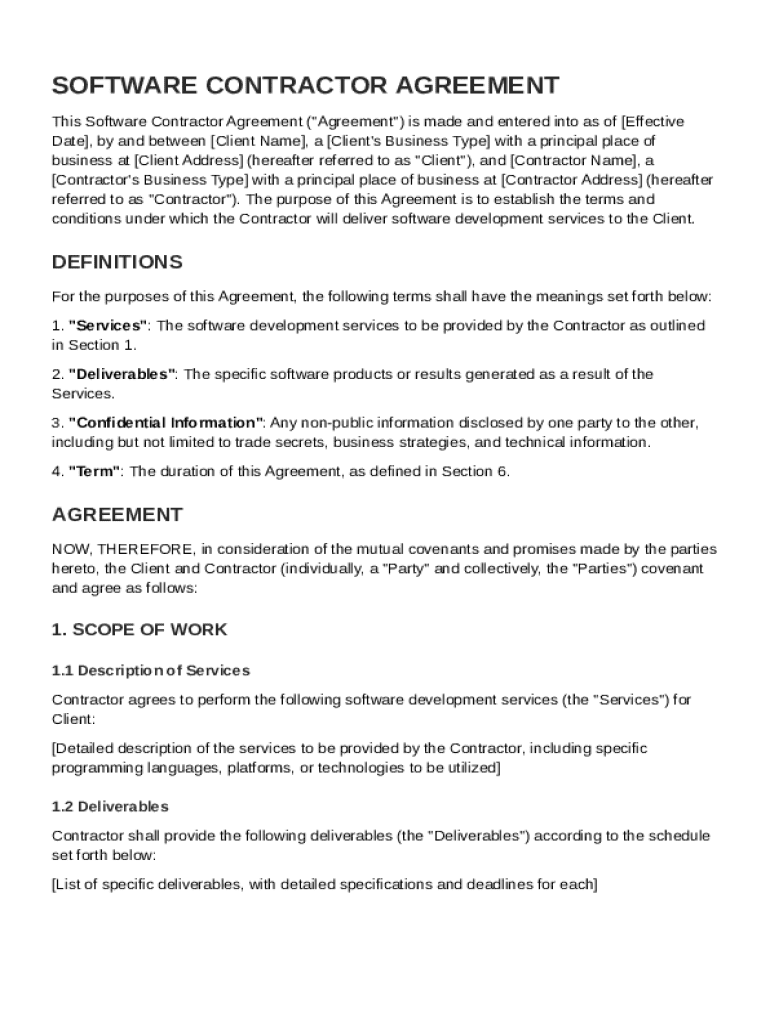







Definition & Meaning
The Software Contractor Agreement Template is a legal document that defines the terms and conditions under which a contractor provides software development services to a client. This agreement is crucial for setting clear expectations and responsibilities, helping to mitigate potential disputes between parties. Common terms include the scope of work, payment details, intellectual property rights, confidentiality measures, and termination clauses. By defining these critical aspects, the template ensures that both contractor and client have a mutual understanding of the obligations and protections afforded to each.
Key Elements of the Software Contractor Agreement Template
Scope of Work
The scope of work in the agreement specifies the services to be provided by the contractor. This section outlines the deliverables, methodologies, and specific tasks that the contractor is responsible for completing. Clearly defining the scope helps prevent misunderstandings about project expectations and ensures that all parties agree on the project's objectives.
Compensation Details
Compensation details are a fundamental component of the agreement, detailing how and when the contractor will be paid. This section may include payment schedules, rates (hourly or fixed), and invoicing procedures. Properly outlining these terms helps ensure timely payment and financial transparency.
Intellectual Property Rights
Intellectual property (IP) rights clarify the ownership of the software developed. This section specifies whether the client or contractor retains rights to the work produced. Often, the agreement stipulates that once the client fulfills payment obligations, the client gains ownership of the software, while the contractor retains rights to the methodologies or pre-existing components used.
How to Use the Software Contractor Agreement Template
Customization and Personalization
Users should customize the template to fit the specific project and relationship parameters. This involves adjusting sections such as deliverables, timelines, and payment terms. By personalizing these areas, both parties can address their unique needs and legal requirements, ensuring a comprehensive agreement.
Legal Review
Before finalizing, it is advisable to have a legal professional review the agreement. Legal counsel can provide tailored advice on state-specific laws or industry standards, ensuring the contract is enforceable and comprehensive. This step is crucial in safeguarding both parties' interests.
Steps to Complete the Software Contractor Agreement Template
-
Gather Required Information: Collect all necessary data including project scope, timelines, payment schedules, and contact information.
-
Complete Core Sections: Fill out the template by inputting details such as scope of work, compensation, and IP rights.
-
Review with Stakeholders: Share the draft with involved parties to gather feedback and make any necessary adjustments.
-
Legal Consultation: Seek a legal opinion to ensure compliance with relevant laws and regulations.
-
Finalize and Execute: Once reviewed and adjusted, both parties should sign the document to formalize the agreement.
Legal Use of the Software Contractor Agreement Template
The template serves as a legal framework for software development projects. It safeguards both contractor and client by providing a clear, agreed-upon outline of obligations and expectations. Using the agreement in line with local laws ensures its enforceability and helps protect against legal disputes.
Important Terms Related to Software Contractor Agreement Template
- Non-Disclosure Agreement (NDA): A separate document that may be included or referenced to protect confidential information shared during the project.
- Force Majeure: A clause that excuses a party from liability if unforeseen events prevent fulfilling contractual obligations.
- Indemnification: Provisions outlining each party's responsibility for losses or damages that may arise during the course of the project.
State-Specific Rules for the Software Contractor Agreement Template
Different states may have unique regulations affecting contractor agreements, such as statutes governing IP rights or worker classification. Understanding these differences is crucial for compliance and ensuring the agreement is legally binding. Engaging local legal expertise can aid in navigating these state-specific nuances.
Examples of Using the Software Contractor Agreement Template
In practice, a start-up may use this template to formalize a relationship with a freelance software developer, establishing terms for an app development project. In another instance, an established tech consultancy might use it to outline the terms for a client's large-scale enterprise software solution. By customizing the template, businesses of all sizes can ensure clear communication and mutual understanding in their software projects.




