
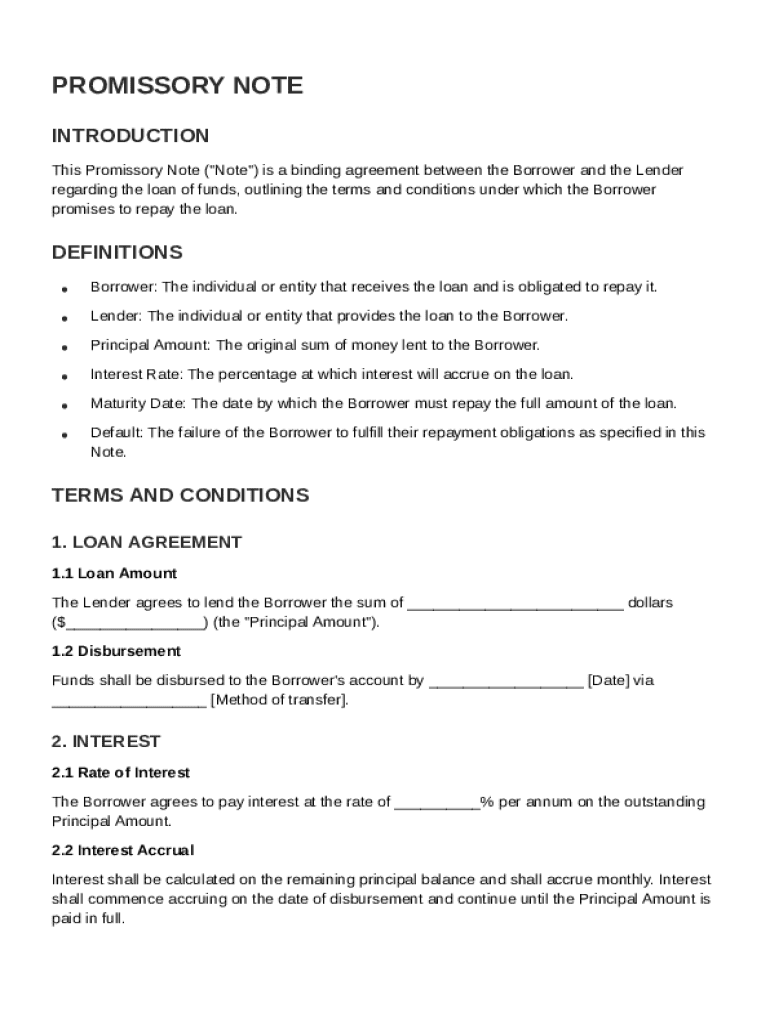







Definition & Meaning
A promissory contract template is a legally binding document used to outline the details of a loan agreement between a borrower and a lender. It specifies the principal loan amount, interest rate, repayment terms, and conditions for default. This document serves as a formal promise from the borrower to repay the loan under the agreed-upon terms, providing legal protection for both parties.
Key Characteristics
- Principal Amount: The initial sum of money borrowed, excluding interest.
- Interest Rate: The cost of borrowing, typically expressed as a percentage of the principal.
- Repayment Schedule: A timetable outlining when payments are due, the amount of each installment, and any special payment conditions.
- Default Conditions: Circumstances under which the borrower has failed to meet the obligations of the contract, and the consequences thereof.
How to Use the Promissory Contract Template
Step-by-Step Instructions
- Gather Necessary Information: Obtain personal details of both the borrower and the lender, including names, addresses, and contact information.
- Principal and Interest Details: Clearly state the loan amount and the rate of interest applied to the loan.
- Repayment Terms: Define the installment amounts, due dates, and the total length of the repayment period.
- Default Terms: Specify what constitutes a default and the ramifications in such an event.
- Signatures and Dates: Ensure both parties sign and date the contract to validate the agreement.
Practical Example
For instance, if a small business owner borrows $50,000 at an interest rate of 5% over five years, the template would include monthly repayment amounts, totaling the interest over the period, and a detailed plan of consequences for late payments.
Key Elements of the Promissory Contract Template
Major Components
- Parties Involved: Clearly list the names and roles (borrower or lender) of all parties.
- Loan Amount and Interest: Provide exact figures and agreed-upon interest rates.
- Payment Terms: Detail installment amounts, frequency, and start and end dates.
- Governing Law: Indicate which state's laws will govern the agreement, important for resolving disputes.
- Signatures: Both parties must sign the document to enforce the terms legally.
Detailed Breakdown
- Amendments and Waivers: Specify any conditions under which the terms may be altered.
- Notices: Detail how communication between parties should occur if required.
Legal Use of the Promissory Contract Template
Compliance with Legal Standards
The promissory contract template must comply with legal standards to be enforceable. In the U.S., adherence to the guidelines provided by the Uniform Commercial Code (UCC) is necessary.
Enforcement and Validity
- Legally Binding: Ensure both parties willingly consent to the terms.
- Protection Against Default: The template should clearly articulate the measures lenders can take if a borrower defaults.
- Record Keeping: Maintain copies of all signed documents for legal and financial records.
Who Typically Uses the Promissory Contract Template


Common Users
- Individual Borrowers and Lenders: People engaging in personal loans.
- Small Business Owners and Investors: Businesses requiring temporary capital.
- Financial Institutions: Banks or credit unions providing structured personal loans.

State-Specific Rules for the Promissory Contract Template
Variations by Jurisdiction
- Interest Rate Limits: Maximum interest rates may differ, affecting terms.
- Usury Laws: State-specific laws that govern the amount of interest charged on loans.
- Enforcement Protocols: Procedures to handle disputes or defaults may vary.
Examples of Using the Promissory Contract Template
Personal Loans
An individual borrows funds from a relative to purchase a vehicle and uses the template to set a structured repayment schedule with interest.
Business Loans
A startup secures initial funding from an angel investor, defining repayment terms to align with projected revenue milestones.
Digital vs. Paper Version
Advantages of Each Format
- Digital Version: Allows easy modifications, electronic signatures, and email distribution. It is efficient for maintaining records and tracking changes.
- Paper Version: Suitable for contexts requiring hard copies, with a traditional approach to signing and archive storage.
Practical Scenarios
Use the digital template when dealing with remote parties or when a quick turnaround is required. Opt for a paper version for in-person meetings or when dealing with institutions that require physical records.




