
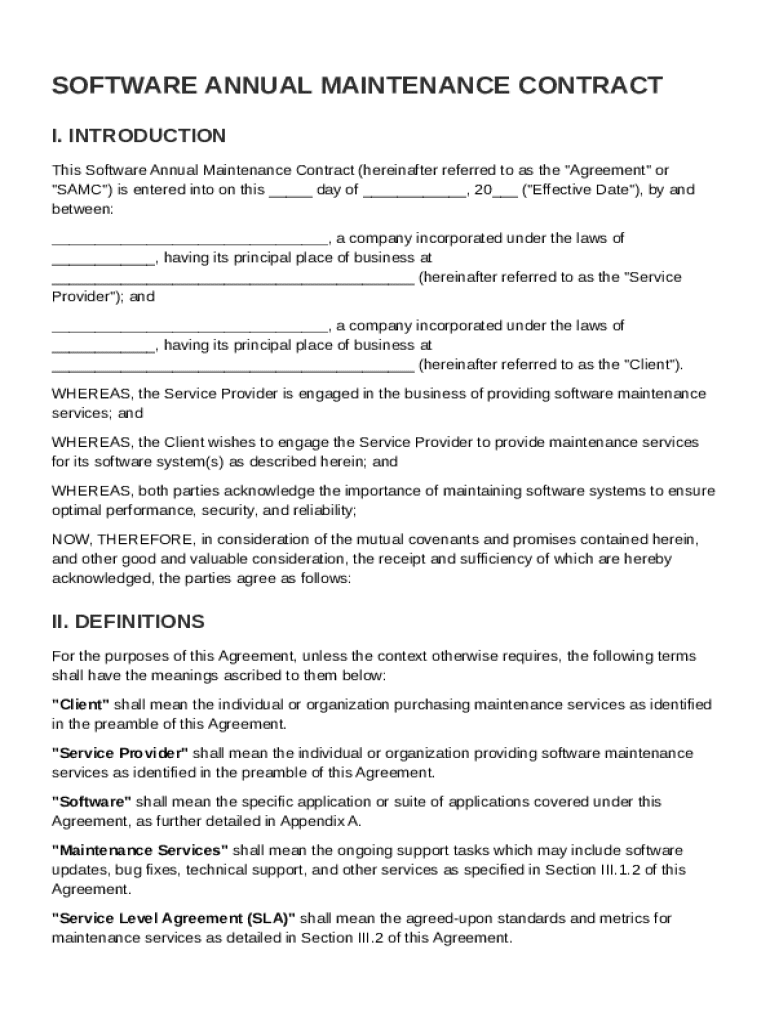







Definition & Meaning
A Software Annual Maintenance Contract (SAMC) Template is a standardized legal document outlining the terms and conditions related to the ongoing support and maintenance of software systems. It serves as an agreement between a service provider and a client, detailing the responsibilities and expectations from both parties. This contract ensures that the software remains functional and secure, covering aspects such as regular updates, troubleshooting, and technical support. In essence, the SAMC establishes a formal relationship aimed at optimizing software performance and longevity while safeguarding client data.
Key Components of an SAMC
- Service Level Agreements (SLAs): Define the performance standards and response times the service provider must meet.
- Scope of Work: Details the specific maintenance tasks and services included within the contract.
- Payment Terms: Specifies the payment structure, including rates, schedules, and possible penalties for late payments.
- Roles and Responsibilities: Outlines the duties and obligations of both the service provider and client to prevent any misunderstandings.
Key Elements of the Software Annual Maintenance Contract Template
A comprehensive Software Annual Maintenance Contract Template must encompass several key elements to ensure complete clarity and coverage. These include:
- Definitions: Clear explanation of terms used within the contract to avoid ambiguity.
- Confidentiality Obligations: Stipulate how sensitive information will be protected and handled.
- Liability Limitations: Limit the extent to which each party is responsible for losses or damages.
- Dispute Resolution Procedures: Describe how conflicts will be addressed and resolved, preferring arbitration or mediation to litigation.
- Miscellaneous Provisions: Capture essential conditions not covered elsewhere, such as force majeure clauses or contract termination terms.
Steps to Complete the Software Annual Maintenance Contract Template
Completing a Software Annual Maintenance Contract Template involves several crucial steps to ensure accuracy and compliance:
- Review and Customize: Thoroughly examine the template to customize it to the specific needs and circumstances of the contract parties.
- Include Client and Provider Information: Clearly state the names, addresses, and contact information of both parties.
- Define Scope and SLAs: Specify the detailed scope of services and set measurable service levels.
- Set Payment Terms: Agree on how and when payments will be made, along with any penalties for defaults.
- Address Confidentiality and Liability: Incorporate terms that protect sensitive information and limit liability.
- Signatures and Dates: Include signature blocks for authorized representatives of both parties and record the date of agreement.
Who Typically Uses the Software Annual Maintenance Contract Template
The Software Annual Maintenance Contract Template is utilized by a diverse range of stakeholders within the software and IT industries. Typical users include:
- Software Development Companies: To formalize maintenance agreements with clients who utilize their products.
- IT Service Providers: For businesses offering outsourced IT maintenance and support services.
- Corporate Clients: Especially those that rely heavily on proprietary software applications requiring regular updates and troubleshooting.
- Small to Medium Enterprises (SMEs): As a structured way to maintain vital software resources efficiently.


Important Terms Related to the Software Annual Maintenance Contract Template
Understanding the terminology associated with Software Annual Maintenance Contracts can be crucial for both drafting and comprehending the agreement:
- Service Level Agreement (SLA): Commitment to a specific level of service, including response and resolution times.
- Uptime Guarantee: The percentage of time that the software is guaranteed to be operational.
- Change Management: Procedures and policies for managing software updates and changes.
- Incident Management: Protocols for addressing and resolving software issues that undermine functionality.
Legal Use of the Software Annual Maintenance Contract Template
Employing a Software Annual Maintenance Contract Template appropriately can influence its enforceability and effectiveness:
- Compliance with Local Laws: Ensure the contract aligns with relevant state and federal laws, especially concerning data privacy and security regulations such as the GDPR or CCPA.
- Validity and Enforceability: Confirm that the contract includes necessary legal stipulations for enforceability, such as mutual consent and consideration.
- Review by Legal Professionals: It is often advisable to have the contract reviewed by legal experts to ensure it is comprehensive and legally sound.
State-Specific Rules for the Software Annual Maintenance Contract Template
State-specific regulations can impact the structure and clauses of a Software Annual Maintenance Contract Template:
- Jurisdiction Variations: Legal requirements can fluctuate significantly between states, affecting aspects such as confidentiality, liability, and dispute resolution.
- Local Licensing Needs: Certain services might require local licenses or certifications, which should be acknowledged in the contract.
- State-Specific Consumer Protections: Consider any additional state laws protecting clients, which may necessitate specific contractual inclusions.
Business Types That Benefit Most from Software Annual Maintenance Contract Template
Different business entities can derive significant advantages from employing a Software Annual Maintenance Contract Template:
- Technology Startups: Providing a structured approach to manage early software iterations and ensure product reliability.
- Manufacturing Firms: Relying on specialized software for operations will benefit from regular updates and issue resolution.
- Healthcare Providers: Needing reliability and compliance with health data protection standards for patient management systems.
- Educational Institutions: Ensuring that administrative and instructional software systems are secure and up-to-date.




